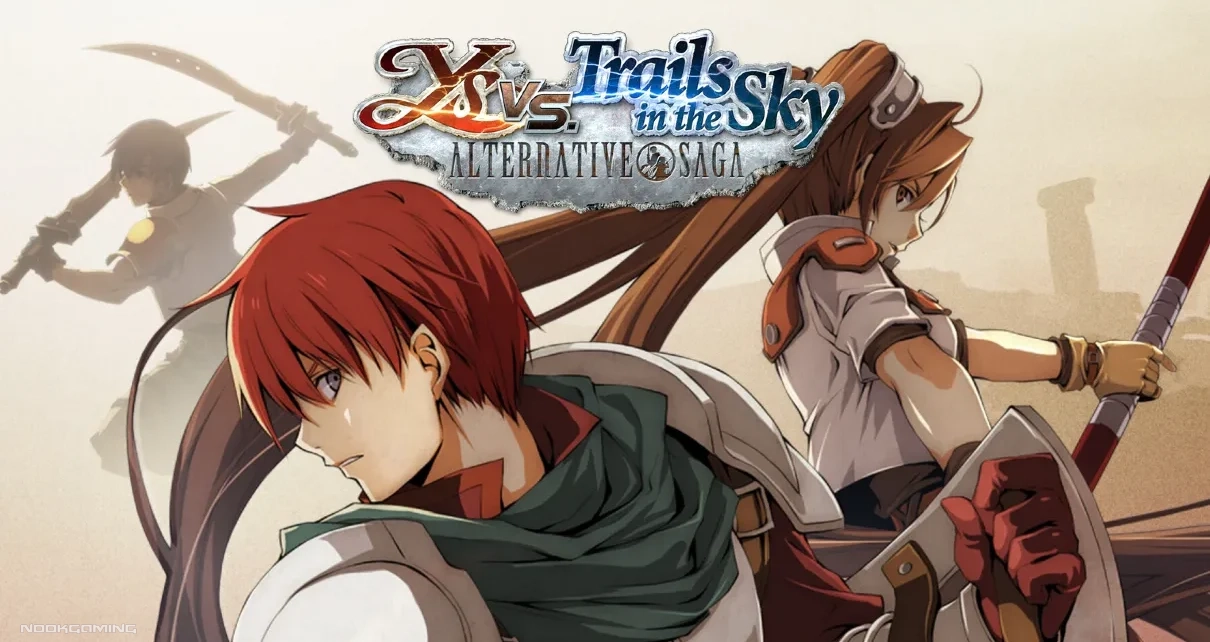
Ys vs. Trails in the Sky: Alternative Saga is quite the peculiarity within Nihon Falcom’s catalog. I’m not one for reductive comparisons, but the easiest elevator pitch I can give this game is that can loosely be described as Nihon Falcom’s version of Square Enix’s Dissidia Final Fantasy as a sort of PSP crossover RPG/fighting game hybrid. The game was originally released in 2010, not long after Ys Seven and shortly before Trails from Zero, and is a celebration of all things Falcom to that point using their two flagship franchises, Ys and The Legend of Heroes/Trails.
Given that this game predates even the release of the original 2011 English release of Trails in the Sky, and that it also was something of a teaser for Trails from Zero (a game that wouldn’t officially release in English until 2022), it remained little more than an obscure curiosity among Falcom’s western audience and devout Ys and Trails fans. It always struck me as something with next to zero chance of ever officially being released outside of Asia. So you can absolutely color me surprised that it actually received an English release in 2025, and on modern platforms to boot, courtesy of refint/games.
What Am I In For Here
Among Falcom’s catalog, Ys vs. Trails in the Sky: Alternative Saga was originally released following Ys Seven and just prior to Trails from Zero, and its roster of characters and general makeup reflect this era. There’s naturally some expectation of familiarity with the source material, mainly Ys Seven and the first two (preferably all three) Trails in the Sky titles. As per usual with me and these reviews, I aim to keep spoilers (of big Trails stuff especially) to a minimum.
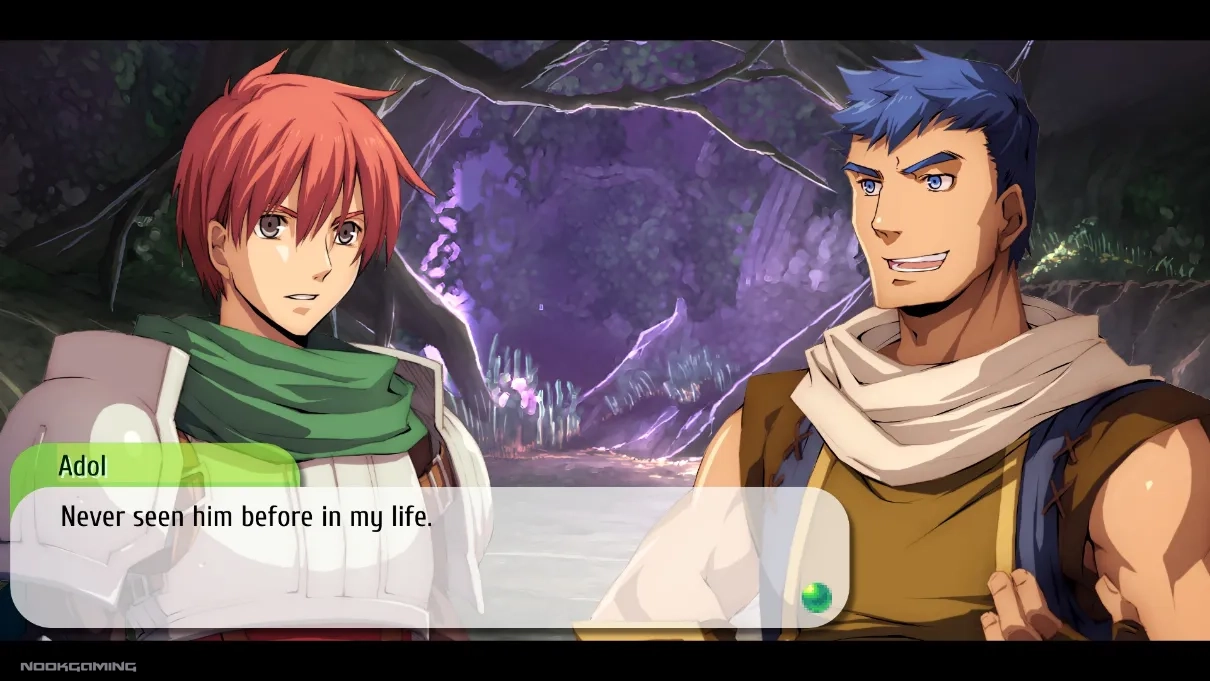
On the Ys side, all but one of the cast are from Ys Seven, which makes sense given that it was the first Ys game to actually allow players to play as characters besides Adol Christin himself, barring the prequel title Ys Origin which only sees rep here in the form of assists and music. Ys doesn’t have a ton of recurring action characters and two of the main ones that existed at the time (Dogi and Geis) are already party members in Seven, so that’s about what could be expected. A fair share of their movesets and animations are based around those in that game. The final inclusion to round out the Ys roster is Chester Stoddart from Ys III/Oath in Felghana, a recurring and somewhat iconic boss from that game. There are fairly minimal spoilers for Ys in Alternative Saga, outside of the inclusion of a particular party member from Ys Seven who doesn’t join up with Adol until fairly late in the game.
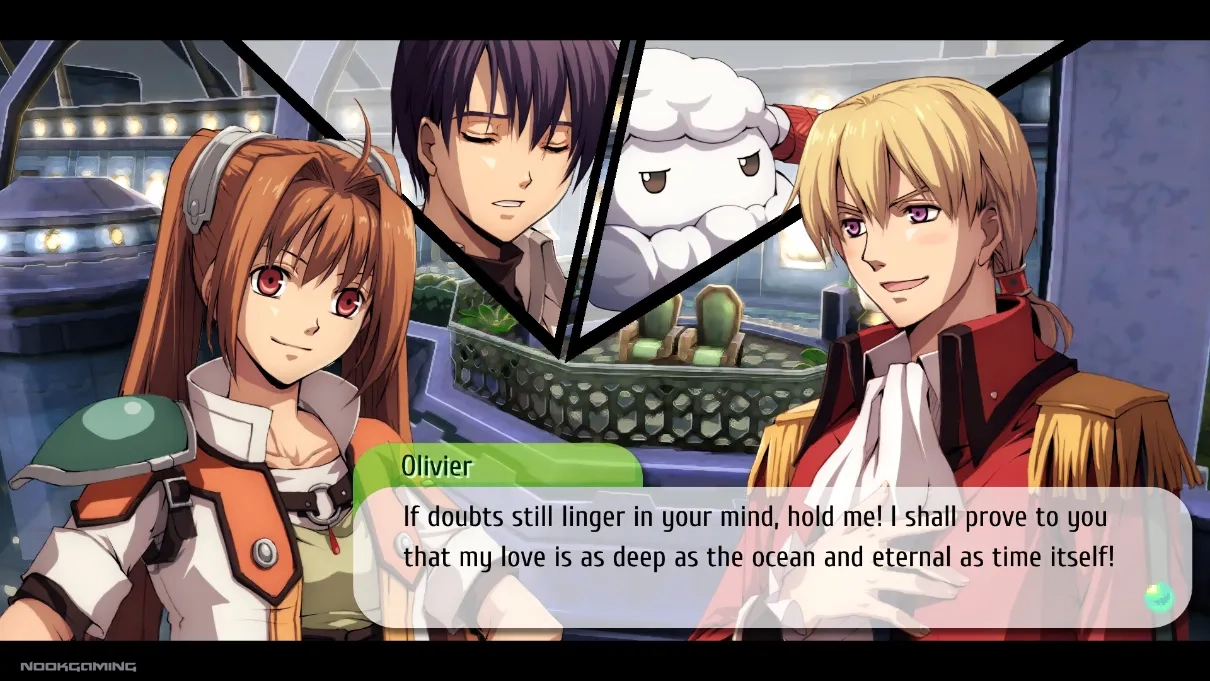
On the Trails side, the roster consists of six of the eight main party members of Trails in the Sky’s First Chapter, sans Zin and Scherazard (who are assists). Additionally, two major characters from Trails in the Sky’s Second Chapter are playable, namely Renne and Loewe. On top of that, the game features several significant areas from Sky SC as stages, and several characters’ bios have a share of significant SC spoilers, so a fair warning to those who just started getting into the series through the 2025 remake of Sky’s 1st Chapter and are unfamiliar with the rest of the Sky trilogy. Finally, you have the inclusion of the protagonist of Trails from Zero, Lloyd Bannings, who technically debuted in this game as Zero hadn’t finished development yet. He feels more meant to be a teaser than anything (and his characterization here doesn’t yet feel fully aligned with what it ends up as in his own adventure), so the content from Trails from Zero is kept fairly minimal.
As a celebration of all things Falcom, there are heaps of little references to games of Falcom’s past. While much of the game’s content comes from Ys and Trails, there’s all sorts of other Falcom rep in the roster of assists, the music, the stages, et cetera, with plenty of deep cuts. There’s stuff from Zwei: The Arges Adventure, Brandish, Xanadu Next, Gurumin: A Monstrous Adventure, the pre-Trails Legend of Heroes titles, Vantage Master, and even the appearance of Mona from the Lord Monarch series as your shopkeeper (who occasionally makes minor cameos in Falcom games like the much later Trails Into Reverie). Some of these callbacks even eluded me at first given the sheer breadth of Falcom’s catalog. You won’t really need to know as much about what the stuff beyond Ys or Trails is or where they came from to enjoy this game, but it’s worth pointing out that the game’s got enough easter eggs to fill a hundred baskets.
Much Xanadu About Nothing
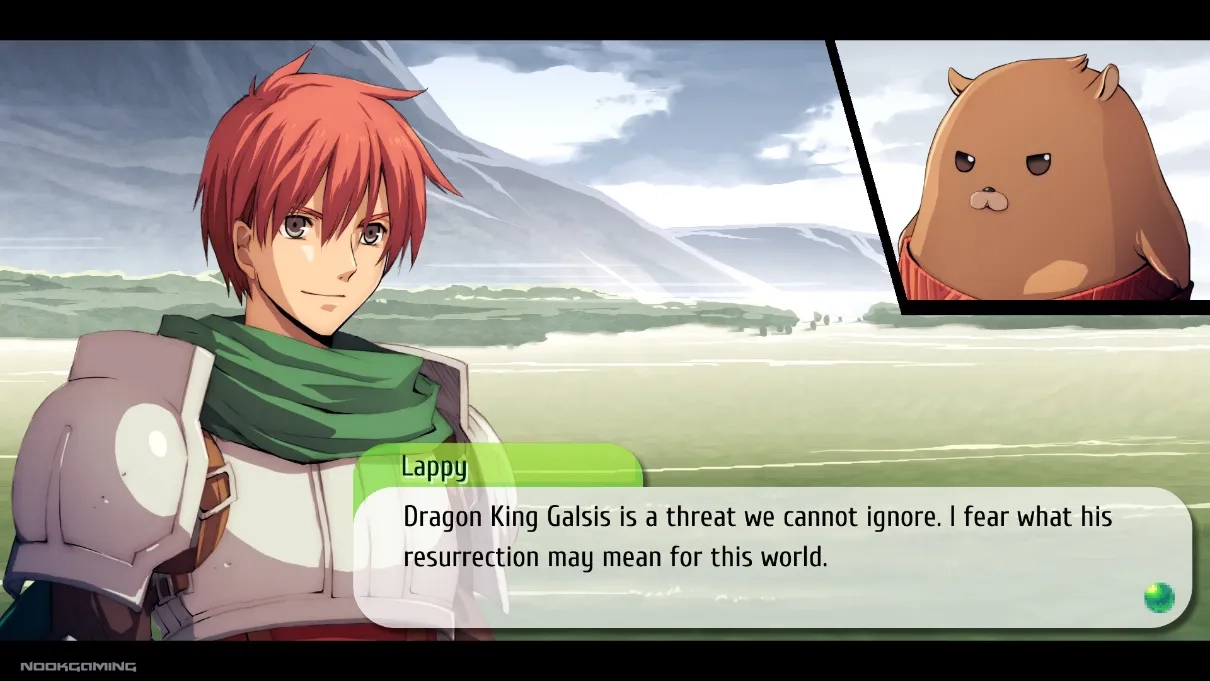
Ys vs. Trails in the Sky: Alternative Saga has a story mode that makes up the bulk of the game’s single-player content. You have the option to play through the story as one of five characters of the roster, two from Ys (Adol, Geis) and three from Trails in the Sky (Estelle, Kloe, and Tita). The casts of each game suddenly get taken to the land of Xanadu (with a lot of references to Xanadu Next in particular showing up here), a land threatened by a great evil dragon named Galsis. They must unite and fight against this evil.
Unfortunately, because a crossover fighter needs characters to fight each other, Galsis puts most of the cast under his spell to do his bidding and make them fight the player’s chosen character. The story features a bunch of 1-on-1 fights, as well as occasional 2-on-2 fights and battles against “bosses” who tend to be more standard action fights akin to those of Ys Seven. Each character’s order of opponents differs, as do the scenes and dialogue, but they play out pretty similarly overall.
The actual story itself is pretty garden-variety “heroes uniting against evil” fluff, without much in the way of Falcom’s often poignant writing when they’re at their best. Given that the Ys and Trails series have interconnected continuity between games of their respective stories, there was never the possibility of anything that could disrupt the narrative fabric or canon of those universes. It might have been able to do something with a non-canon self-contained story with original characters, but I don’t think anything like that was gonna be really in the cards given what the game feels like it’s going for.
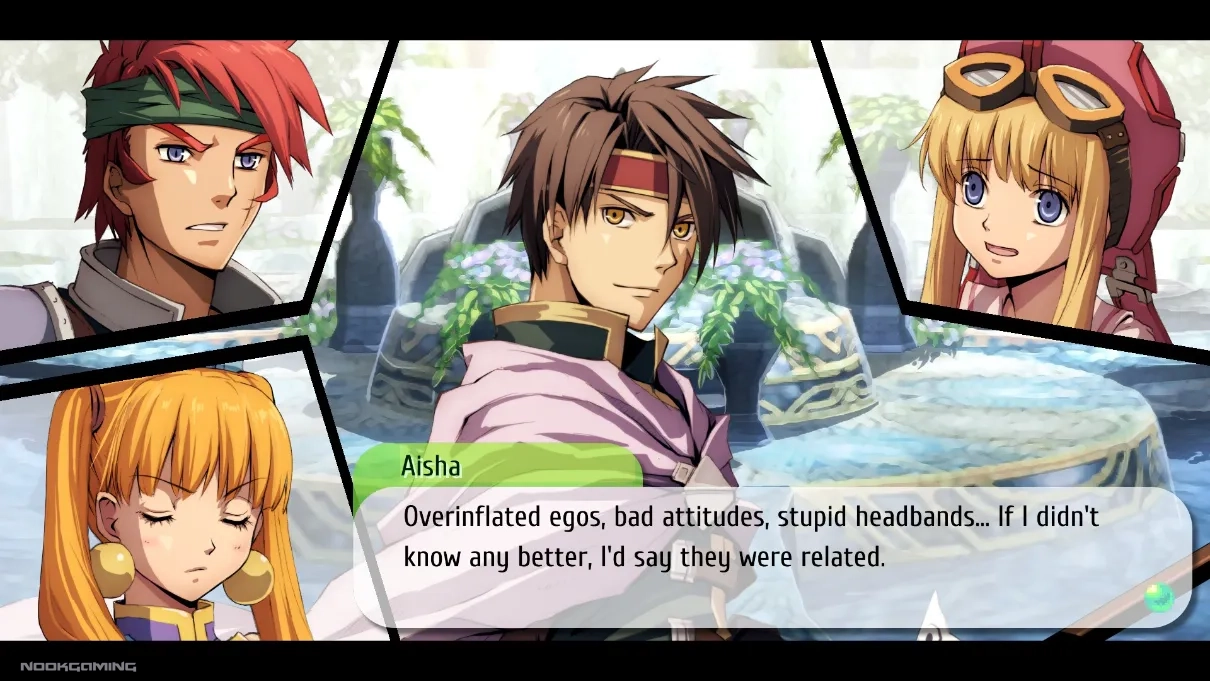
Something that crossover fighters often can do to still have an enjoyable story mode is feature fun interactions between characters. To that effect, there are quite a few enjoyable exchanges. Alas, there are a couple of caveats that inhibit more of this. For one, the game makes little effort to introduce these characters and their relationships with one another to anyone unfamiliar with them from their source material, and said material can already be a bit of a commitment to get into. You’ll see a lot of characters saying “Oh that’s such and such, look out” or “hey it’s her, why do I have to fight her?” without the game explaining the context behind those reactions. For another, Trails games spend far more time developing their characters and portraying their interactions and quirks than Ys Seven did with its relatively limited characterization of its cast. This means the Sky characters do more of the heavy lifting in providing the personality to the writing of the cast, and many of the fun interactions are based on the ones Trails fans are already familiar with.
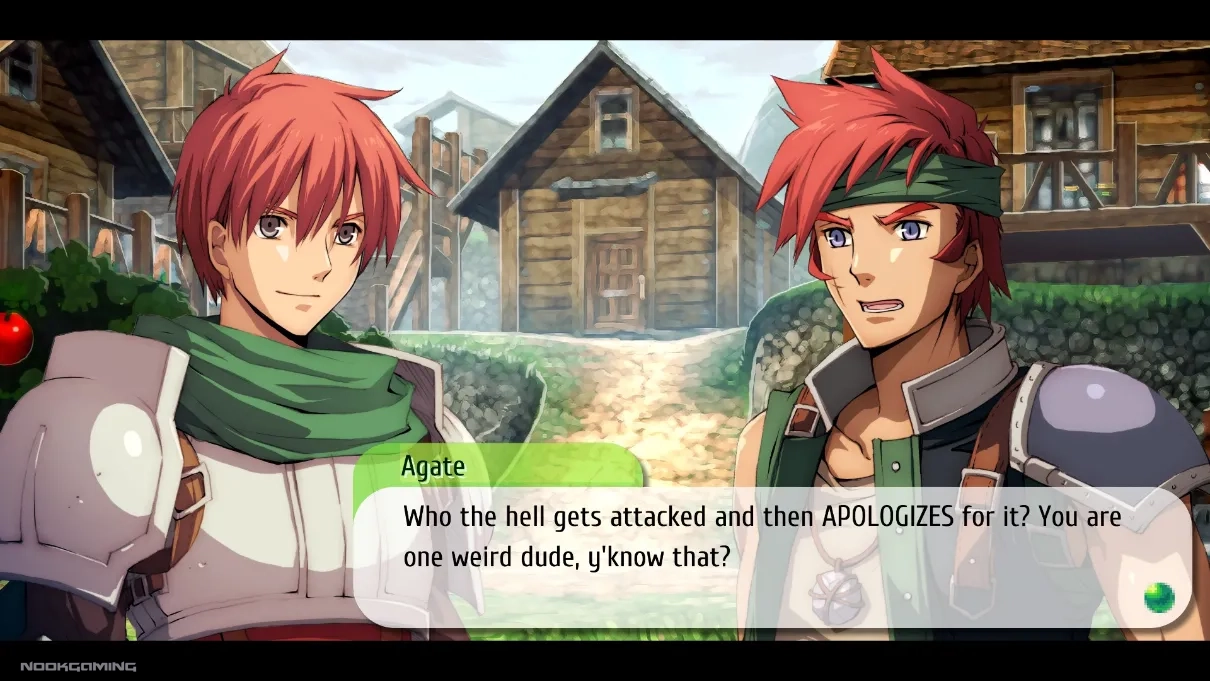
That’s not to say there aren’t some highlight moments here and there in the story. The Sky characters are already a delight when you’ve gotten to know them, even if their portrayal is comparatively a touch more shallow with the limited scope of this game. Olivier is always a fun character, no matter what situation he’s in or who he’s talking to, for example. There are also still some highlights with the Ys cast, as I found it quite funny watching scenes like Agate (Sky) and Geis (Ys) bickering, given their similarly standoffish personalities. Ultimately though, there are some obvious limitations to what a crossover between these two can accomplish, so the mode feels like a fair demonstration of what they were able to do with a limited scope.
If you want to play as the twelve characters who can’t be selected for story mode, you can also run through the standard arcade mode. This mode is comparatively barebones, just giving you a series of fights against AI fighters without much else.
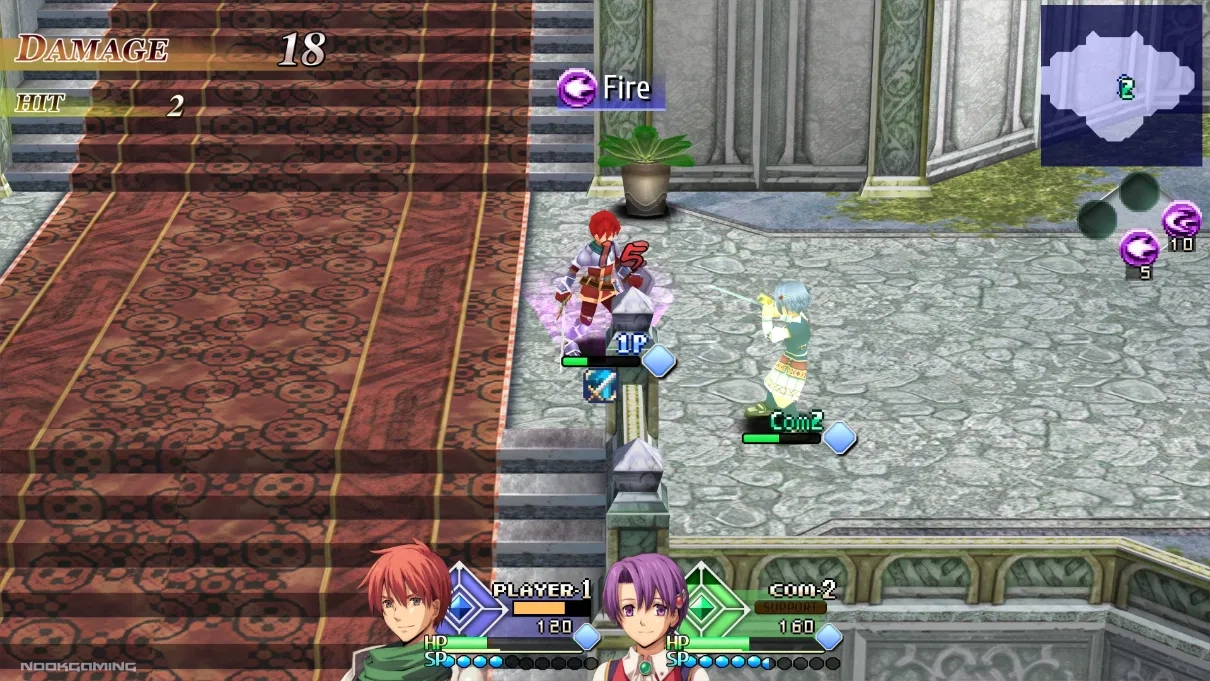
Fighting Right On
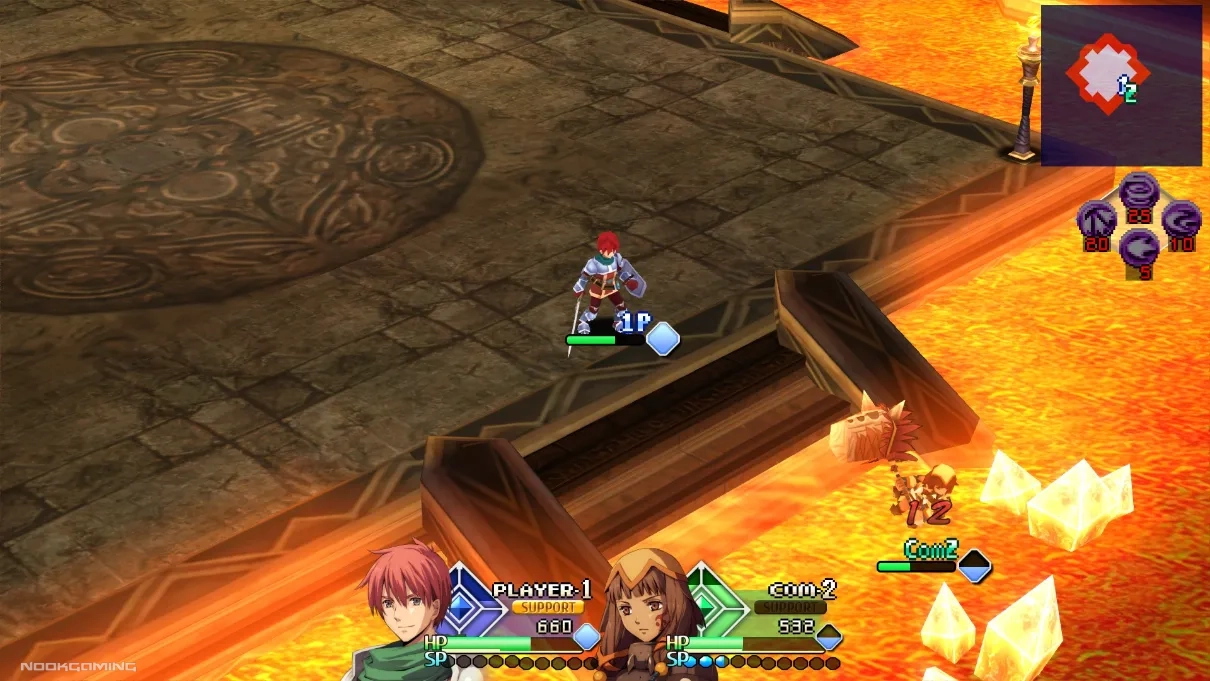
The core of combat in Ys vs. Trails in the Sky: Alternative Saga is a modified arena fighter version of the system found in Ys Seven, a system which Falcom would iterate on and modify with Ys Celceta, VIII, IX, and X. You can do basic attack combos, dodge rolls, charge attacks (which generate SP), and guard. A perfectly timed guard works like flash guards from those games and gives you a few bonuses, including mini-crits to your attacks for a brief duration. You can use four special skills of your choice by holding a button and pressing another button; these tend to be stronger attacks or offer additional buffs/debuffs, and these use the SP you build up through combat. You can also call on an Assist to give you a significant buff, and over time you build up a meter to use your character’s super skill (called Extra/EX skills).
The game uses fully 3D arenas with a wide variety of layouts and designs and even a few stage hazards, plus items that drop from breakable objects in stages. As such, there’s a jump button for movement and aerial combat, which spices things up considerably. To prevent pacing from drawing to a crawl via spamming of guard and dodge roll for hit-and-run tactics, you also have a stamina meter that depletes from overuse of those buttons. Pacing of combat is actually one of this game’s stronger points, with fights generally not taking especially long or feeling too drawn out.
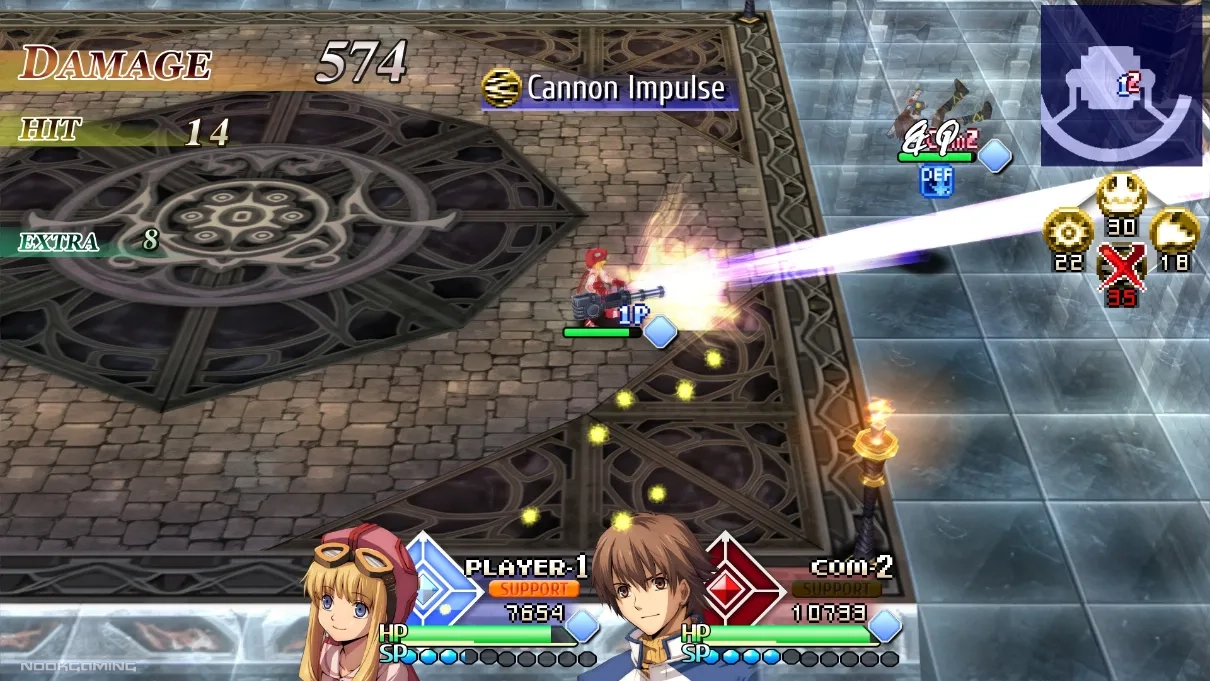
Falcom definitely didn’t have much history with making fighting games, and this game absolutely feels more designed to be for fans of their games rather than for fighting game aficionados. Still, I think they took a pretty solid system in Ys Seven’s and translated it to a fighter that’s rather fun to play. Mechanics like flash guard and Extra skills work rather well on the whole for a game like this. The game doesn’t feel like it was intended to be especially balanced, as some of the assists are downright broken and zoner characters with ranged options tend to reign supreme, but it doesn’t particularly need to be as there’s nothing like a ranked mode. There’s a lot of options to choose from to adapt a given character to your preferences, as you can set them up with different skill loadouts, assists, and even stuff like accessory equipment with their own various little stat perks.
Story mode has sort of an RPG progression system. This does mean that it’s an unorthodox place to try to develop your skills with the game’s mechanics, given that things aren’t held equal between you and the story mode opponents in the way they might be in a conventional fighting game where stats are more static. As you partake in battles, you obtain money and EXP to buy stuff and level your characters up. Even on Nightmare, if you’re struggling, it often just takes a better set of equipment or just grinding levels to power your way through, so it’s hard to really describe the story as a difficulty-driven challenge like Ys can often be. As this is more of a fighter than an RPG, opponent AI is a lot snappier, meaning combat involves you getting hit by smaller attacks that are harder to predict, rather than big, telegraphed enemy attacks you build your game plan around. There are a few bosses that feel more in line with Ys Seven foes, though these battles aren’t as robust as those of a standard Ys action RPG.
Ys vs. Trails in the Sky: Alternative Saga is its own game with its own way of doing things. Still, for as obvious as comparisons might be to stuff like the Dissidia Final Fantasy or Super Smash Bros. series, I think the most similar game I’ve played that comes to mind when playing it is actually that of the Power Stone duology, particularly with its stage design and certain mechanics. And any game that manages to check some of those boxes is pretty neat in my mind.
C’mon, Grab Your Friends
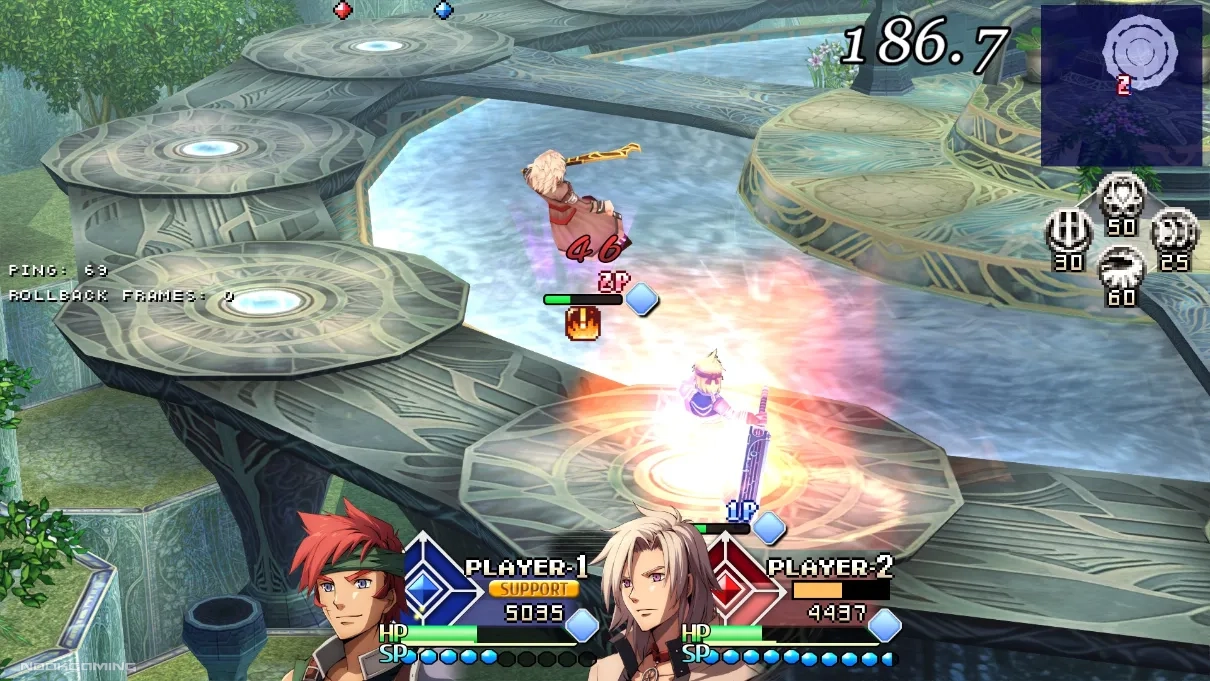
As a fighter, Ys vs. Trails in the Sky: Alternative Saga naturally includes multiplayer options. There are options for both local play and online play, and even the option for crossplay between platforms. Online play has rollback netcode as well. In the matches I played online, things felt pretty fun and smooth for me personally.
As a budget crossover title between two already somewhat niche JRPG franchises originally made in 2010, I don’t expect this game to have a particularly large playerbase given it’s drawing from a fairly small Venn diagram overlap section of potential players. The game also isn’t especially balanced, and there’s not anything like a ranked ladder, which is probably for the better in this case. If you wanna play multiplayer, you probably gotta do it old school to get the most out of it: getting together with friends (in a call or in person) and deciding on house rules for what’s allowed and what to ban. There’s at least already a fan wiki with plenty of documentation on some of the finer details of the game to look at. In my experience, this helped me see some of the interesting potential this game has, even if I don’t expect this game to be as easy to find online matches with years down the line as the AAA fighting games.
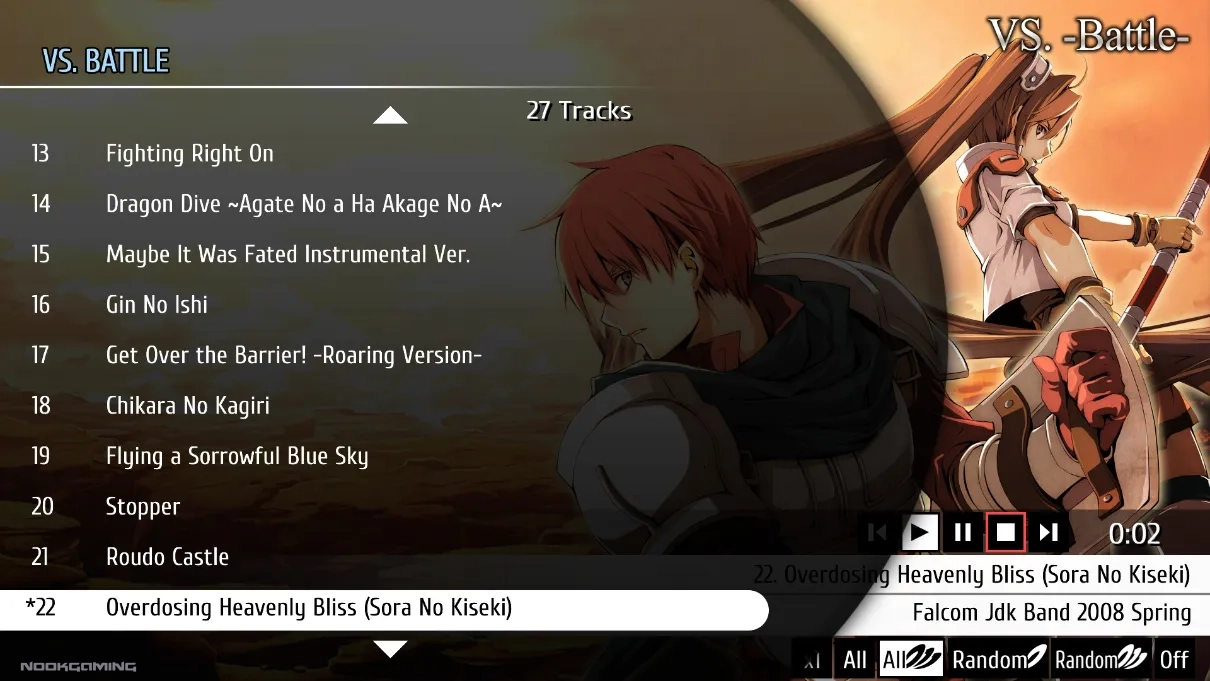
An especially nice perk of this game is that you can set any music to play in any stage in the game’s multiplayer and free battle modes. The music catalog for this game when fully unlocked is…well, calling it “stacked” might somehow be a gross understatement. There are an absolutely gargantuan 153 tracks covering decades of Falcom titles in this game, with plenty of grand arrangements and renditions as well as the original versions. With Falcom being a company well renowned for how much they put into their game soundtracks as is, you can bet that the hits keep on coming. There are of course many of the beloved epic themes (like my beloved Overdosing Heavenly Bliss and Genesis Beyond the Beginning) and the transcendant battle themes (Get Over the Barrier, Silver Will/Gin no Ishi), but there’s also a variety of lighter and goofier tracks (e.g. Amber Amour/Kohaku no Ai) if you so choose, even if they don’t particularly make sense for fighting. While it’s sorta cheating by having the pick of the litter across the company’s massive catalog, this game can seriously stake a claim to perhaps having the greatest soundtrack ever put into a fighting game, it’s that loaded.
Unfortunately, with all the stuff to unlock in this game, it takes quite a lot of time to get everything you would want to be able to really maximize your multiplayer experience. Most of the accessories and soundtrack options for multiplayer require you to accrue gold by playing the game a bunch and spend it in the shop before you can use them in any of the modes, let alone online. As such, there is a bit of a playtime barrier to overcome to get the most out of the game, and that can be fairly repetitive. I wouldn’t fault anyone for just downloading a 100% completed save file online at some point.
Presentation/Miscellaneous
As this is an upscaled PSP game, the visuals definitely show their age in terms of overall look. Thankfully, the aesthetic sense to combat and stages is still solid, as outside of the occasional clutter in the 4-player fights, I rarely found the game to have readability issues. It helps that this game runs at 60 frames per second in this version over the original PSP game’s 30FPS. There’s a wide variety of stages to play on that bring forth plenty of nostalgia if you’re already a fan of these series. Still, while I generally like the character designs of Falcom games from the era and think most of what’s on display here looks nice, I did notice at least a couple of character portraits have something of a strabismus/misaligned eyes, which feels a bit off.
You can choose between the original Japanese audio or newly dubbed English audio. Most of the characters who’ve had steady voice roles maintain their voices from their most recent performances (Bryce Papenbrook still voices Adol, Stephanie Sheh still voices Estelle, Matt Mercer still voices Olivier, etc.) I was particularly impressed with Courtney Lin’s voice for Renne in this game, given she had yet to portray the character for a Sky game. The one oddity for anyone coming off Trails in the Sky 1st Chapter is the significant difference in voice for Loewe, which I imagine was due to this game and that one handling casting at a similar time under different localization directors. Beyond them, plenty of characters who hadn’t yet been fully voiced (like most of the Ys Seven cast) are here, and I think the voice acting on the whole in both audio tracks is solid for what this game is.
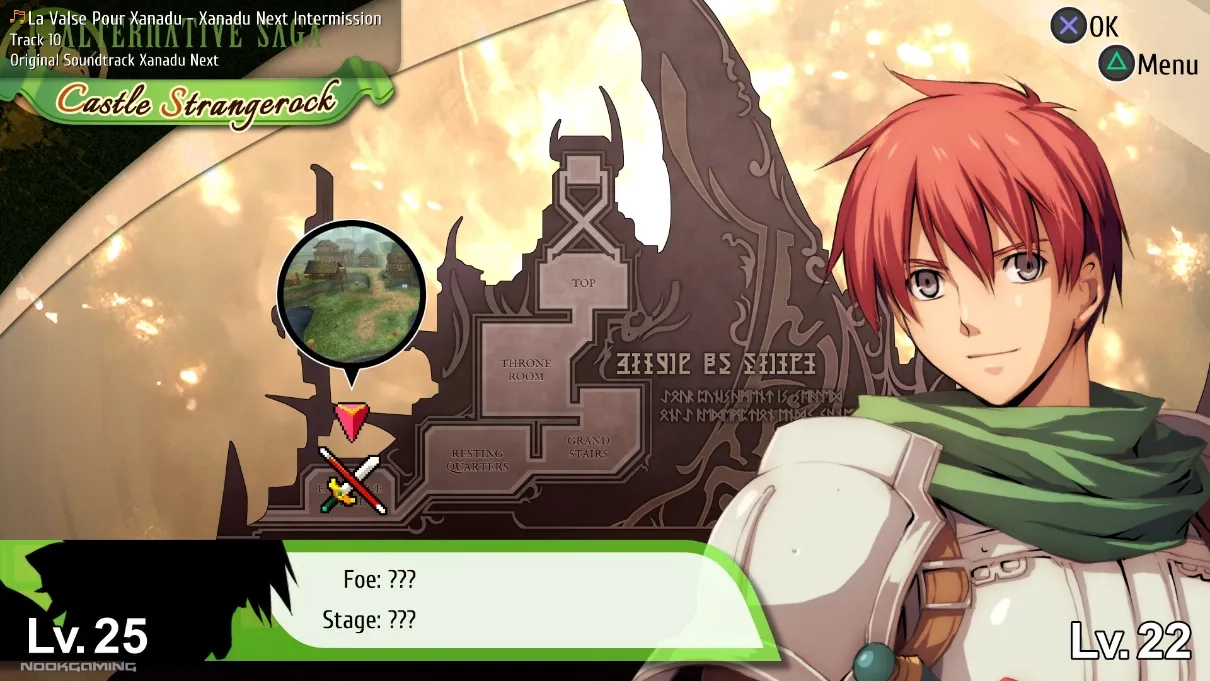
The game does feature auto-saving, although story progress still requires manual saves. This can be a touch awkward, as I at one point forgot to save my story mode progress when exiting to the title screen, so I had to redo a few fights, which were substantially easier the next time because the game saved my character levels and item purchases but not which fights I had done. So make sure to remember to save your game.
Most of my experience performance-wise went without issue. I occasionally ran into troubles with the voiceover and had the game crash on me a couple times, though both of these occurred after I alt-tabbed out of the game for long periods and then went back into it. This happened relatively infrequently, but enough to note.
Verdict
The biggest barrier to recommending Ys vs. Trails in the Sky: Alternative Saga is not really a functional one. The game wasn’t made to be the most balanced experience and it has many of the issues that typically limit crossover titles in their ambition, but it’s still made with the goal of fun in mind, and it’s chock full of goodies. This is also far from a rush job of a port to modern systems, given the game features dual audio, maintains most of the existing English cast of these franchises, and they put a lot of work into its online features. Indeed, as someone who played the original PSP title many moons ago, this is more than I could have hoped for with a 2025 rerelease of this title. Some minor hiccups aside, it is a genuinely excellent remaster of a rather niche game.
Rather, it’s the fact that this game conceptually feels made for a fairly small number of people. This one is for Falcom fans specifically, and there’s a lot of appeal to them here, even if it doesn’t break a ton of ground for either series. For anyone outside that space, it’s significantly harder to recommend this game. Which is a bit of a shame, because this game is genuinely quite fun for what it is. The implementation of 3D Ys mechanics into a fighting game works better than it perhaps should, given this is a company not known for making fighting games, and it has perhaps the best assembly of music of the company’s illustrious catalog.
If you aren’t already a fan of Ys and Trails, this game can be a tougher sell, much as I recommend getting into those series already with all my heart. If you are a fan of Ys and Trails already, this is a worthy title to fit into your collection. It’s a neat little time capsule of Falcom’s history, and a fun experience on its own for what it is.
YS VS. TRAILS IN THE SKY: ALTERNATIVE SAGA IS RECOMMENDED

If you would like to see more fighting games, you may be interested in our review of Dragon Ball: Sparking! ZERO. Or perhaps you’d like to take a look at our coverage of the Nihon Falcom JRPGs including Trails in the Sky 1st Chapter?
Many thanks go to refint/games for a PC review code for this title.
Been playing games since my papa gave me an NES controller in the early 90’s. I play games of almost all genres, but especially focus role-playing, action, and puzzle-platform games. Also an enjoyer of many niche things ranging from speedrunning to obscure music from all over the world.