After the not-quite conclusion of the Trails of Cold Steel arc, Nihon Falcom put forth one final game in the Erebonia saga to tie up some loose ends before finally moving forward with the next arc of their long-running Trails JRPG series. The Legend of Heroes: Trails into Reverie serves as a sort of sequel-slash-bridge game between the Cold Steel and Daybreak arcs, as well as something of a capstone for the series’s three arcs leading up to it. And given this game has been something of a gap in our series reviews, I figured it’d be as good a time as any to plug that gap and talk about Reverie before the series’s next new release.

Disclaimering
One primary goal of The Legend of Heroes: Trails into Reverie is wrapping up many of the loose narrative ends of previous arcs. Now, I usually do my damndest to conceal any sorts of spoilers within my Trails reviews, whether it be events within the game itself and in the surrounding games or even the appearance of characters from previous titles. Here, however, it’s almost impossible to talk about this game or use screenshots from it without at least some minor details sneaking through. I will keep away from too many big event spoilers, but it is quite difficult to talk about the plot of Reverie without discussing what leads into it.
Reverie has an absurdly large playable cast and it is very easy to get lost in the who and what with this game without at least prior context from games like Azure, Cold Steel III, and IV. As has been the case for a while, a section of short story summaries of both Crossbell games and all four Cold Steel titles are available from the title screen, with a lot more detail on Zero and Azure especially. Still, those don’t quite compare to what you get from actually playing the games, and some details will be lost otherwise.
Furthermore, unlike most JRPGs, your party starts at around level 100 in Reverie and your resources from the get-go are commonly at the power level of mid-to-late game resources of previous games. Falcom really expects you to be quite familiar with the Cold Steel combat system by this point, and apart from a few standard tutorials, they push you into the thick of things rather quickly.
The More They Stay The Same
Given where it is in the timeline of the series and its ultimate purpose, The Legend of Heroes: Trails into Reverie is something of an in-betweener. It’s not particularly concerned with offering a ton of shakeups to the series, though it’s not devoid of additions entirely. In several ways, this game is a lot like Trails in the Sky the 3rd; it carries more expectation that the player is coming off of what came directly before, and even shares a few core aspects in its setting and structure, which I’ll get into more detail on.
I typically would talk narrative before gameplay, but I’ll get most of the latter out of the way here. There isn’t really a ton to say about this game’s combat system itself because it pretty much follows the same system of Cold Steel III and IV. And because it already is hard to recommend without those games, my thoughts on combat are roughly the same as with those games (particularly Cold Steel IV, since thankfully this game doesn’t have bosses with the same penchant to spam self-recovery like in Cold Steel III). Because the game doesn’t feel the need to ease you in all that much anymore, it gets things rolling quicker, which is nice. To keep my thoughts on the combat brief, I had a good time because there is a fun core system here, even if I’m not fond of the quartz system in the Cold Steel arc or the addition of Brave Orders since Cold Steel III.
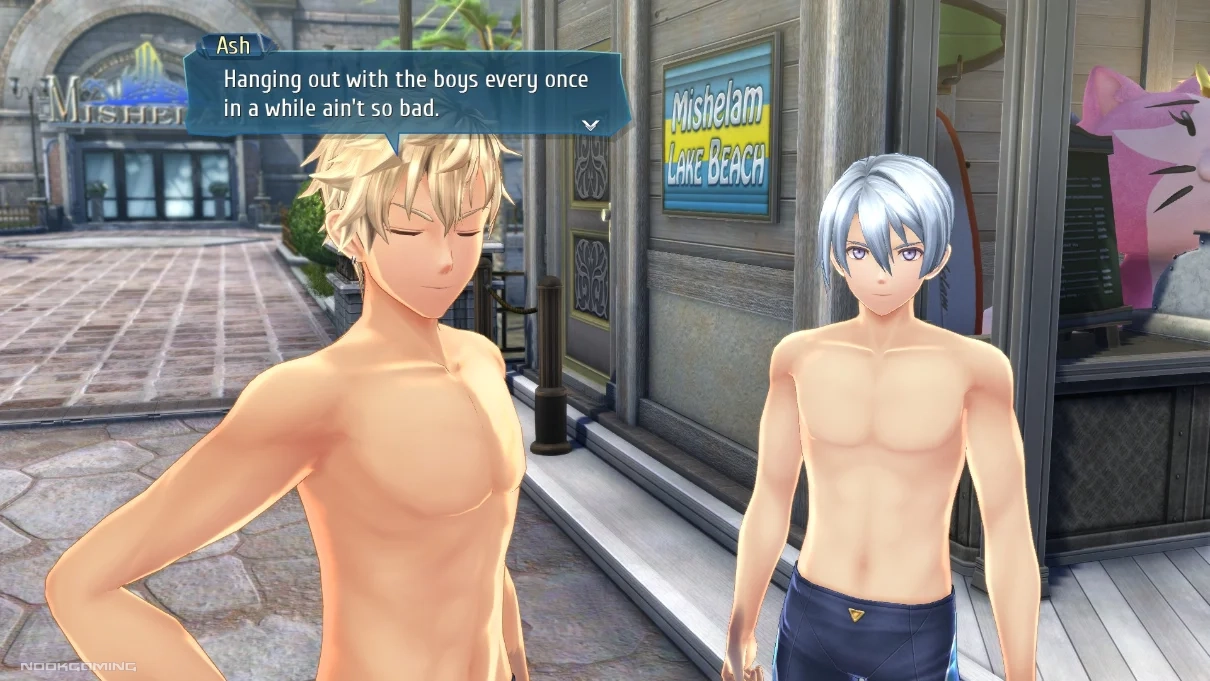
Even by the standards of this series, this game’s cast is gargantuan. Several characters from earlier titles are also voiced in English for the first time in this game, and there are also a handful of voice recasts here (some of which admittedly sound significantly better than others). For the most part though, I appreciate the consistent continuity of the cast in both languages, so pick your preferred voiceover. I honestly think they’re both fine.
Much of the soundtrack is also rehashed from previous Trails games, mainly Cold Steel III and IV. There are some new tracks as well, and a couple of good tunes to add to the collection. To be honest though, I think Trails into Reverie was a marker for when Nihon Falcom’s games really started declining in soundtrack quality and became more forgettable than iconic. A lot of the battle themes in this game sound like they’re trying to capture what a previous game did, but are significantly worse at what they’re going for. This is also the point where the overuse of some rather poor guitar samples/VST plugins from at least one of their composers really started to become both more prevalent and considerably grating, a problem that only got worse with titles like Daybreak.
Cold Steel the 5th?
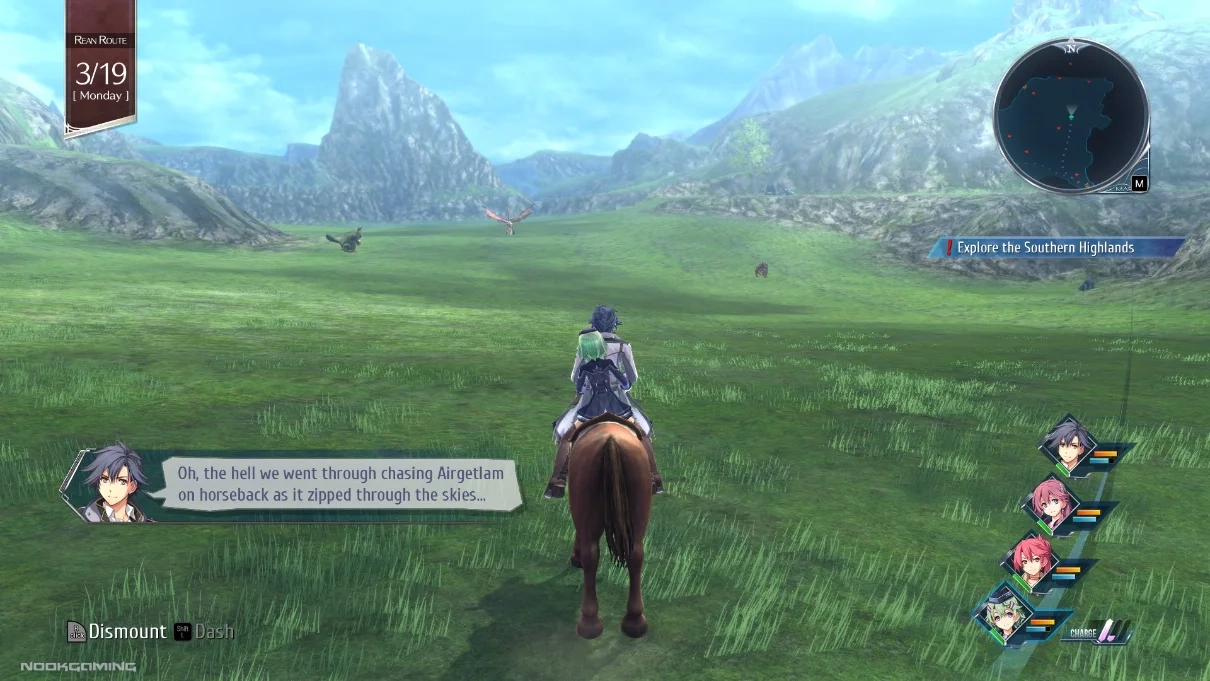
The Legend of Heroes: Trails into Reverie is set shortly after the events of Trails of Cold Steel IV. Rather than simply a continuation of the Erebonia arc, it follows more broadly in the aftermath of everything that happened in the previous six games. Similar to Trails in the Sky the 3rd, it carries expectations that you know what happened in the games before. It also provides plenty of “what happens next in the life of X character” scenes, both in the main plot and in the game’s enjoyable optional Daydream episodes (which are very similar to Sky the 3rd’s Sun/Moon/Star doors).
This game was built on a relatively minimal amount of new assets. It’s the last game of the engine Nihon Falcom used prior to Trails through Daybreak, so it maintains the same look as Cold Steel III and IV, though their cutscene direction is still another slight step up from its predecessors. Most areas you visit are ones you should be adequately familiar with if you’ve played thus far, which I’d be surprised if you didn’t before booting this game up.
What is relatively new, however, is the structure upon which it operates. Rather than one linear story following a main character, Reverie is largely split into three stories up until its final act, those of protagonists Lloyd, Rean, and “C”.
It Tolls For Thee
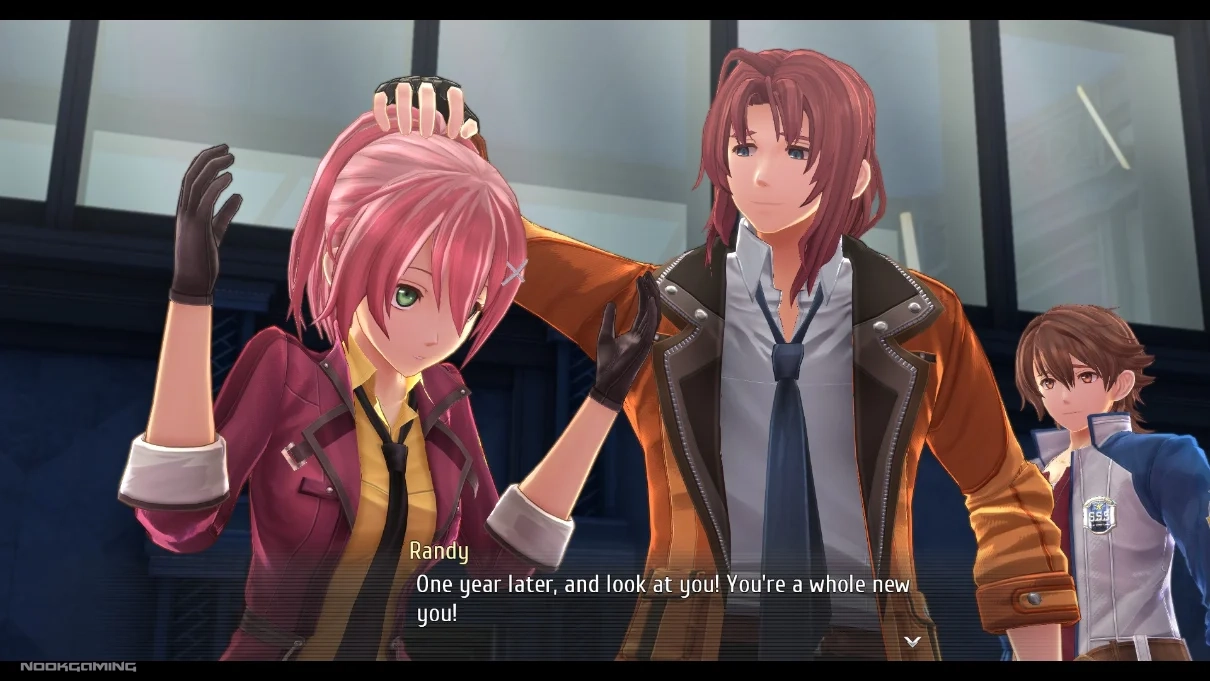
The story following Lloyd Bannings and the SSS in The Legend of Heroes: Trails into Reverie is a long time coming. Trails to Azure ended on a bit of an inconclusive hook that eventually leads into the later Cold Steel games, and those still never quite finished the tumultuous story of the micronation of Crossbell. Crossbell regularly takes center stage in Reverie as the site of a good amount of the game’s events. While the fight for Crossbell has been long and arduous, several great strides have been made. Unfortunately, it can never be that easy, as something once again threatens the country that just can’t seem to catch a break.
As much as I love the SSS, I think they got a bit of a raw deal in this game. Most of the cast have already experienced their arcs ages ago (and had them constantly brought up throughout Cold Steel), and a lot of Lloyd’s story just rehashes the motions and beats they already went through in games like Azure. There is at least a neat little theme throughout of how the SSS might have been depended on a bit too much by Crossbell as their would-be savior, and how it takes everyone to really push for a brighter tomorrow. Sadly, it rings a touch hollow given everything that ends up transpiring in this game. As has been the case of the last few games, Reverie has a lot of contrived situations that seek to further escalate the scope of the greater narrative, but which don’t actually make the overarching story between games a ton better, and Lloyd’s side bears the bulk of this.
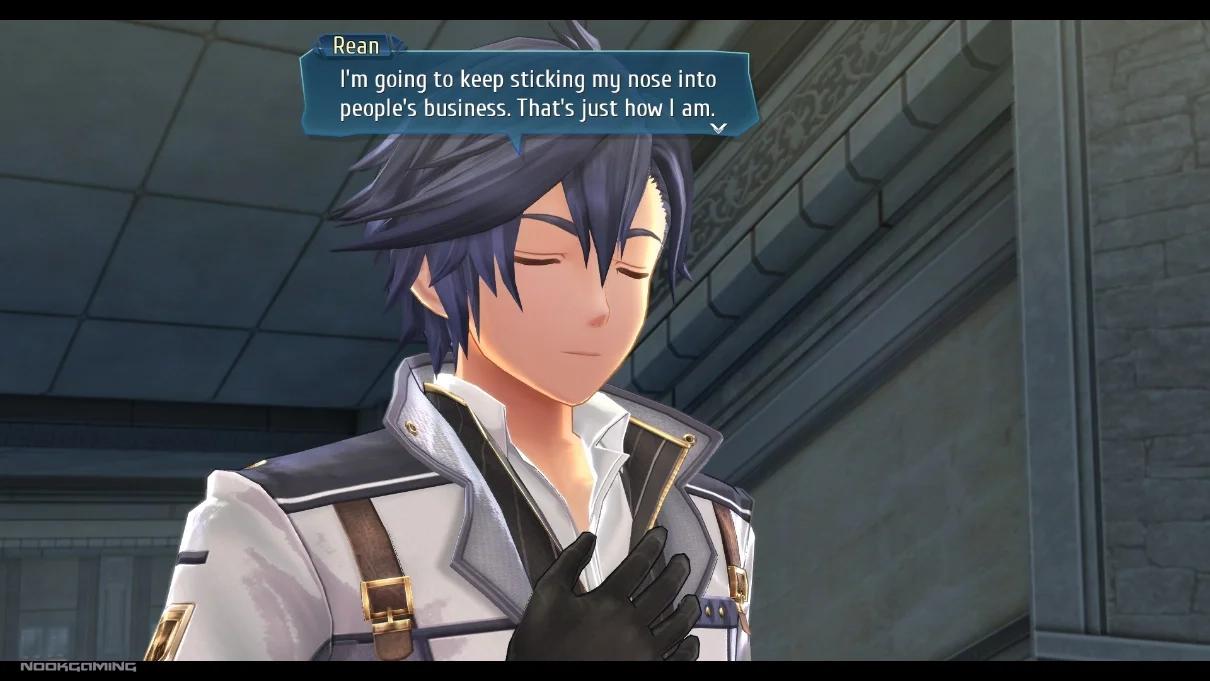
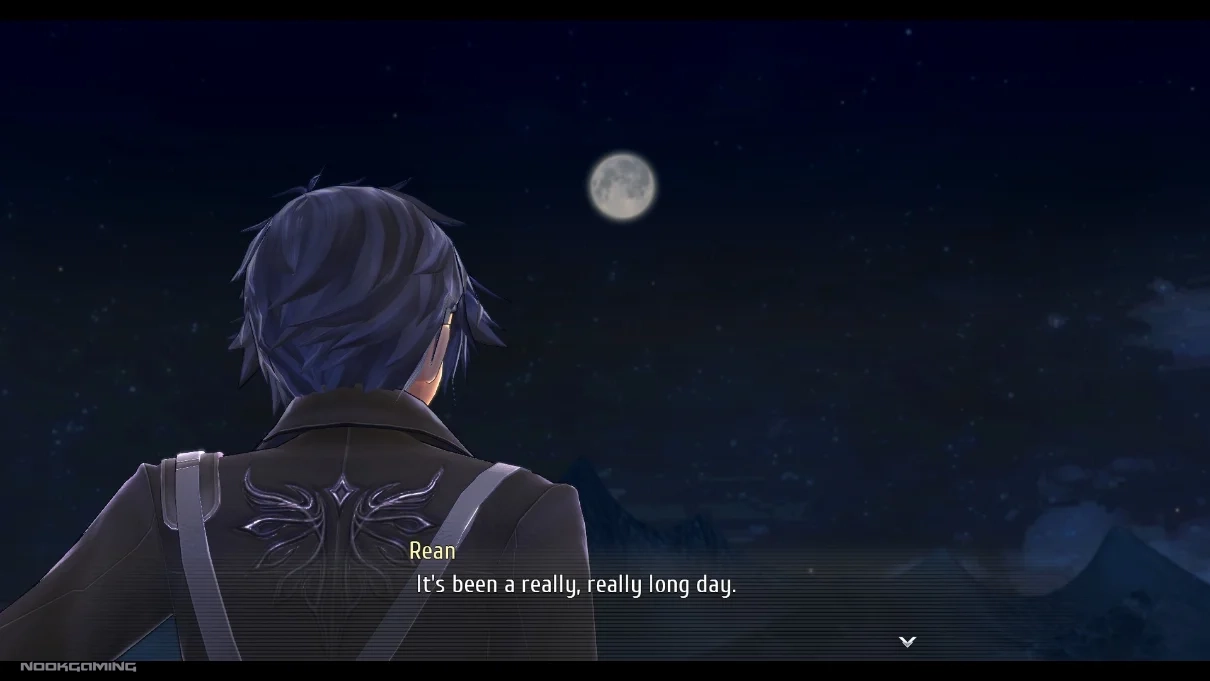
Of the three stories, the one following Rean Schwarzer, Class VII, and the Erebonian cast is the least focal for much of the runtime of Trails into Reverie until pretty late in the game, which makes sense given they just had four games in a row in the spotlight. They play a bit more of a supporting role in the events for much of the story, investigating the goings-on and being involved, with their story focusing more on the aftermath of everything that came before.
One of my problems with the Cold Steel games was that despite the increasing scale of everything going on, it often felt like there wasn’t much in the way of meaningful consequences. To an extent, Reverie at least presents some amount of reckoning with the consequences of everything that happened before, showing and stating that not everything is all hunky dory now and that there is still work to be done in moving forward. That said, there isn’t a lot, and it also doesn’t have as much weight attached to said consequences as I would have hoped, still sweeping a few things too easily under the rug. Like Lloyd’s story, it has a few good scenes here and there (even with Rean, who I am otherwise tepid on), but the narrative here doesn’t do a ton for me. Honestly, my favorite scene of their story was the one with the robot Mishy, a rare instance where a game feels like intentional self-parody without being truly obnoxious or insincere about it.
The plot of this game once again has the issue of just not being particularly convincing with its own sense of danger, no matter how much it ups its scope. While Reverie doesn’t quite reach the level of ridiculous contrivances of a Cold Steel IV, it definitely still has its share of eye-rolling shenanigans with certain plot elements and its own powerscaling and ambition creep. Reverie feels like something of a microcosm of the Cold Steel arc as a whole, storywise. There’s ambition in its scope here, but it often feels like many of its plot elements and story beats are contrived for the sake of grandeur in a way that takes away from the overall story.
C is For Connection
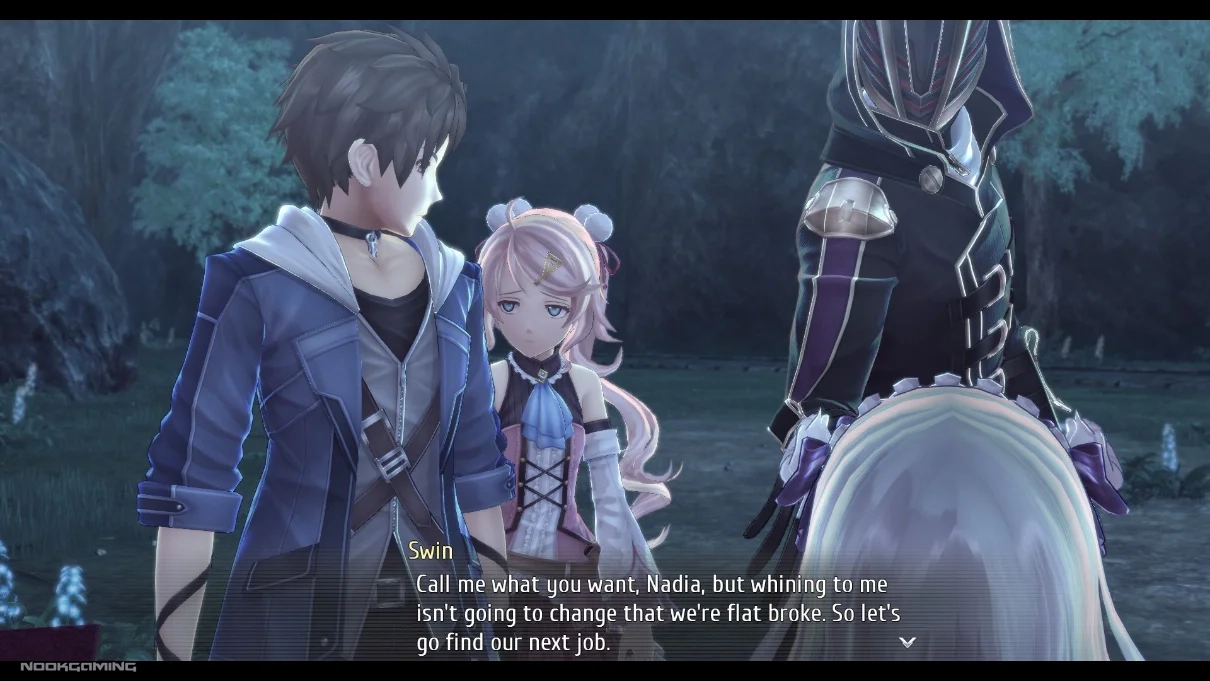
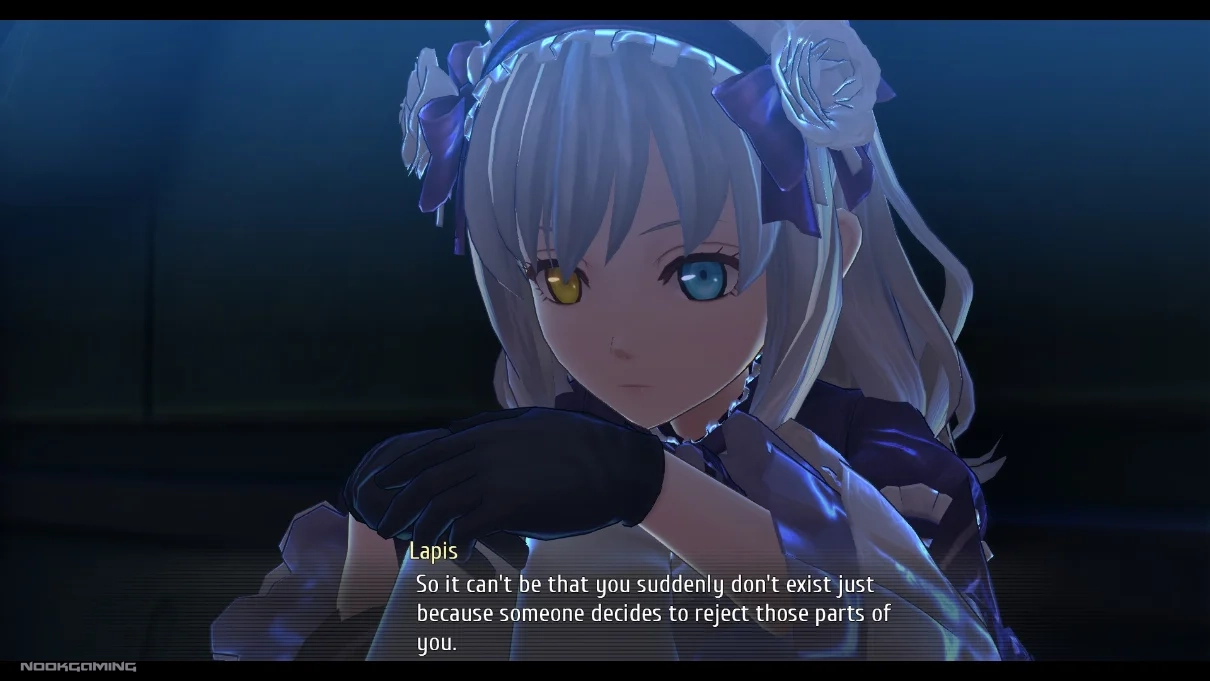
The final story of the three follows the group of a mysterious masked man going by the moniker “C” (not the first in the series and definitely not the last). Along his mission, he hires the young duo of Swin Abel and Nadia Rayne, and the group is completed by an eccentric and somewhat haughty doll automaton named Lapis. This group operates perpendicular to the other two, at times crossing paths, and generally they are on quite a different wavelength than the teams of the other two stories. By a fair margin, C’s story is my favorite.
For one, most of the focus is on newer characters rather than bringing back the old crew for another ride around the block. Swin and Nadia have one of my favorite introductions into the Trails series, given that they’re the subjects of an in-universe novelization that you can actually read throughout Cold Steel IV (or the summaries section of this game if you didn’t bother collecting all the volumes of Three and Nine). This novel series amusingly plays into their characterization and utilizes an existing form of story lore to give you their backstory in a different way so that they don’t need to dawdle on it from the get-go. The two make for a fun straight man/funny girl dynamic in their banter, banter which is further enhanced by the presence of Lapis who oozes moxie and ego. Legitimately one of my favorite scenes in this entire series comes when Lapis and Nadia are just hanging out together for an afternoon on the town, offering a rare scene of two funny personalities without a straight man to respond to their escalating quips and antics.
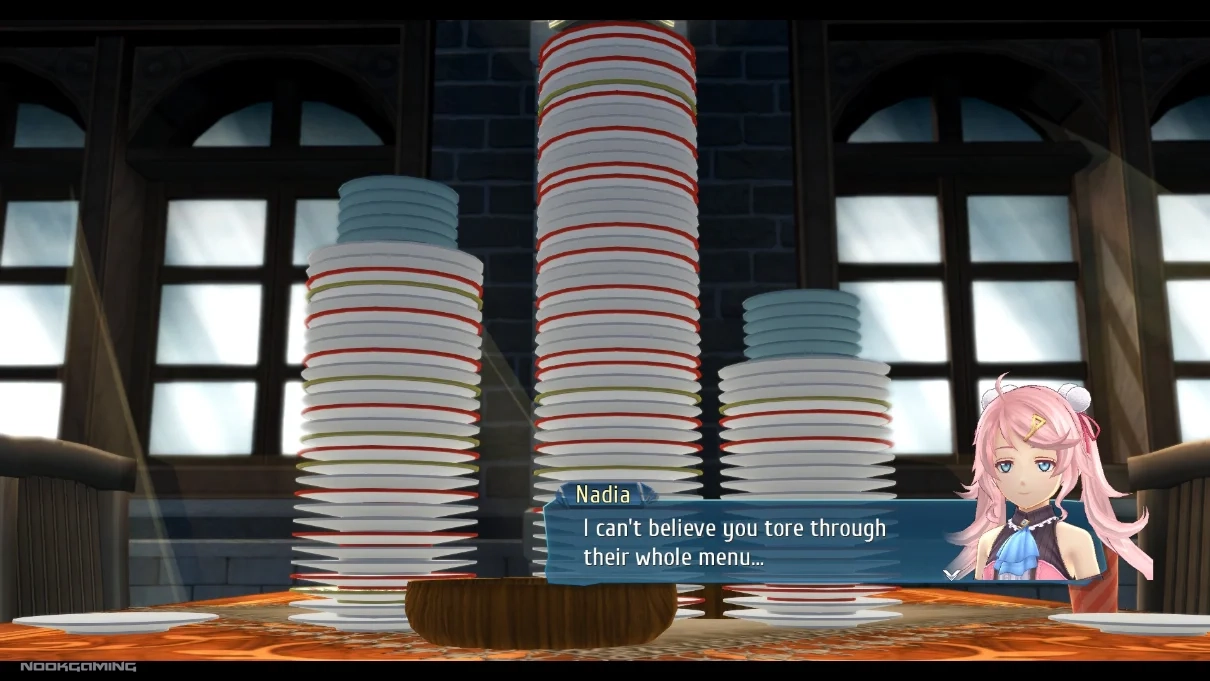
Like with many Trails games since Trails to Azure, C’s story offers an example of how this series narratively still maintains my attention through the micro rather than the macro, i.e., the individual characters and the stories happening in each setting rather than the main overarching plot. The primary story of Reverie isn’t particularly great, especially coming off the mess that it follows and is still relatively anchored to, but I still enjoy many of the character stories and interactions. While all three stories have their good moments, C’s story has the most, and I’d argue the best, because of the particular characters being focused on. Pretty much every significant character within C’s story has some degree of sin weighing on them, and how their stories are handled and how they come to terms with everything makes for many of the most compelling scenes within the entire game. Unlike the other two, this story also keeps its cast more condensed and focused, with only a handful of secondary characters joining in.
These Dreams That Sleep
Along with the three intertwining stories, the other primary gimmick of The Legend of Heroes: Trails into Reverie is found in the True Reverie Corridor (TRC), a sort of pocket dimension all three parties gain access to. The TRC makes for the most blatant comparison this game gets to Trails in the Sky the 3rd, given its intentional resemblance and similarities towards that game’s setting of Phantasma, even if it’s not the main setting this time. It also features many optional scenes, which tend to provide their own little vignettes of characters living their lives more divorced from the main plot of the game.

The dungeon contained within TRC is procedurally generated and can have its design reshuffled from the base area. There are some neat mechanics to it, but Trails games already don’t typically have very standout dungeon design and randomizing it doesn’t really add a ton to that element otherwise. It is neat that it functions as an environment to completely mix and match your party, although there’s just so much to manage on that front that I imagine most people will pick their favorites and/or the ones that they find best get the job done and stick to that squad.
I don’t think Reverie quite captures the magic of Sky the 3rd in how it uses that game’s approach with the pocket dimension setting, given 3rd was considerably more dense and deliberate with a lot of what it was going for. Still, there’s plenty to enjoy here. It’s fairly fun, even if the randomized dungeon design is not particularly standout. It also hosts the series’s first true effort to feature a postgame, one which offers a surprising amount of additional stuff to do even after the credits roll. Though your mileage will vary on said postgame’s actual quality, as I personally find some of the additional scenes to do more harm than good to the actual narrative of the game and the series.
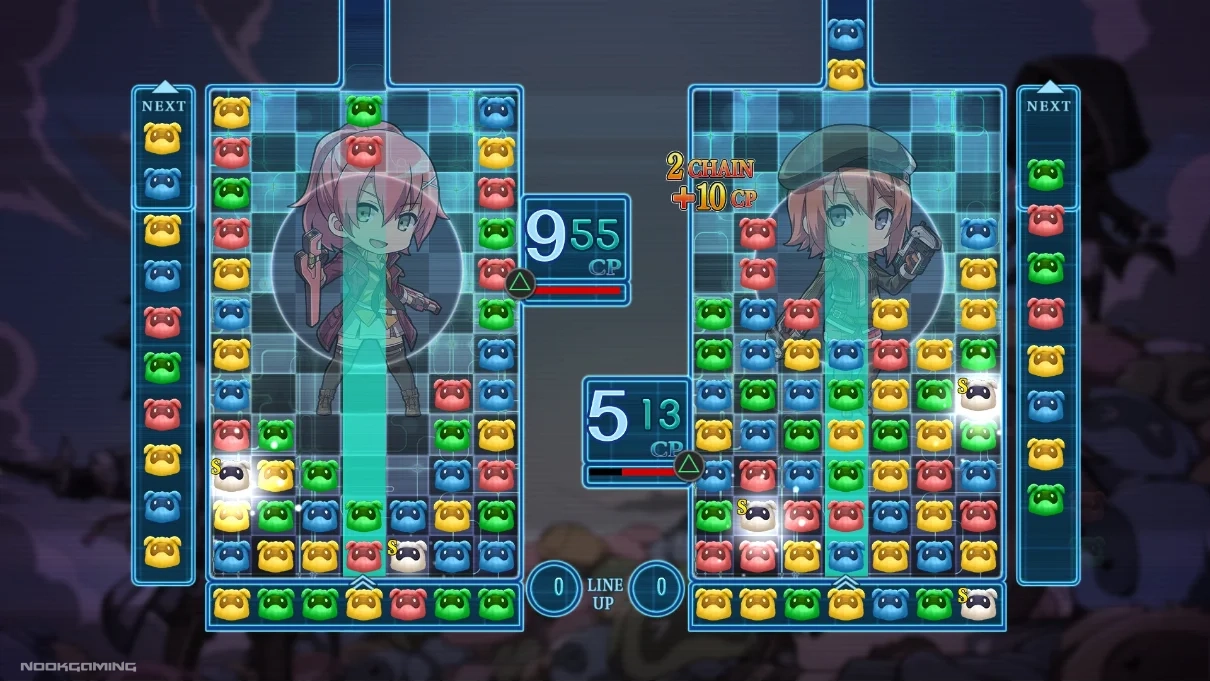
The base area is where a lot of the fun little minigames can be found, including staples like Vantage Master and Pom Pom Party, plus additions like a goofy magical girl anime-themed rail shooter. There are some pretty fantastic rewards available for playing through the various components of TRC that you can take into each character’s story, so while it doesn’t have a ton of relevance offhand for the game’s main narrative, it is still quite worth doing. The ability to access it with the press of a button is also one of many things that breaks the game’s balance outright, given you can quickly access the game’s powerful shops and the Celestial Tree for fully healing everything (once powered up completely) from almost anywhere.
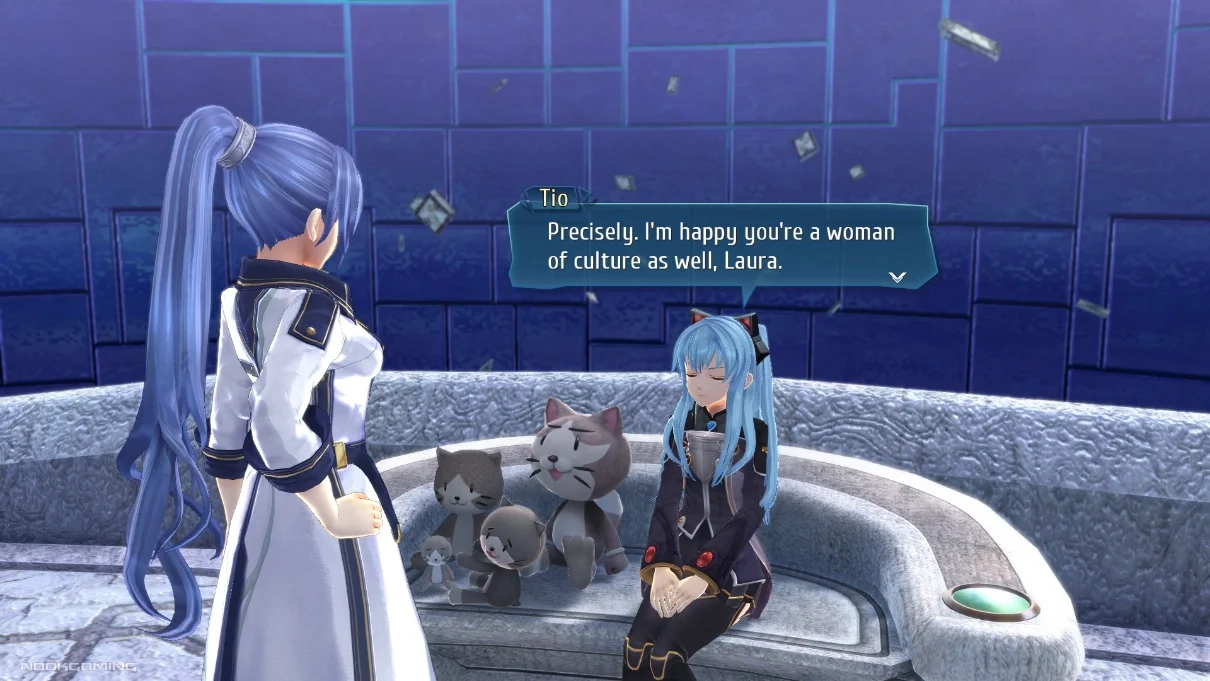
Perhaps what I appreciate most about the TRC is how many charming character interactions you’re able to witness. As you progress through the story, the bands of party members tend to disperse into little groups in the base area and make chatter amongst each other. Even characters who seldom have had a reason to interact with each other will be yucking it up over their similar experiences, personality traits, interests, and so on. This is something the Cold Steel series in particular was often pretty lacking in and desperately in need of, especially in its early installments. These exchanges helped me appreciate and enjoy the cast of this entire series even more, including several characters who I didn’t even particularly like throughout the Cold Steel arc. For a series where characters tend to be a high point and a big reason to be invested, watching the casts intermingle and make even mundane chatter makes that investment feel all the more rewarded.

Valley of the Shadow
I played The Legend of Heroes: Trails into Reverie on its Abyss difficulty, which is made to be harder than Nightmare. I do not recommend that most people do this unless they are experienced with the series and are fine with constant equipment upkeep and potentially looking at the game over screen constantly. It’s up there with Sky SC and Azure on their respective Nightmare difficulties for the thinnest margin of error in the series, especially early on when you don’t yet have as many game-breakers (or haven’t spent much time on figuring them out yet).
Enemies hit incredibly hard. Even the most basic of enemy mobs will wipe you out in a handful of turns if you don’t use things like buffs and Brave Orders. Enemies also have a ridiculously high speed stat; it’s not uncommon for enemies to get multiple actions before you ever get your first, and they regularly get several times as many actions as you. If you want to have more ability to mess around, I’d recommend an option lower than Abyss.
On one hand, there’s a certain amount of fun to be had with this, and I’d say I had more fun with Reverie’s combat than I did any of the Cold Steels, partly as a result of this. It forced me to really think about my options and at times come up with rather unorthodox strategies, as what might work for one fight doesn’t necessarily work for another due to how often the game shuffles around who and what you have access to. It is more likely than ever you will die if you use high delay actions like S-crafts (your powerful interrupt skills) recklessly, as enemies might get four or more actions before your characters get another one. I was forced to use them a lot more carefully than in previous Cold Steel titles in many instances.
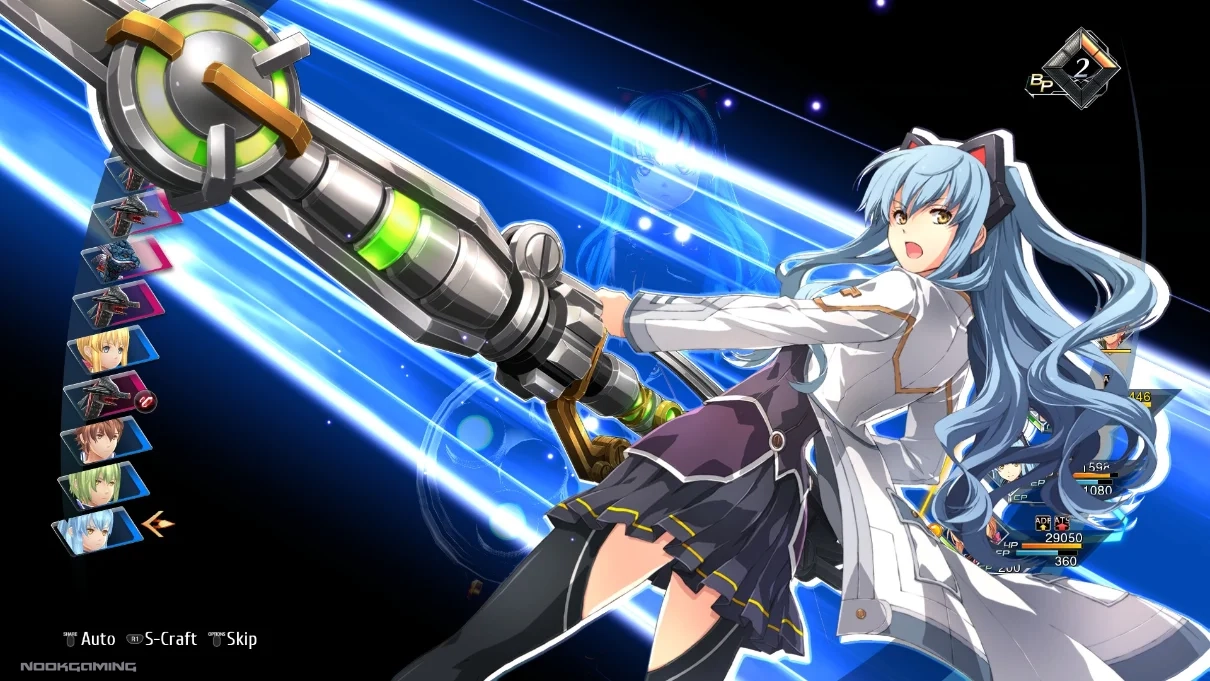
On the other hand, the need to really abuse the game’s mechanics to stand much chance serves to highlight the fundamentally busted nature of the combat system since Cold Steel III. Brave Orders alone are so fundamentally broken that a difficulty that actually all but forces the player to use them constantly to survive will inevitably be completely warped around them. For example, you get a Brave Order that reflects nearly every enemy attack in the game for the next four of your turns. If enemies get four turns for every one of yours, this not only neutralizes but outright weaponizes the enemy’s speed stat against them to have them slowly beat themselves to death, even after Falcom greatly nerfed reflect damage. While this alone will typically not beat bosses for you outright, tactics like this in tandem with other exploitable and broken mechanics utterly shatter any remote concept of game balance. Balance is not the be-all-end-all to JRPG combat, and Trails games are no stranger to broken mechanics. And sure, the gamebreakers become so abundant that they feel almost core to the experience in this case, rather than a loophole rewarding intuitive players, and the exploits aren’t always the most fun to use. After a point in the game, even on Abyss, fights tended to only be challenging when an effort was made to limit a certain resource.
Furthermore, because of the constantly shifting structure of the game, I regularly had to swap my limited powerful resources (e.g. powerful unique accessories and quartz) around. This game has just way too many playable characters (around fifty) for it to not feel like an arduous slog through menus to try to keep everyone up to snuff. While not the first RPG with a roster this large, Reverie is perhaps the one with the most slots for resources to allocate to each character between their equipment and quartz. The amount you can put on each character (and often will have to) creates a much more granular experience than even something like a Suikoden or Chrono Cross with their similarly large casts. Trying to shop becomes a nightmare because you have to scroll through dozens of characters to find the one you actually want to compare what they have on. There’s a smorgasbord of options to experiment with, but it felt discouraging to actually do so very often when it takes so much time just to adjust everyone’s equips.
Gestalt
If there’s one word that describes my feelings on The Legend of Heroes: Trails into Reverie, it would be “salvage”. Despite my hangups with the game’s systems and overly cumbersome menu/equipment demands, I felt this to be the most fun game with the Cold Steel combat system. And despite how messy I feel the Cold Steel story has been for much of its run, there’s a lot that this game does to set things well going forward, as well as help me appreciate the casts of the games thus far. In other words, I think this game helps to salvage some of my good will towards the series that started to dwindle during the Cold Steel arc, one which I have long had conflicted feelings about.
What’s most regrettable in this is that it took all this time to get here. Reverie is harder than almost any Trails game to recommend by itself because of just how much it depends on prior games for context. As much as I would love to say that it’s the best game of this set outright, I also don’t think it works nearly as well if you aren’t coming off everything that came before it. While I greatly love how many enjoyable character interactions this game facilitates through its vignettes and through the TRC, it doesn’t quite work as well if I’m not already quite familiar with its cast. This game is a welcome splash of cold water and a much-needed band-aid for a decent share of the woes of the previous games, though it is impacted more significantly by where it lies in the series than perhaps any Trails game yet. As a result, however, there really isn’t much else quite like it to actually play, and I mean that largely as a positive.
Verdict
The Legend of Heroes: Trails into Reverie ties a neat ribbon on the much-prolonged and at times rough arcs of Zero/Azure and Cold Steel. It has plenty of issues of its own, including a relatively weak main plot, gradually declining soundtrack quality, and combat that reeks of excess by this point through feature creep. However, it uses everything the series has built up thus far to make for an experience that is dense with fun things to do. There’s a lot here I was hoping to see more of with the previous Cold Steel games, so better late than never on that front.
Trails into Reverie is a hard sell if you aren’t already a fan of the series and haven’t played a good amount thus far (even the much more turbulent Cold Steel IV), which hurts it more than many games in the series. But it does quite well to make sure that the people who have kept up thus far feel sufficiently rewarded. It’s not the highest mark of this series by any stretch, but I found it to have still been probably the highest one Trails has had since Azure.
THE LEGEND OF HEROES: TRAILS INTO REVERIE IS RECOMMENDED

If you are looking for another JRPG title, check out Dragon Quest I & II HD-2D Remaster.
The writer played The Legend of Heroes: Trails into Reverie on PC.
Been playing games since my papa gave me an NES controller in the early 90’s. I play games of almost all genres, but especially focus role-playing, action, and puzzle-platform games. Also an enjoyer of many niche things ranging from speedrunning to obscure music from all over the world.