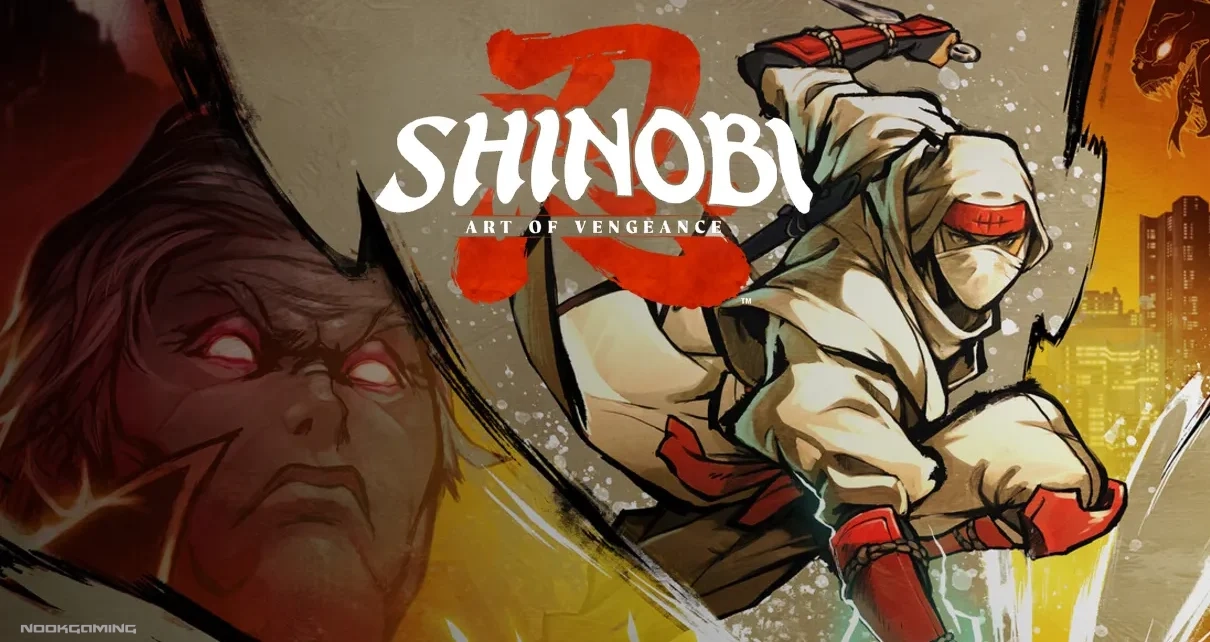
The Shinobi series was considered Sega’s answer to Ninja Gaiden back in the late 80s, combining their arcade game know-how with the aesthetics of classic ninja movies. It went on to become quite a celebrated series, with The Revenge of Shinobi and Shinobi III being hailed as some of the best games for their respective platforms. It also had a short-lived stint in the third dimension with the PS2 title and its sequel, both of which have gone on to become cult classics among action game enthusiasts. However, aside from one last game released in the early days of the 3DS, the series was on radio silence for quite a while. Fast forward to today, where Lizardcube, the developers of the excellent Streets of Rage 4, have graced us with Shinobi: Art of Vengeance.
Return of the Ninja Master
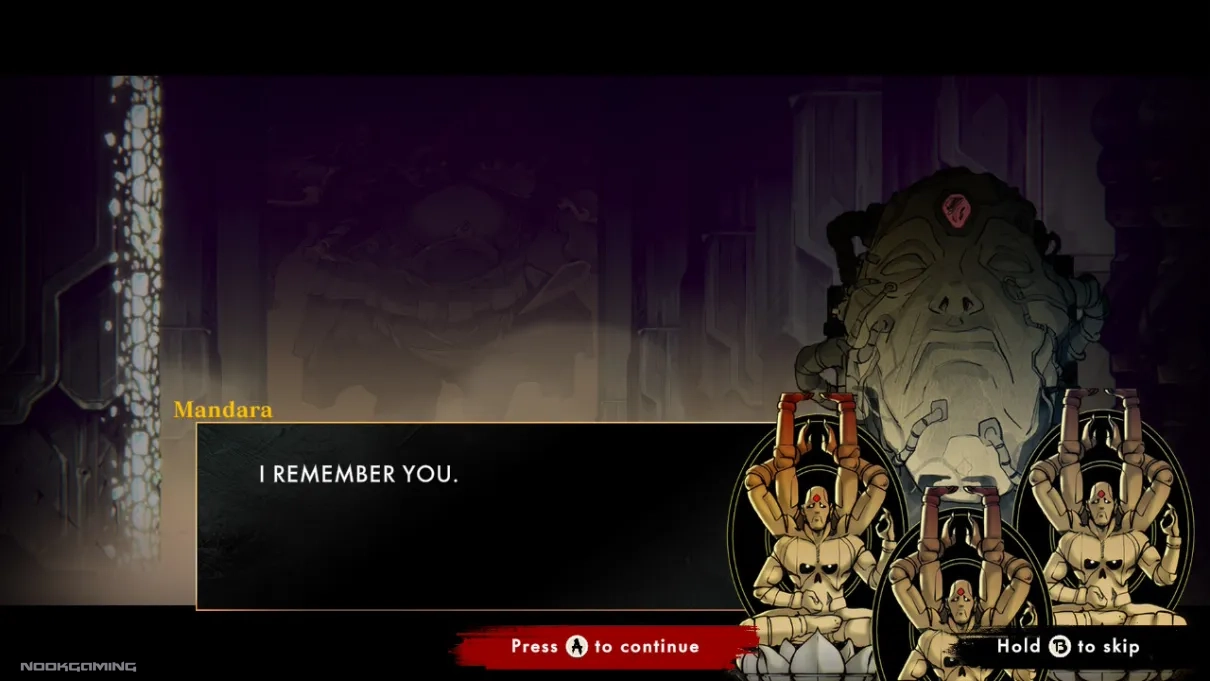
After being absent from the role of main protagonist for more than 30 years, Joe Musashi makes his triumphant return to the driver’s seat in pretty spectacular fashion. Picking up sometime after the events of Shinobi III, a new villainous faction called ENE Corps is steadily taking over the world. The main thing that keeps them from doing this is Joe’s own group, the Oboro Clan. However, while things seem relatively okay for them with Joe and his wife expecting a child soon, it’s not long before things go up in smoke. Nearly the entire Oboro Clan is killed by a sudden assault from ENE Corps, with its leader Ruse leading the charge. Having stolen the power of the Grim Reaper, Joe heads out to avenge his clan and spare himself of any more heartbreak.
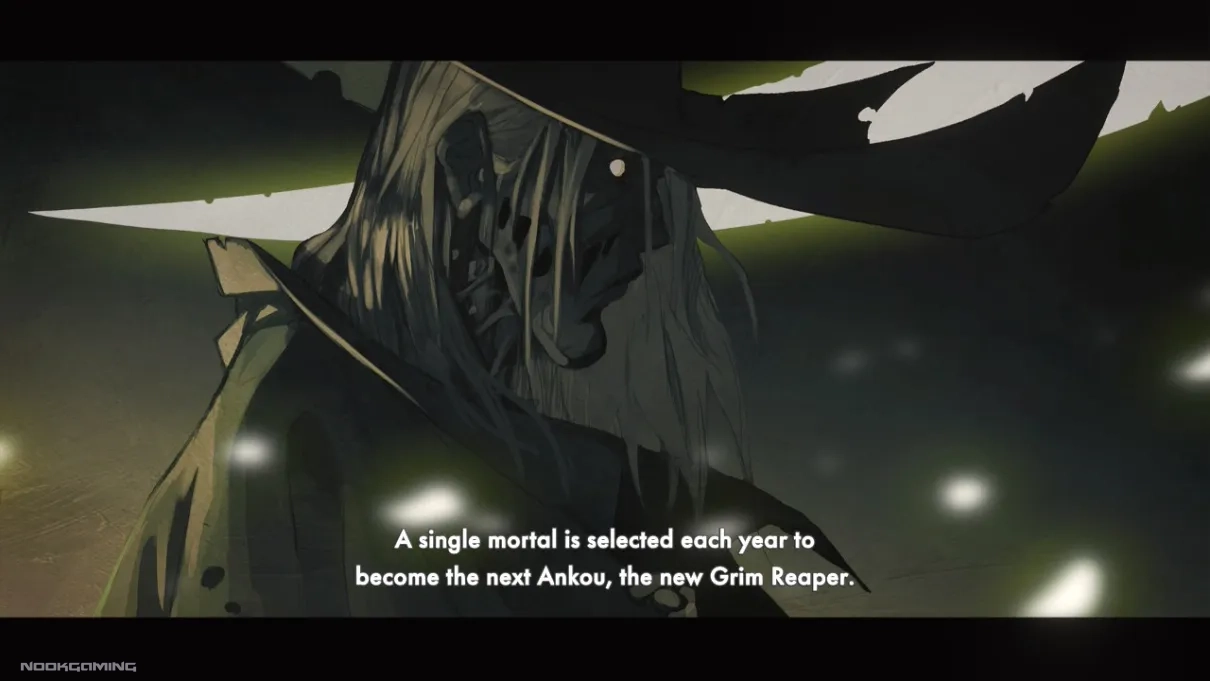
I commend the writers for taking a surprisingly dark turn on an old series and actually committing to it. Joe Musashi’s trilogy has always been relatively lighthearted compared to the ninja stories that inspired it, so to see this game take such a shocking turn with what happened afterwards was quite refreshing. It’s not a particularly deep or complicated plot even with this new layer of tragedy, but it adds a nice sense of moodiness and pathos to the whole experience that wasn’t quite as felt prior. Even many of the bosses you meet and promptly cut down have their own motivations and personal tragedies that have shaped them in some form. Although Joe himself still remains a mostly silent protagonist, he is granted a small speaking role and is given a reaction to everything through more narration. There’s one specific instance where this is used to excellent effect, but this is a surprise that I think is best left for players to discover for themselves.
Shinobi was always far lighter on narrative compared to the likes of Ninja Gaiden, so Art of Vengeance in response adds many new elements to the existing universe in an attempt to flesh it out. So now on top of the Grim Reaper, we have elements of corporate greed, war profiteering, and regular communion with spirits looking to make some money. These are all fine and I think they add a nice amount of character to the story, which I otherwise think is simply okay. Like the games, it’s a narrative that’s mostly built on supporting gameplay setpieces, but the added amount of dialogue gives these moments more weight than before.
The Revenge of Shinobi
One thing has to be made perfectly clear before talking about the gameplay of Shinobi: Art of Vengeance: it does not play to the mold of previous 2D titles whatsoever. What was originally a series of concise, score-focused action platformers with short length is now a sprawling 2D adventure game with lots of upgrades and collectibles. Joe Musashi’s overall moveset has been shifted dramatically, and the game’s general ethos is nothing like before. While I lament that this means it’s not a true sequel to Shinobi III, this is neither a good nor bad thing when taking the successes and failures of Art of Vengeance into consideration. Instead, quite a bit of data from Lizardcube’s previous games like Streets of Rage 4 and Wonder Boy: The Dragon’s Trap are found here, with the aesthetic and story of Shinobi being used to wrap everything up in something cohesive.
Joe Musashi’s moveset has been greatly expanded to match this increase in scope. While I’ll get to his combat capabilities later, his overall movement options are greater than in previous games. While you won’t have everything at the start, from the outset, Joe can double jump, do a midair dash, wall jump, wall run, slide down ropes and cables, and vault over obstacles. Later, he’ll unlock abilities like being able to break down walls and floors, grapple onto nearby grapple points, climb cracked walls, and shimmy across ceilings. Rather than dole out all of these at once, you’re instead given them piecemeal. This is fine by itself since some players might risk being overwhelmed by having so much thrown at them at once, but it does lead to a fairly major problem I have with the game.
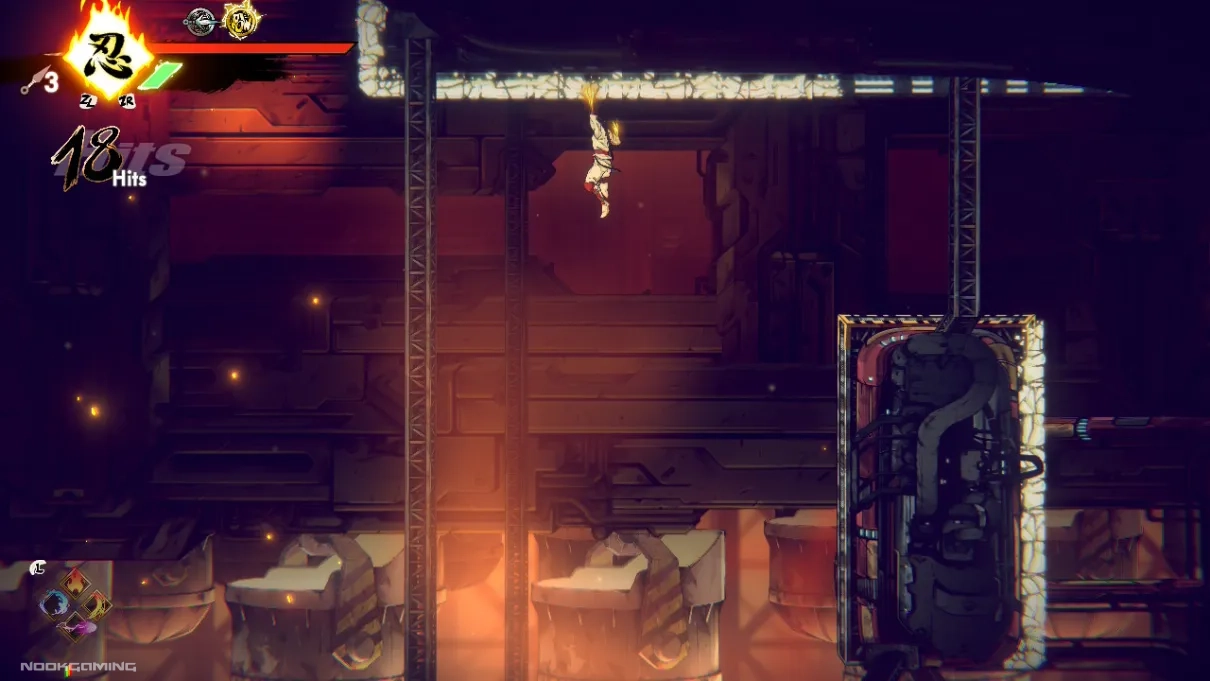
Due to the sheer size of each level and all of the content they have, you’ll be doing quite a bit of backtracking if you want to collect any valuables or do some of the optional challenges that lead to important upgrades. While it’s fair to wait until you obtain all of the traversal-based upgrades to do any backtracking, this will leave you underpowered and without quite a few strong abilities that are immensely helpful for the latter stages of the game. I’m stuck between either being underpowered and having a less tedious experience, or getting stronger at the cost of feeling as if I’m having my time wasted for no real reason. As a result of how egregious it is, the pseudo-Metroidvania style level design wound up getting spoiled for me.
When it does decide to focus on exciting level setpieces and daring platforming challenges with lots of obstacles, it’s a lot of fun. Joe’s control, when compared to previous Shinobi games, is no longer deliberately stiff and actually quite freeing and loose. This is complemented by the surprising number of callbacks and homages to the original Shinobi trilogy, feeling meaningfully transformed thanks to the new mechanics and gamefeel. While the level design has its share of problems, it lands well when the gameplay becomes more focused and linear.
Best Served Cold
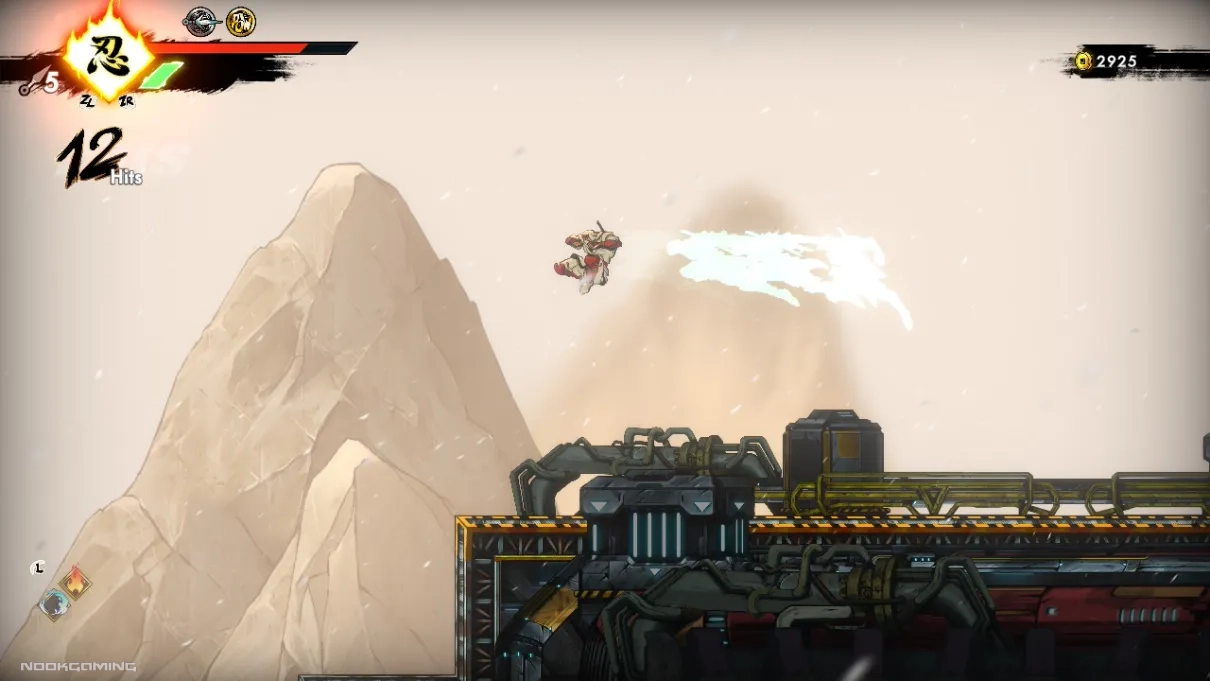
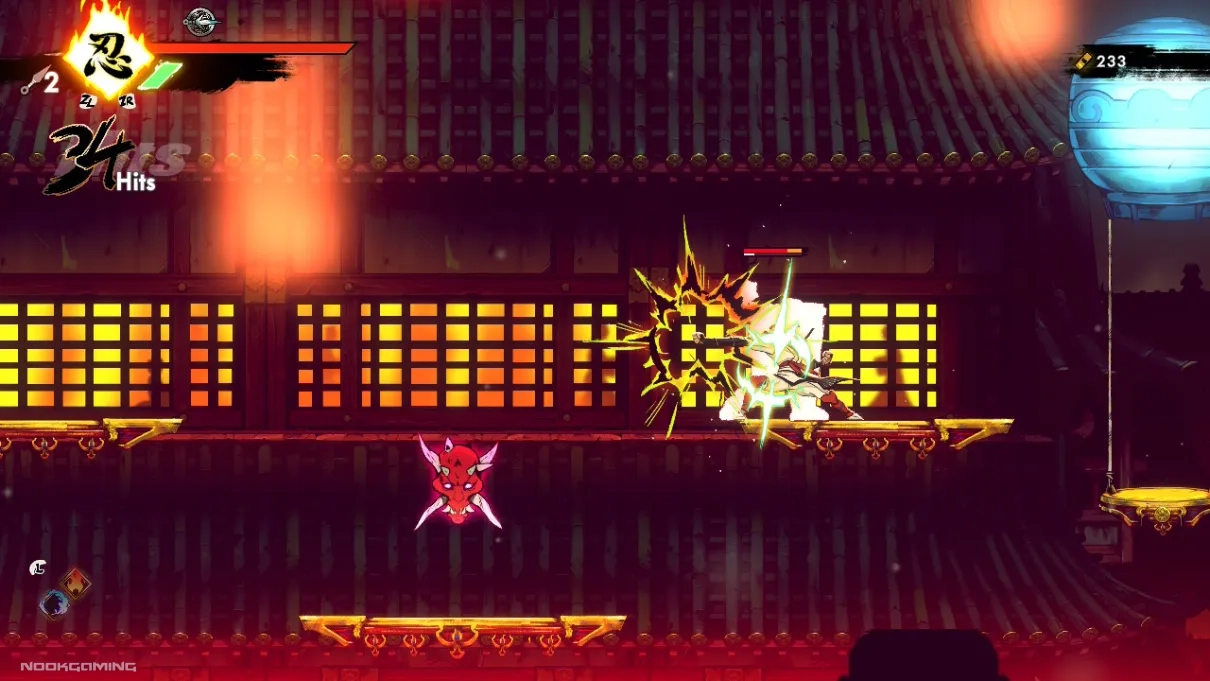
Just like the platforming and progression, combat in Shinobi: Art of Vengeance is also a total divergence from previous games. Instead of a game where you have few attacks that must be landed with precision against enemies that often die in one hit, it’s become the total opposite. Shinobi: Art of Vengeance is more like a 2D beat ‘em up, where you can combo and beat the absolute stuffing out of enemies across whole rooms. Joe Musashi’s moveset and potential for creativity resemble a fighting game character’s. He’s got a light attack combo, a heavy attack combo, as well as projectiles that can be customized with purchasable upgrades. Further, he can also unlock more attacks to open up greater potential combo routes. While many enemies will die well before you complete a combo or they’re able to break out of it, knowing how to extend them for as long as possible is essential for boss fights.
Speaking of enemy design, I really like what they’ve done here. Enemies feel healthy in variety, with different movesets and different strengths that will force you to get crafty or improvise your approach to combat. Some will rain death from above as they stand on high platforms, some will fly around and force you to play tag with them, others will be mook ninja who get in your way, while some will be armored and force you to break through their defenses before you can start doing big combos on them. Further, each enemy also has a unique condition that will allow you to perform an Execution, instantly killing them and netting you bigger rewards than killing them normally might. Smaller enemies that move constantly may only need to be hit with a single kunai to activate an Execution, while some enemies might need to be hit by an explosive barrel instead. These are massively satisfying to perform, thanks to both the dexterity needed to pull them off, and the game’s great sense of crunch and feedback.
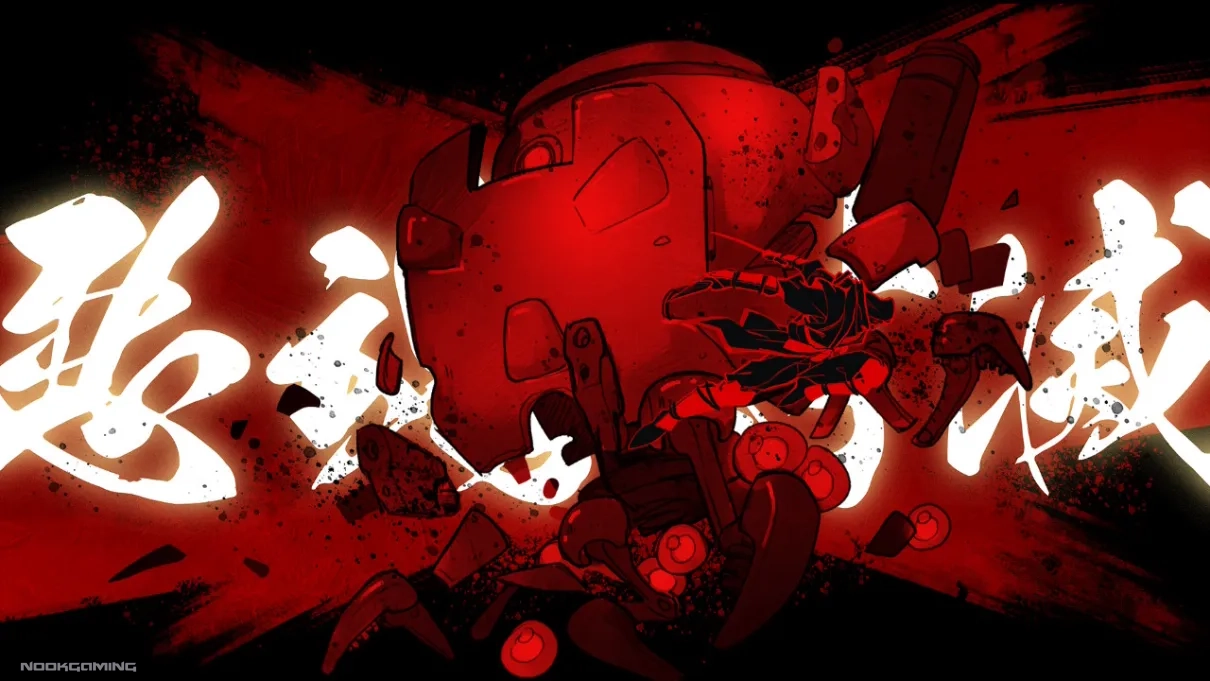
Amplifying things further are Joe’s Ninpo abilities, which are special attacks that draw from a gauge you fill up while fighting enemies and landing hits. Once the gauge is full, you can let loose one of four types of Ninpo that deal more damage and have added effects compared to regular attacks. These add a nice splash of personality and player freedom to the way you can approach some situations. For example, players who are daring may go for the highly damaging but close-range Fire breath Ninpo, while players who play it safe may go for Ninpo that are projectiles. Some can even extend combos or close distances in mere moments. Given the number of them and the endless ways you can approach combat, it’s fair to say that I still have yet to discover the system’s full potential, but I mean that in a good way.
The simply ridiculous number of things you can do in a single combo is the main reason the large stage size is justified in my eyes. Picking up a helpless ninja with a launcher combo and seeing how far I can carry him with a mixture of punches, kicks, sword swipes, and so on never got old. It’s expressive in a way that feels purposeful, and unlike my feelings on the level design, it is a truly solid reversal of Shinobi’s original design principles.
Checking off the List
Optional challenges in the levels of Shinobi: Art of Vengeance include Ankou Rifts, which feature significantly harder platforming challenges and enemy encounters compared to what you’ll find in much of the game. These are a clean break from the rest of the game, which broadly features easy platforming until endgame ramps things up considerably. Like with my aforementioned issues with backtracking, I do wish these moments were just implemented normally into the main adventure rather than be something I have to search for. The same applies to the Elite Unit battles, optional waves of enemies hidden throughout each level. Completing all three in a given level will unlock a special item, typically some sort of equippable item, a new attack skill, or Ninpo.
You’ll also be able to find a handful of Relics in every level, which can be traded in to unlock more skills at the in-game shop. As well, you’ll be able to find new equipment that will provide buffs to Joe in some form or fashion. These are fine enough incentives to explore, but it does play into my issue with the game feeling too overstuffed for its own good. Put simply, I’m not going to feel excited about finding an item that will let my Fire Ninpo deal an extra 15% of damage. Nor am I going to feel excited about an upgrade that boosts health gained by a minuscule, mostly irrelevant percentage. These are the kinds of things that, while not harmful individually, add up and can devolve things into feeling like busywork for no real reason.
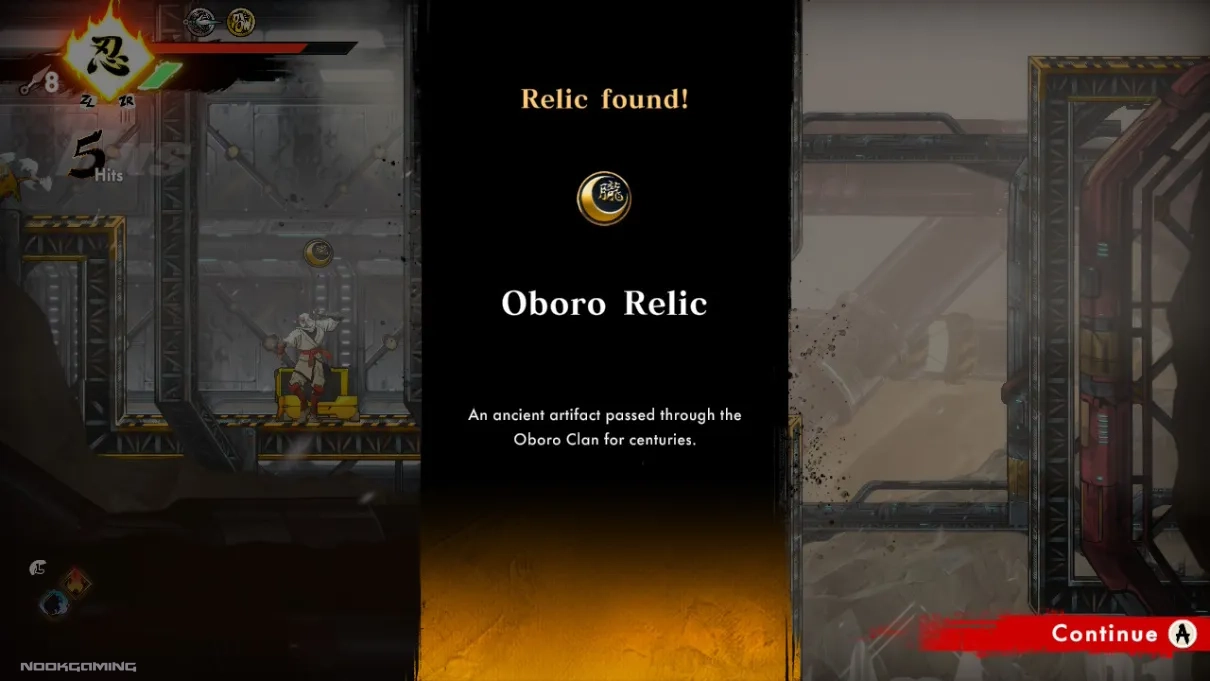
The best parts of this game are when the systems are free and expressive without needing to rely on superficial additives like stat-boosting equipment or a laundry list of skills that feel indistinct. All too often, I’m left opening my menu to see what new item I got, only to then ask myself, “Is this really necessary?”. I’m not much of a believer in the idea that game elements like these are wasteful, per se, but these do distract from the gameplay in ways that don’t enhance the overall experience. Some more balance and fewer trinket-like rewards could have gone a long way here.
Musashi’s New Look
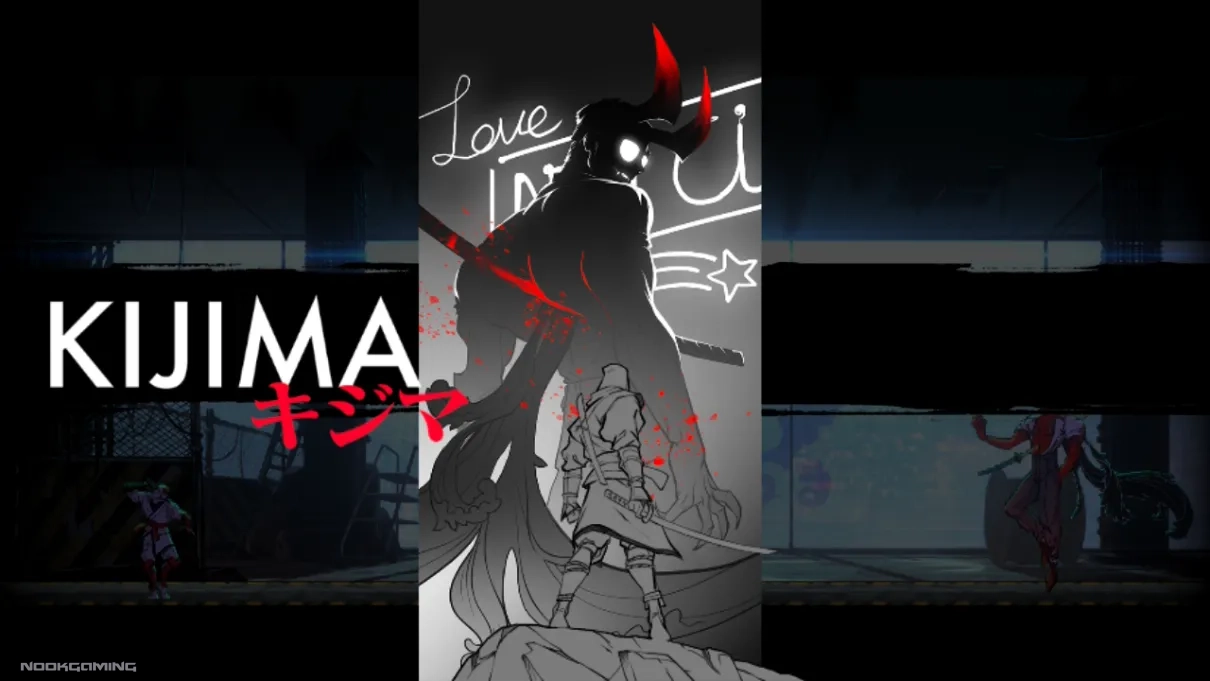
Continuing in the roots of Lizardcube’s traditions, Shinobi: Art of Vengeance’s artstyle is a very lovingly realized mixture of detailed drawings and sprites. There are lots of thick paint lines used for characters and effects that bring to mind Japanese calligraphy, with some special attacks even being embroidered with kanji. Backgrounds are also very nicely drawn, with them being huge in a way that really manages to sell the impressive scope of each level. They’re also thick with atmosphere, feeling appropriately moody given the game’s story and stakes. I do have one small issue with them, in that they’re a little too detailed for their own good at times. Things like platforms or obstacles can sometimes get lost in the shuffle of a background’s busyness.
On the other hand, I found myself feeling neutral about the game’s music. This is disappointing since Shinobi 2 and 3 have some of the most celebrated soundtracks on their respective platforms, but I don’t think Art of Vengeance’s soundtrack is quite as consistent. It definitely has the issue of many tracks blending in or being so stylistically similar that they don’t stick out in my mind. Many of them are slower, more atmospheric tracks filled with eastern flourishes that ramp up when you’re in a combat encounter. However, it sticks too closely to that one style for an astonishing number of its levels and leaves it hummable only in the midst of play. There are some exceptions, like the excellent Fish Market theme or the opening stage, but overall it did leave something to be desired.
Verdict
In not adhering to the philosophy of previous 2D Shinobi titles, Shinobi: Art of Vengeance instead does its own thing, for better and for worse. It’s a game that revels in its own excess, asking how many bells and whistles it can add to the core action platforming experience before finally hitting a ceiling. In doing this, it makes for a game that I am tempted to say is one-of-a-kind, but in losing the elegance and no-frills nature of previous titles, it becomes bloated too. It’s strange for me to look at a game I like this much, and I still wind up asking myself whether it really needed quite a few of the things it did. That being said, I did often forget about these problems in the midst of play, enjoying myself as I combo’d enemies across rooms or searched for any secrets I missed. While I’m hopeful that the next game is a bit more lean and purposeful, this experience is still nothing if not artful.
SHINOBI: ART OF VENGENCE IS RECOMMENDED

If you like platformers with a ton of action, you might also want to check out our review of Ninja Gaiden: Ragebound.
Many thanks go to SEGA for a Nintendo Switch review code for Shinobi: Art of Vengeance.

A hobbyist who took up the pen to write about their favorite pastime: games. While a lover of many genres, Isaiah Parker specializes in Platformers, RPGs, and competitive multiplayer titles. The easiest way into his heart is to have great core gameplay mechanics. Self-proclaimed world’s biggest Sonic fan. Follow him @ZinogreVolt