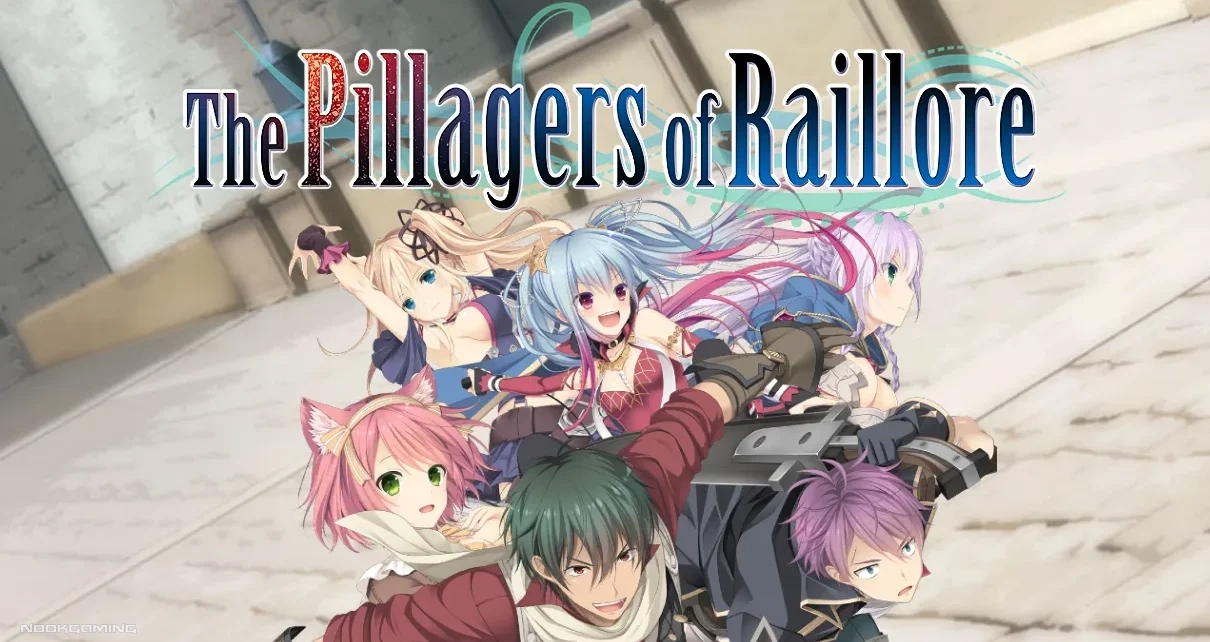
The Pillagers of Raillore (Raillore no Ryakudatsusha) is a 2019 visual novel by 3rdEye. Set in the fictional town of Raillore, the game’s story revolves around two groups of people that get entangled in a series of events that threaten to overturn their daily lives as they know it. It features a linear story jam-packed with action scenes that use high amounts of special effects. The English version of the game was released by MangaGamer on May 29, 2025 and is only currently available for purchase on their website.
As my first 3rdEye visual novel, I had no idea what to expect from The Pillagers of Raillore. At first glance, it just seemed like a generic fantasy action eroge that you’d finish reading in 5 hours tops. But looking at the synopsis and then the promotional material from the upcoming English release, I began to feel a little bit excited because of how detailed the story’s setting was. I’m actually a pretty big fan of eroges with ridiculous yet charming elements of action-filled fantasy and obvious power scaling. It’s what initially pulled me into reading visual novels in the first place, and encountering one still gets my blood pumping. But from experience, their stories can easily be compromised by an overabundance of high-octane fighting scenes.
Will The Pillagers of Raillore be able to hit that sweet balance of being story-driven while featuring tons of fantastical brawls with atmospheres so electric you can feel your hair stand? Let’s take a journey to Raillore and discover for ourselves!
A World Where RPG Skills are Commonplace
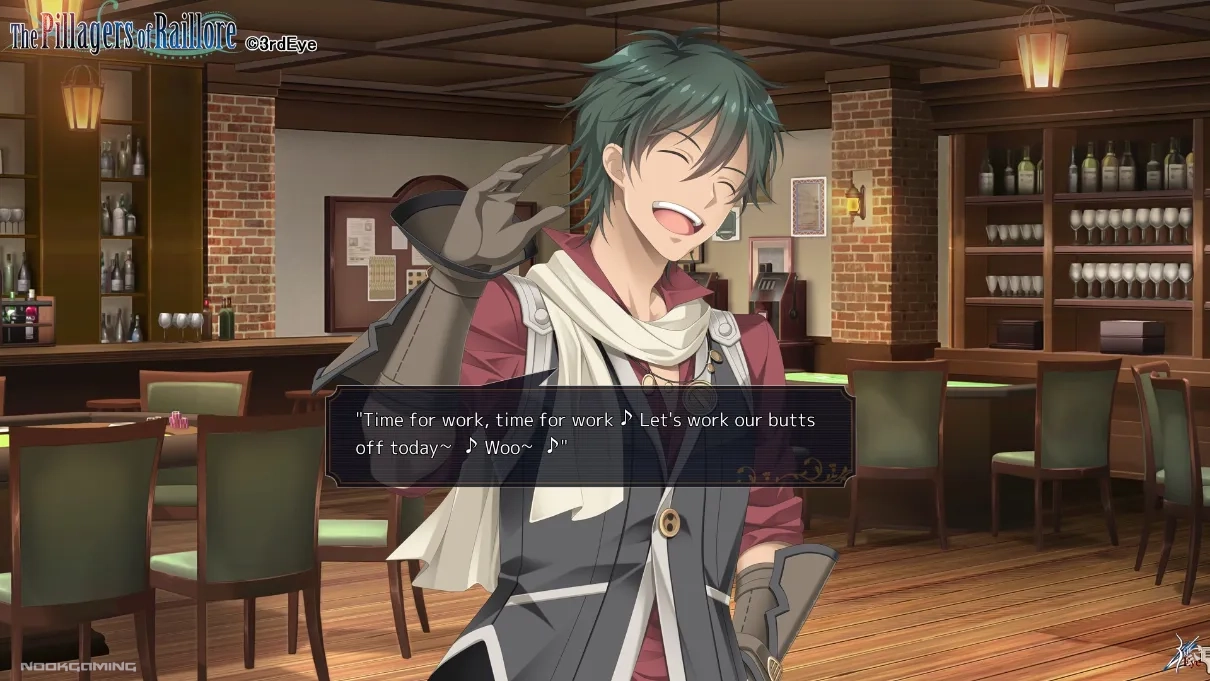
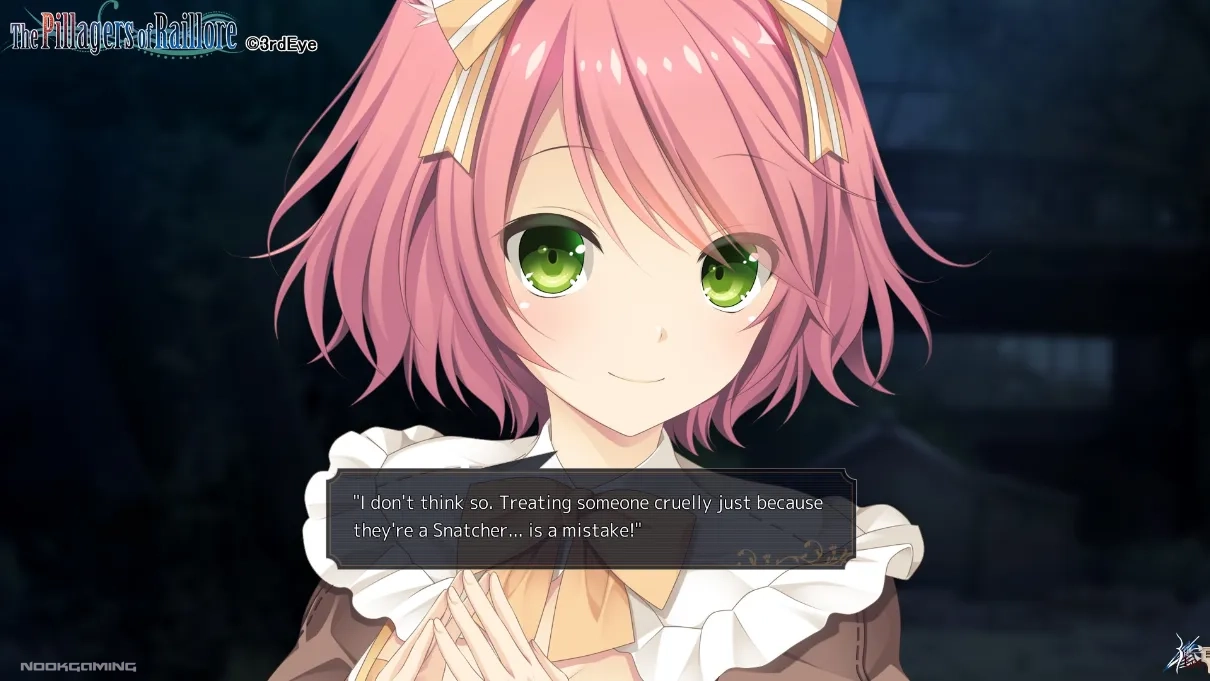
The story of The Pillagers of Raillore mostly takes place in the city of the same name, Raillore, where approximately 90,000 people live. In this city, people who make use of supernatural powers for their daily tasks and livelihoods are commonplace. Collectively called “Dunamis”, most of these skills provide their owners with varying levels of convenience, with some excelling more in battle because of their highly destructive potential. Because of the fear associated with their abuse, people started discriminating according to the type of Dunamis one holds. Eventually, the town’s citizens began to look upon people who can create and/or manipulate matter, or enhance their own bodies as respectable members of society while Snatchers, or people whose Dunamis require them to take something from others to use their powers, began to be ostracized.
To combat the dangers associated with the improper use of Dunamis, the city of Raillore created the Order of Security and Regulatory Knights, or the Regulatory Corps for short. This organization specializes in combat and deals with crimes and incidents, both Dunamis-related and not, while helping out with more mundane tasks on the side. Within the Regulatory Corps, a special branch called Mistilteinn handles special crimes, mostly incidents associated with the Fallen God Syndrome. The squads under the branch are primarily duos composed of a Dunamis user and a Snatcher who sport battle-oriented abilities. Dubbed as Pillaging, Snatchers can only make use of their Dunamis upon approval from their supervising officer to avoid accidentally hurting the town’s citizens. The goal of the organization is but one thing: to rid the world of the dangers related to what they call “Errors”.
Raillore’s Original Sin
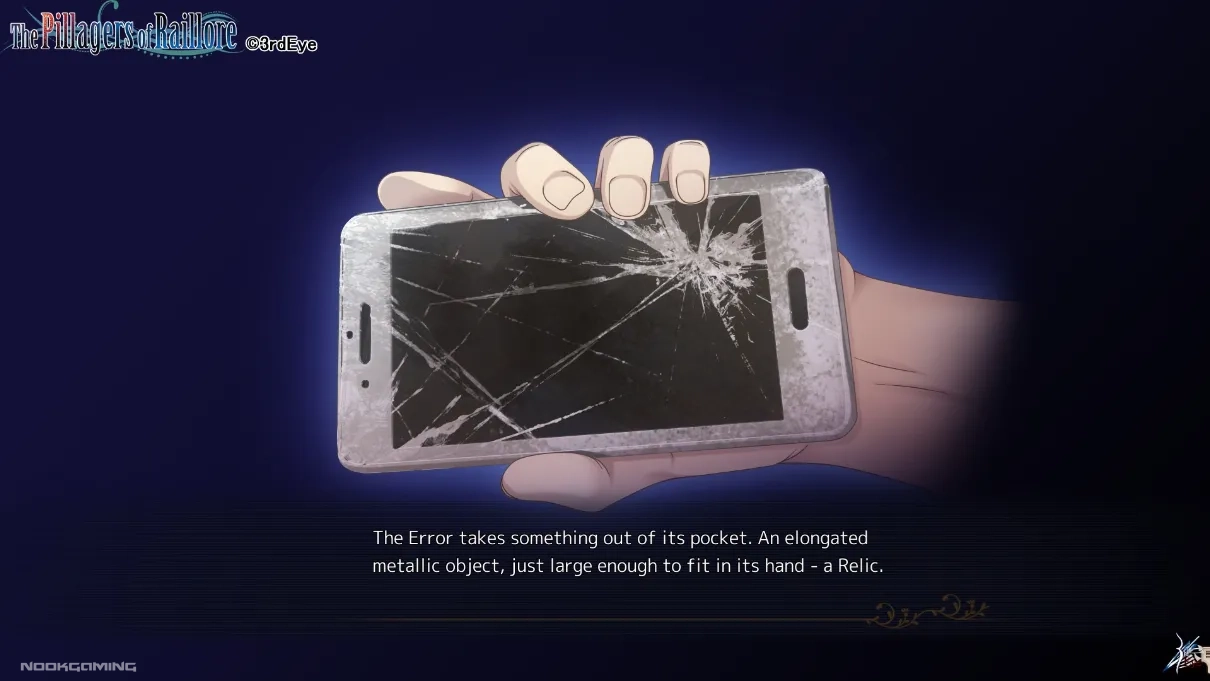
Errors, or people afflicted with the Fallen God Syndrome, are those who have lost the ability to use their Dunamis. They are easily identifiable through the animal ears that appear on top of their head upon contracting the disease. After a tragic event ten years prior to the start of the story that inflicted unforgettable scars onto the citizens of Raillore, Errors began to be ostracized due to their ability to produce Imaginaries, devices created through the use of Relics excavated from Dungeons, or the ruins from the old world. Since then, Mistilteinn has been in charge of gathering Errors and administering treatment to them to contain their powers.
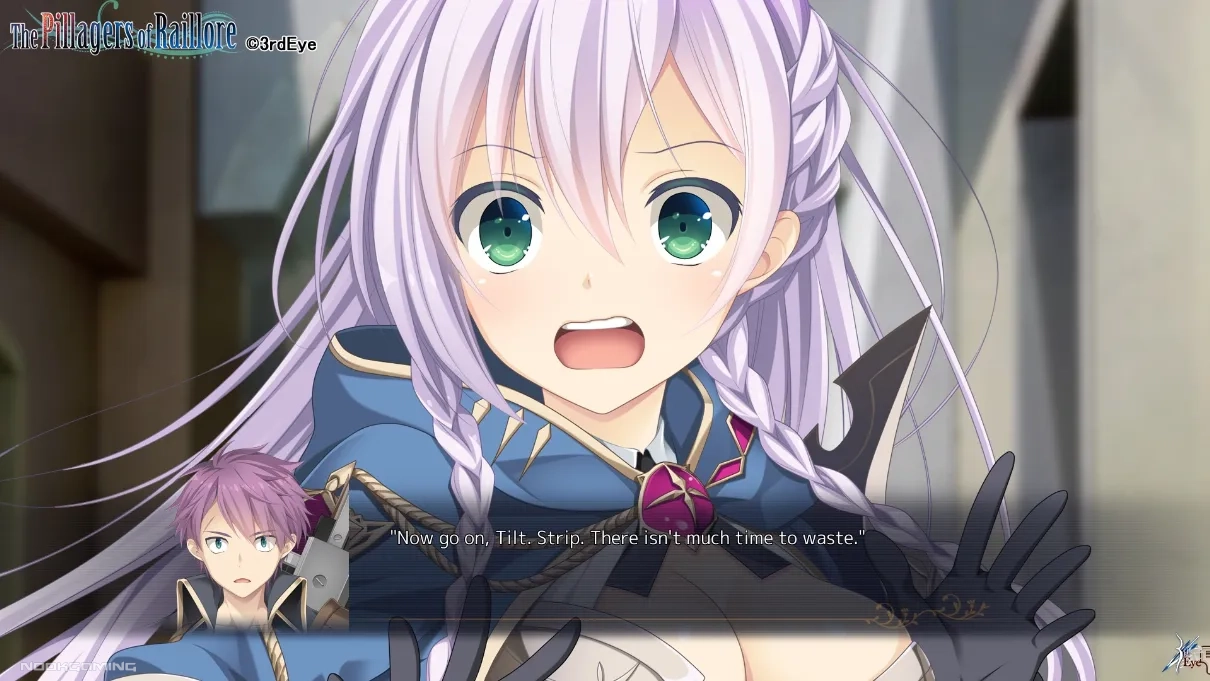
Within the ranks of Mistilteinn exists two peculiar characters; Tilt Blandora, an electricity Dunamis user, and Reno, a Dunamis-pillaging Snatcher. The duo find themselves in pursuit of Errors throughout the town on a regular basis and, while not necessarily meaning to, frequently destroy establishments throughout Raillore during their pursuits, earning them the moniker “Fafnir”. One day, the leader of Mistilteinn assigns Tilt and Reno to investigate a series of reports about illegal Relic trading within the city. Fearing that the incidents are the work of a criminal group called the “Mystics”, they pursue various clues and hints that frequently open up more questions than they do answers. Little did they know that these incidents they’ve been investigating are only the start of a series of events that will forever change the city as a whole.
This is the story of how Snatchers, Errors, and Imaginaries usher in a new age for Raillore.
Chapters, Books, and Crossovers
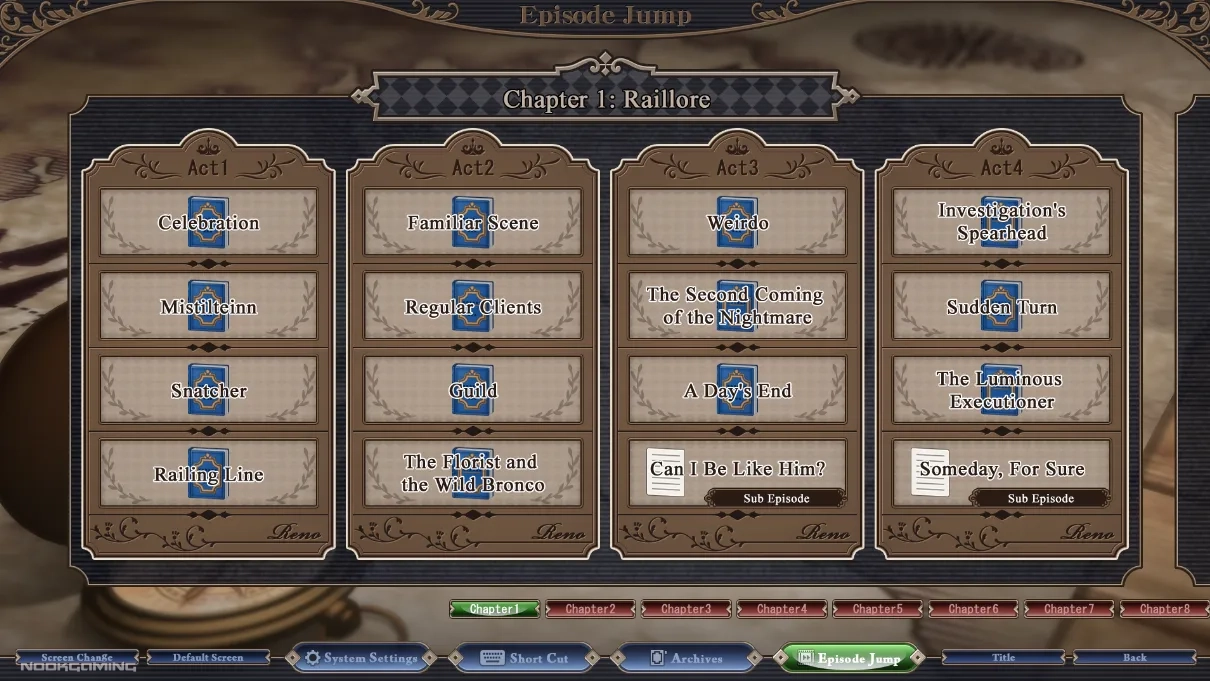
The Pillagers of Raillore’s story features two protagonists whose adventures coincide together as you progress through the game, with chapters focusing on either one or both of them. It is split into eight chapters, each split into four acts which usually feature a central event that defines that particular act. Within an act, there are four episodes which can either be classified as a main episode or a sub-episode. Sub-episodes are unlocked separately from the main story, usually at the end of the last main episode of an act. They can be accessed only by using the Episode Jump function of the game, otherwise you miss it as the game automatically advances into the next main episode.
I like how well they structured the narrative of The Pillagers of Raillore in terms of flow. There’s a clear indication of when an act ends via how the in-game events feel; the central event is easy to grasp and the per-episode progress can be tangibly felt through the text. If not an event, there’s usually a goal that they need to achieve step by step, making for nice reference points when you want to control your reading pace. The use of the sub-episode format is a nice way to avoid breaking the momentum of the story as well, as it puts the agency of taking a break in the hands of the reader. Overall, these feel like very welcome quality-of-life features that help cater the experience to the reader’s preferences, which isn’t usually a bad thing. You’ll seldom find yourself lost about the overarching story element in a chapter because of how they consistently keep it in mind with how the text is written, making the read feel satisfyingly cohesive.
Snatching Cute Girls’ Hearts Away
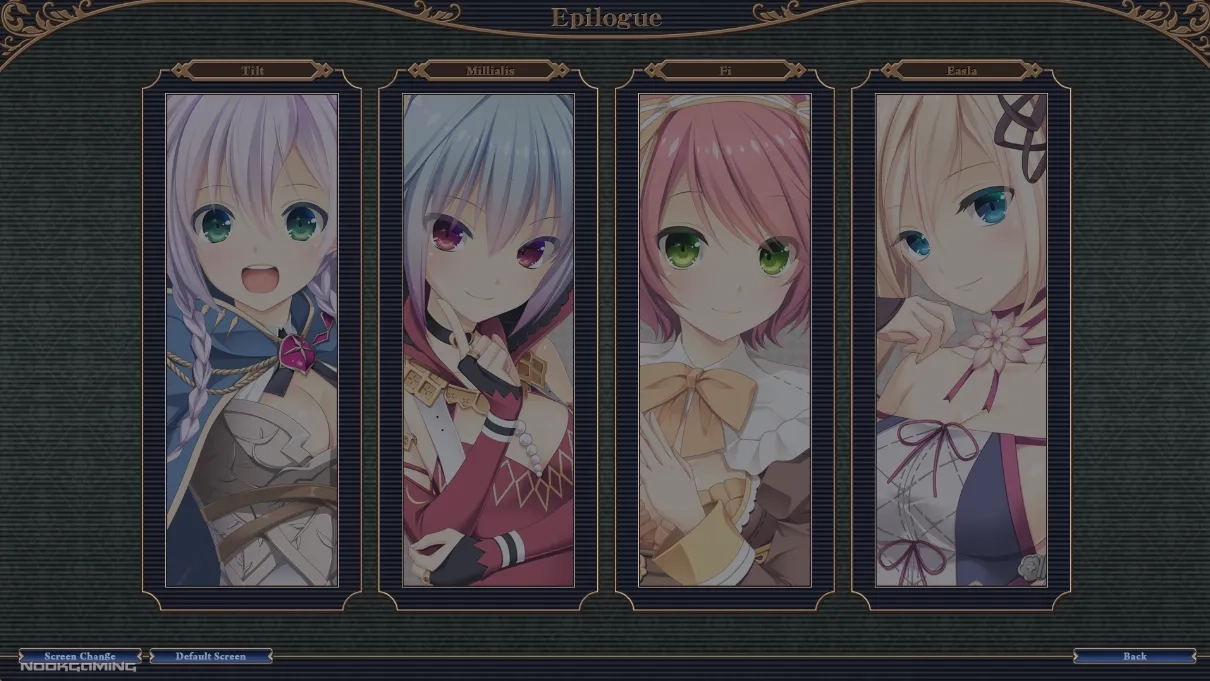
Instead of routes, The Pillagers of Raillore features four heroines in its story whose epilogues you can access when you finish the game. As it is a linear story, these epilogues are not alternative ends, but instead are additional scenarios that happen after the events of the story. They’re a nice addition to the solid pacing of the storyline, providing additional fanservice that would have been awkward to place within the pacing of the main story. That being said, it’s not as if there are no misplaced intimate scenes within the eight chapters. There are a few adult scenes that take place within the main story that don’t add too much to the plot and are, in a way, a bit of wasted potential given that they take up a whole act that could have been another scene that contributed more to the overall story. Nevertheless, these epilogues and random intimate scenes are well-substantiated by the character interactions and events that take place between the members of the cast, making them feel like natural progressions to their relationships rather than shoehorned romance.
Talking about the heroines themselves, the four featured in the epilogue scenarios accompany the two protagonists in their adventures through the land of Raillore and serve as prominent figures both for the in-game events and the protagonists’ character arcs. Coming in pairs for each protagonist, they have great chemistry with both the male lead and themselves, making for entertaining dialogue that doesn’t feel like it panders too much to convenient fantasies. I feel that each of them were given appropriate screen time to display their own unique charms, which made me invested in them and their stories. Their character arcs complement the protagonists’ development as well, providing apt foundations for their future relationships with each other.
That being said, their interactions are still laced with the usual humor you’d find in eroges or anime media in general, so be ready for lots of references to their individual chest sizes and supple figures. If you can look past that, then their stories actually provide nicely done mini-arcs that fit well into the overall narrative.
Ninety Points into Animation!
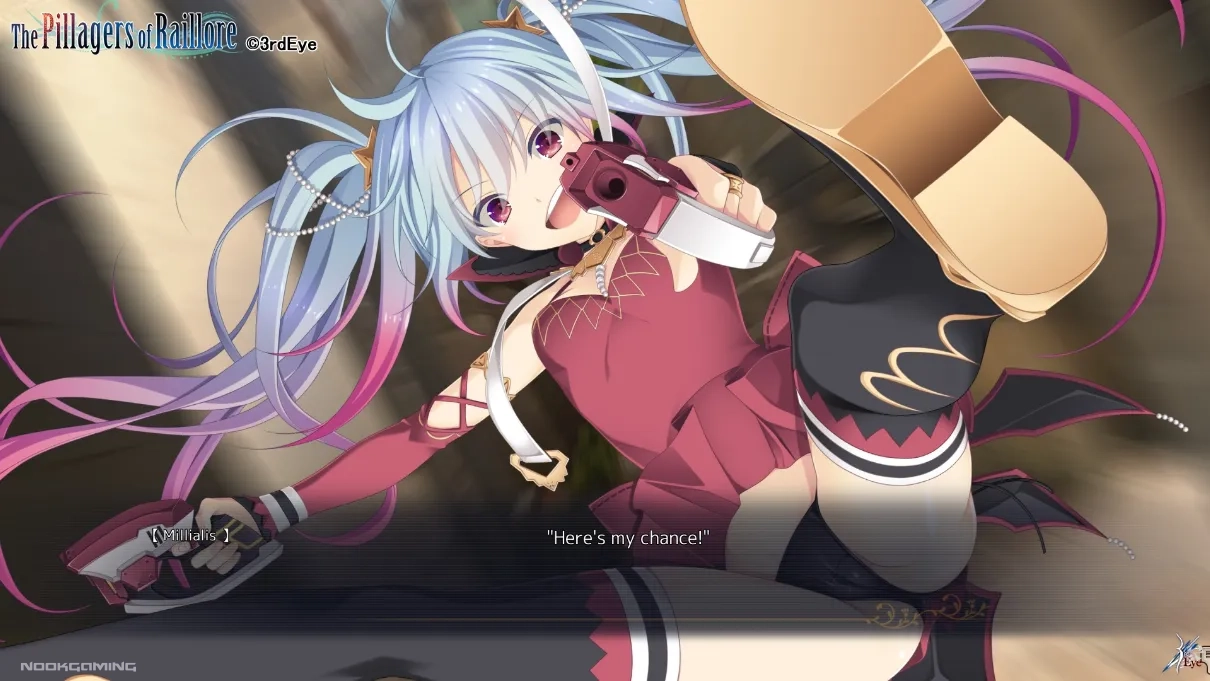
Possibly one of the more standout aspects of The Pillagers of Raillore is something that it has in common with its predecessor, Sorcery Jokers: the generous use of special effects during its fight sequences. During these scenes, the visual novel makes use of a combination of art assets ranging from elemental attacks to varied character sprites to recreate the dynamism you’d feel from an animated work. By using the appropriate sound effects and incorporating them into an overall art direction that utilizes angles, cropping, and rotations to mimic movement, it is able to create the feeling of action despite strictly using static images and small, looping gifs. It’s a pretty unique experience being able to literally visualize concepts such as speed, impact, and the exchanging of blows in what has been a medium that highly depends on the text and the reader’s imagination being able to digest what it is reading. It pushes the limits of what a visual novel engine can do, and it does so in a stylish, entertaining way.
There are, however, some shortcomings with this approach. While the way it emulated motion felt fluid for most of my time reading The Pillagers of Raillore, for the times that it didn’t, the experience felt very similar to how other games would feel if they suddenly dropped frames or lagged. Perhaps it’s due to the limitations of the game’s engine or my own machine, but bumping into these sudden lag spikes regularly took me out of the scene I was reading. Additionally, because they were using character sprites and miscellaneous art assets for the special effects, there was a noticeable lack of dedicated CGs used for more powerful moments in the visual novel, with some characters not having any outside of those used for battles. It’s not necessarily a turn for the worse per se, but it takes away from the potentially memorable scenes that traditionally have been associated with emotionally charged CGs and soundtracks. While it makes the experience feel a lot more whole because of how well-utilized the assets are, it’s hard to pick out a still image from the visual novel that can clearly relay the entirety of a memorable episode or chapter because of this shortcoming.
Consistently Surfacing Themes and Messages
As I read through The Pillagers of Raillore, one thing I felt it handled really well was how consistent each character was and what they stood for. Reno’s stubborn view on missions, Graydric’s aversion to commitment, Tilt’s pursuit for justice, Fi’s fixation on the idea of family—all of these (and more) frequently find themselves into their interactions with each other, their motivations, and the actions they take in each chapter of the visual novel. Instead of pushing the story to develop in a one-sided way that caters to a particular route, the overall story is driven by the coming together of their values and motivations and, in turn, provides opportunities for the arcs’ resolutions as well. It never feels like it shifts away from an established vision, which, as a reader, I greatly appreciate given how common it is for these stories to get lost in their own storytelling.
Unfortunately, because of how the narrative highlights character growth as its ultimate destination, the way the events in the story scale to the overall setting doesn’t feel quite as impressive. As I progressed through each chapter, the sequence of events from small to city-wide to international felt a bit weird after a certain point in the story given the overall pacing and focus at that point. It didn’t feel like the journey to the last chapter was a well-established one because of how sudden and limited the details leading to it were introduced in the story. Instead of an epic confrontation at the end that embodied the protagonists’ growth throughout the game, it felt rushed with an antagonist that lacked impact given how little time was dedicated to even fleshing out the background surrounding them. The messaging was indeed consistent, but the execution relative to the game’s detailed setting was lacking and felt shoehorned into what was haphazardly built as a “grand” finale.
More Lore than Railing
Ironically, despite being an adult visual novel with great emphasis on its cast’s relationships and character development, because of the overall adventure theme of the title, The Pillagers of Raillore has a pretty low amount of adult content relative to its reading length. It has 8 H-scenes in total. 4 of these H-scenes, however, are found in the epilogue chapters and the other 4 are awkwardly placed somewhere in the main story. Outside of the adult content in the epilogue, the H-scenes are pretty short and irrelevant to the overall events in the story as well, which begs the question of why they were there in the first place. I even forgot that they existed given that most of them showed up near the end of the game.
In a way, the adult content in The Pillagers of Raillore, instead of being a sort of checkpoint for relationships within the story, feels more like additional fanservice material for those who were committed enough to finish the game in its entirety. It contributes basically nothing to the plot nor to the reader’s investment in the protagonists’ romantic relationships. For those who dislike adult content in visual novels, I’d still recommend reading through The Pillagers of Raillore if the synopsis interests you. Skipping it doesn’t take anything away from the overall experience. And for people who like their high-pitched sultry fantasies, I’m happy to tell you that you can praise 3rdEye for including scenarios not only for the main heroines, but for some of the side characters as well.
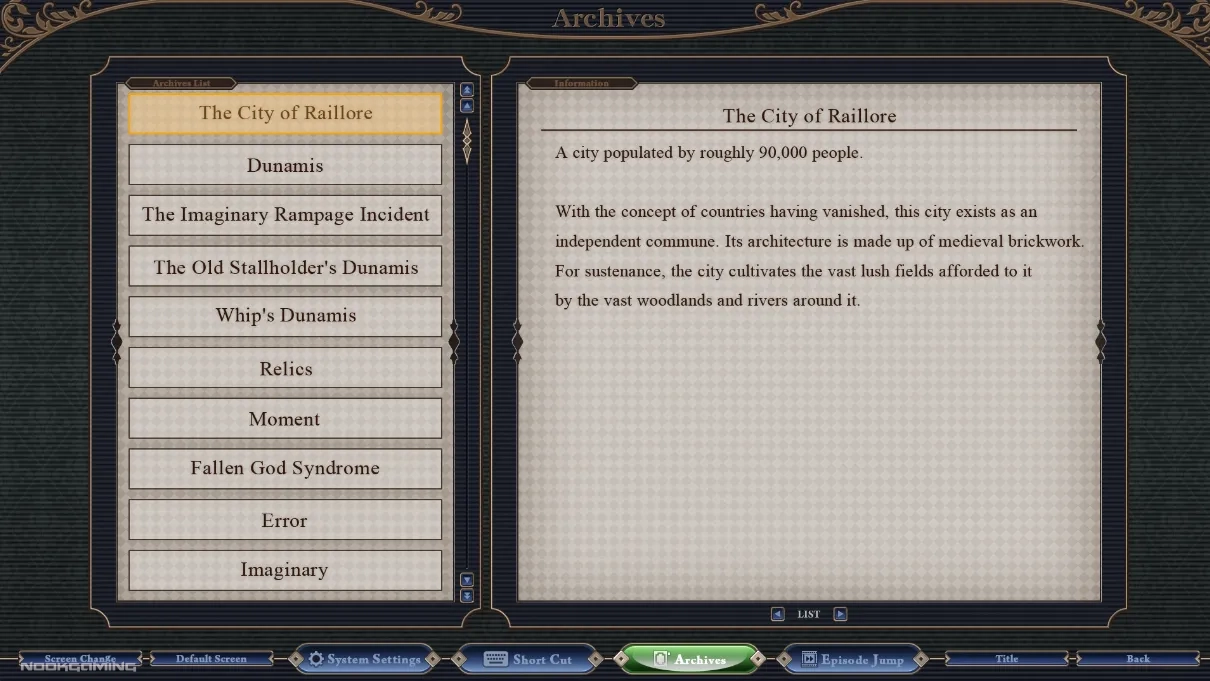
To further drive the point home about how The Pillagers of Raillore wants you to pay attention to its story and lore, there’s an Archive option accessible through the game settings that lists terms relevant to the overall setting and to various events that happen throughout the story. It’s very helpful for reviewing terms you might forget along the way, as the text sometimes glosses over terms during a dialogue. And besides, it’s never a bad idea to flesh out the world better for the reader, even through supplementary material. It’s a nifty way of appreciating the effort that comes into a game’s world-building that I wish more visual novels had.
Art and Music
The Pillagers of Raillore features a total of 90 unique CGs in the gallery, not including variations. These CGs include the sprites they use in their fight sequences and dynamic dialogue scenes, which number 53 in total. Among the remaining CGs there are 11 HCGs, leaving a total of 26 CGs that don’t count as character sprites.
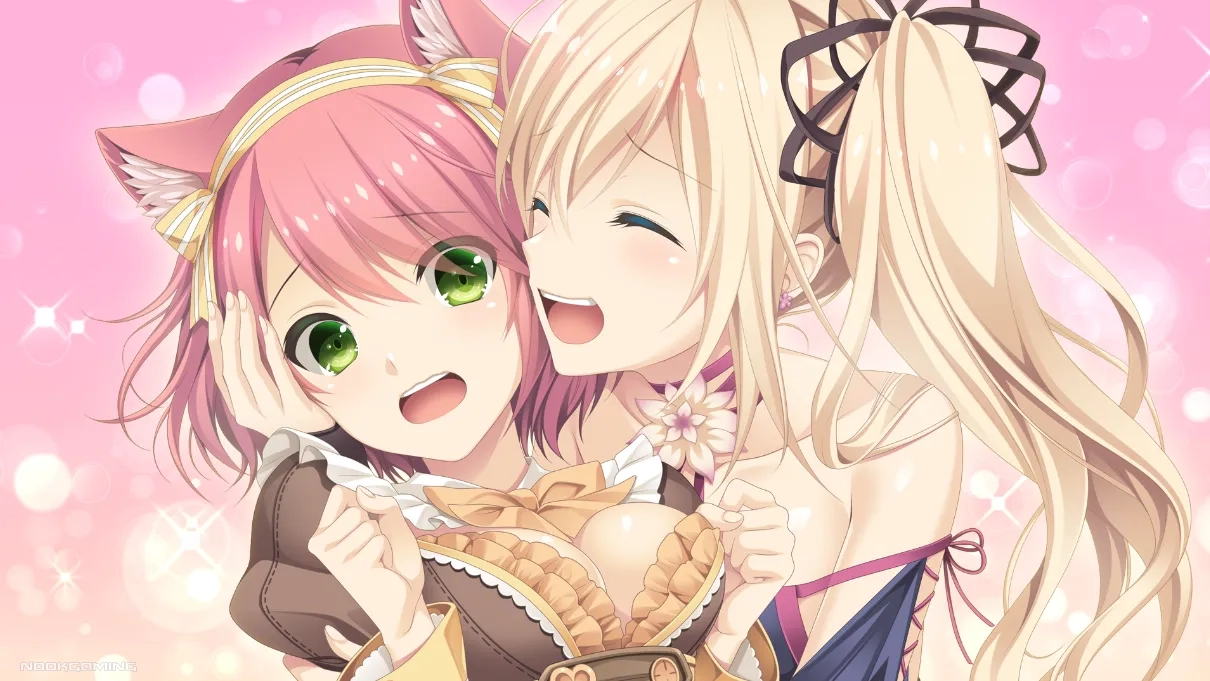
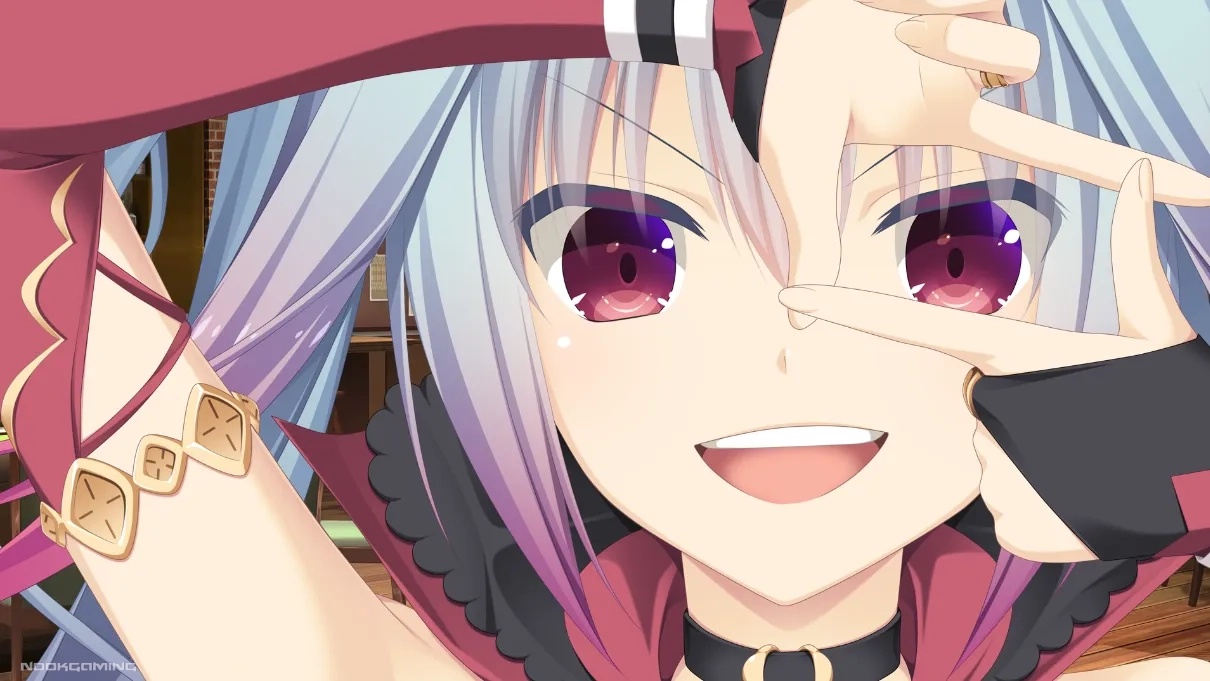
The main artist for the visual novel is Makita Maki, a game artist working mainly for 3rdEye. Noticeable characteristics of their work include heroines with glossy, brightly-colored hair who wear nicely detailed clothes that lean towards exposing more skin rather than modest styles. For Raillore, they made use of large, round eyes for female characters and thinner, more vertical irises for the male characters with the exception of Modie, who sports a comparatively bigger set of eyes. The style is cute and attractive while being flexible enough to accommodate the changing faces of characters during battle, sometimes abandoning the heroines’ cuter features for more raw, impactful expressions. Besides that, they also have a unique style when it comes to dimmer scenes, where they preserve their glossy style to mimic the subtle lighting of the moon on the surface of the characters. For people new to Makita Maki’s style like myself, it might throw them off a little bit because of how different it looks from the default colors.
In addition to the usual H-scene playback offered in an eroge gallery, The Pillagers of Raillore features a Battle Replay as well for confrontations that happen throughout the story. This means that if you, by any chance, want to reread a fight between specific characters specifically, it is easy to do because of the readily available scene selection and the fact that they’re titled. Given how prominent the battle scenes are in this particular title, it makes sense to make them as accessible as possible for future use! There’s also a dedicated section in the gallery for background stills used in the game, boasting a total of 48 unique images depicting the world of Raillore.
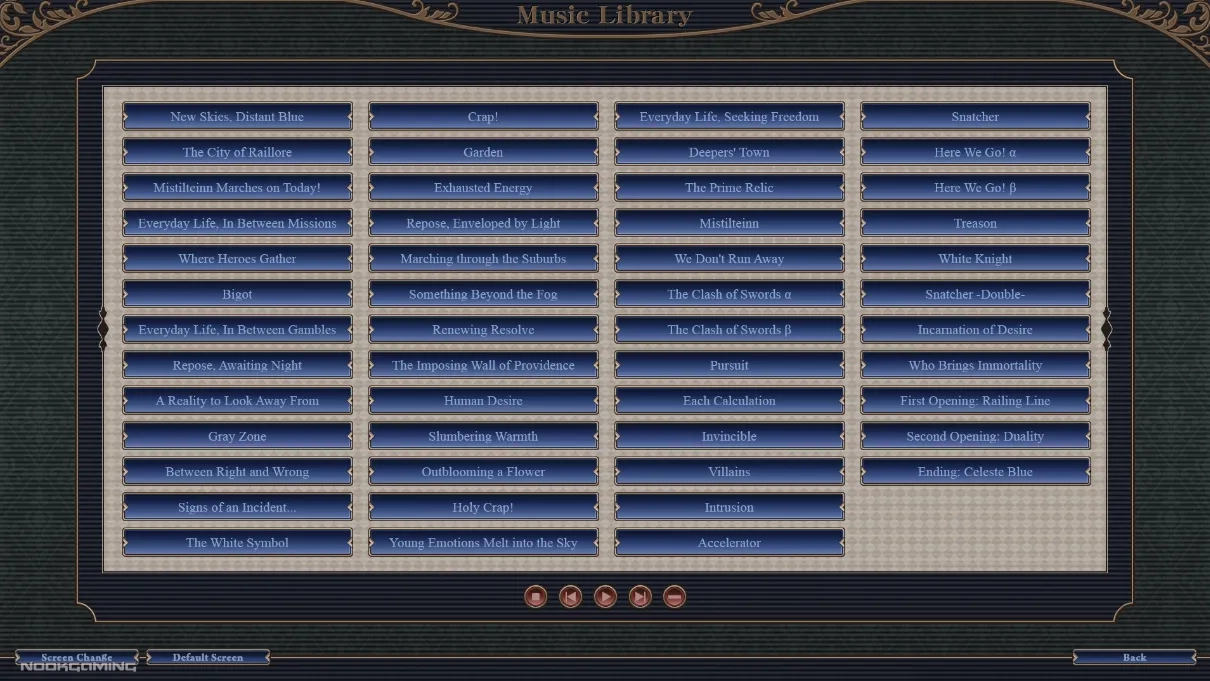
The Pillagers of Raillore sports a large selection of tracks for the game, with 50 songs accessible through the Music Library. The tracks are mainly the work of Mamomo (who previously worked on Sorcery Jokers), setlist, and kakin, a member of the doujin group aeterne that Mamomo has worked with before. Honestly, I had no idea that there were these many tracks at first because a lot of them mesh well together enough for me to think that they’re part of one, continuous track. Amongst these tracks, my favorites are probably Mistilteinn, Garden, and Who Brings Immortality. These tracks are very memorable to me given the scenes they are associated with and do a good job of evoking images appropriate to what they represent in the story. Shoutout to the track named “Bigot” which plays every time there’s comic relief; the name is unfortunate for such a fun track, but the irony of it is pretty funny in and of itself.
Aside from the music, The Pillagers of Raillore is also almost fully voiced. Aside from the male characters’ lines during H-scenes, there are no unvoiced lines throughout the entirety of the game. The voice acting is done really well, especially for Reno given how polarized his roles are for whoever’s assigned to him. There are plenty of raw, guttural shouts alongside the more relaxing, soothing voices the heroines have during the downtime of the story. The presence of voices also helps the battle sequences flow better, with some sections opting to use only voices in-between transitions in the text (which fortunately you can still view via the backlog if you don’t understand a bit of spoken Japanese). Overall it’s a very welcome addition that only adds to an already stellar art and sound direction.
Verdict
The Pillagers of Raillore is an adult visual novel with a storyline that centers on a well-defined fantasy world with lots of high-octane, blood-pumping action scenes. It features consistent themes and messages that play into the overall story and provides apt backgrounds for the cast’s development in their respective character arcs. Fans of shounen battle fantasies will definitely find themselves excited by the chuunibyou-inspiring energy flowing through the visual novel’s text as they take in the eye candy from charming heroines that are both physically attractive and have meaningful stories to tell.
Despite establishing a convincing hero’s journey for the cast, The Pillagers of Raillore suffers from a narrative that places heavier emphasis on character arcs as the main drivers of the story instead of utilizing lore elements as well to supplement the progression of events. While it establishes a good lore base for its worldbuilding, the events that take place during Raillore’s story do not scale well relative to the scope of the setting and the pacing going into the story’s conclusion, creating a sort of dissonance between the grand ending and the journey the characters take on the way there. It ends up making the climax feel rushed because of an antagonist that wasn’t given many opportunities to establish themselves as a significant enemy and a plot barely substantiated before the later part of the text.
With copious amounts of special effects and a plot that relays the protagonists’ struggles to the readers really well, The Pillagers of Raillore is a fantasy adventure that’s sure to both excite and make you feel sentimental with what its story has to offer. Although it falls a bit short in terms of maximizing the potential of its setting, the dialogue and events are still plenty of fun for a fan of the genre. It has an electrifying atmosphere, unexpected twists and turns, and heartfelt emotions. There are a lot of sights to take in, so go ahead and schedule your own visit to this fantastical city!
THE PILLAGERS OF RAILLORE IS RECOMMENDED

If you are looking for another eroge with action, you might want to check out Geminism. We have also covered a wide variety of visual novels both original to English and localized from Japanese, which you can check out here.
Many thanks go to MangaGamer for a PC review code for The Pillagers of Raillore.

Visual novel reader that wishes there were more than 24 hours in a day. Gacha victim, TCG enjoyer, and VTuber simp. Still trying to live happily.