Initially released in 2020, then later internationally in 2025, Summer Pockets REFLECTION BLUE is a nakige/slice of life visual novel from Key, a developer well-known for being one of the pioneers of the nakige genre. As the extended version of the 2018 Summer Pockets, it introduces four new routes with additional scenarios for both new and old heroines.
The story revolves around a teenage boy who, after running away from home, decides to spend his vacation on a small island where his late grandmother once lived. The game is Key’s latest long-format visual novel, utilizing Maeda Jun’s original concept with the help of multiple scenario writers such as Kubota Keigo (Da Capo 4 and 5), Niijima Yuu (Hatsuyuki Sakura, The Witch’s Love Diary), and Okamoto Manabu (various Key titles). The international release, published by VISUAL ARTS, is available to purchase on Steam.
As someone who has read more than a few visual novels here and there, Key is one of the developers that you’ll find yourself always encountering in any discussion of the medium. My first encounter with them was the anime adaptation of their 2004 title CLANNAD, a story that initially feels like a cute slice of life until it does its best to emotionally gut-punch you so that you can spit out all those feelings you forgot you had inside. Regardless of the emotional toll Key titles may take, I feel a sort of happiness having the opportunity to read Summer Pockets REFLECTION BLUE. It feels pretty nostalgic, with all the expectations I have for it and my excitement to read one of their newer works. I wonder how far they’ve come?
With an open heart and mind, let’s go and accompany the cast as they go through another memorable summer vacation!

Crossing the Sea with Broken Wings
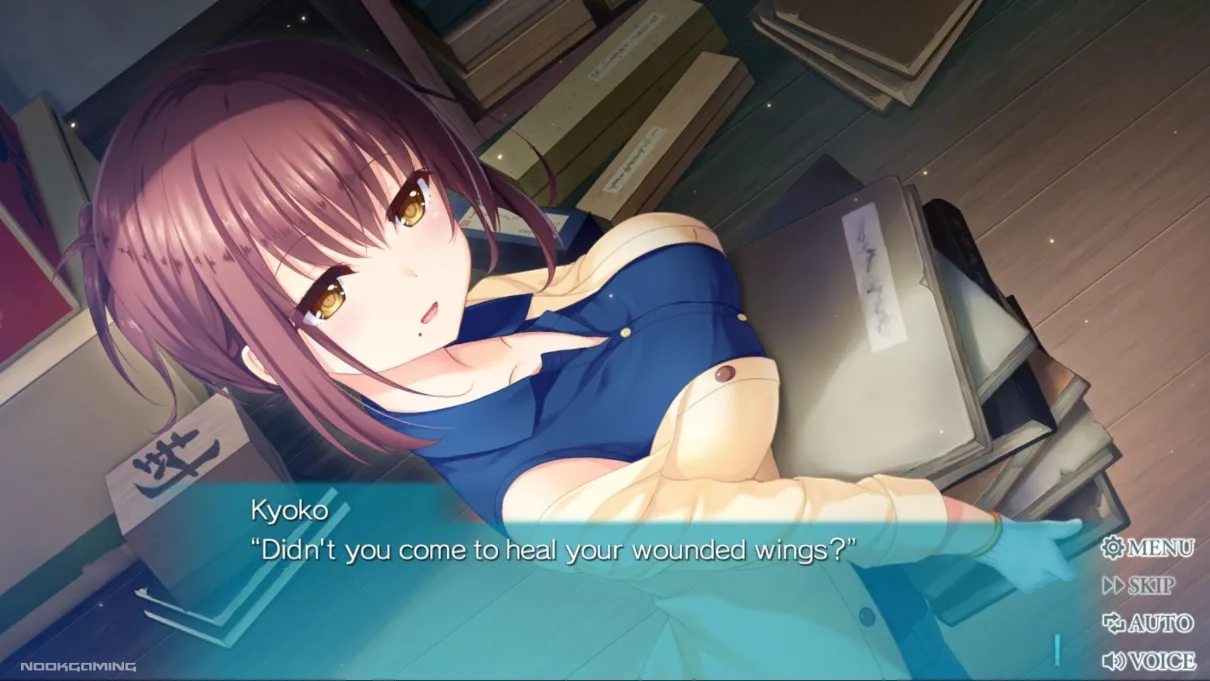
Summer Pockets REFLECTION BLUE follows the main character Takahara Hairi, a teenager whose struggles landed him in a boat going to his late grandmother’s hometown, Torishirojima. Beckoned to the island by a letter from his aunt asking for help organizing his grandmother’s old storehouse, Hairi plans to spend his summer vacation away from the city to “heal his broken wings”. Upon his arrival, he encounters a number of incredible sights: a town with next to no restaurants, a candy store that sells all sorts of oddities, a lighthouse with no light, and lots of greenery. Safe to say, it’s a very empty place in terms of convenience, especially to a boy who has lived all his life in bigger urban centers. The outlook is pretty bleak if you’re considering your options to have a good time.
As Hairi idly spends his time going around the island, he begins to have fateful encounters with some of the islanders. A girl who outright finds him annoying, beauties who are randomly lying around in the fields or on the streets, a trigger-happy munchkin, goddesses of both bountiful and lacking harvests, and men who are overly fixated on their own unique forms of self-expression. Hairi finds that the people themselves, amidst the monotonous rural setting, are full of color and life. They reach out to him and welcome him as one of their own, bringing him along as they do random silly summer activities befitting high school students. What kind of memories will they be creating together?
With a month left before he goes home, Hairi embarks on his precious summer vacation.
Returning to the Nest to Heal
Summer Pockets REFLECTION BLUE’s story mainly focuses on Hairi’s journey to heal his emotional wounds from his troubles in school. Although initially reticent when it comes to his problems, his experiences with the Torishirojima islanders help him eventually open up to others and come to terms with his own issues. Of course, in turn, he helps the others grow through their problems as well, creating heartwarming relationships where they support each other’s efforts to become better as summer ends. The story is heavy on slice-of-life elements, with comedic quips sprinkled here and there to offset the eventual dramatic turn that Key plots are known to take.
Fittingly, as the name implies, Summer Pockets REFLECTION BLUE makes copious use of “summer” as its common motif. Both the setting and the action of the characters evoke nostalgic ideas of vacation, especially in contrast to Hairi’s urban upbringing. In general, the story feels like a fun read. The characters have great chemistry and have amazing expressions; they really run with the idea that they’re just teenagers spending time together and having fun. There is, however, a heavy use of cliches that sometimes makes it feel a bit shallow in terms of character reactions to specific story drivers. For the most part though, the cliches play well into each other to create character dynamics that make for entertaining interactions. Aside from these, I also liked how each character’s unique trait was used to address Hairi’s internal struggles differently, highlighting the multifacetedness of similar personal problems. It makes the visual novel have a more heartfelt, emotional way of framing its message.

Summer is the Season of Migration and Hot, Passionate Love!
As a visual novel with romantic themes, Summer Pockets REFLECTION BLUE features a cast of primarily cute girls, most of whom Hairi can end up in a relationship with if he chooses to pursue them. There are eight heroine routes, with two more scenarios unlockable after clearing the initial eight. Each of the heroines comes with their own separate character arc that lasts through the entirety of summer, which means that depending on who you choose to pursue, Hairi’s relationship with the others and his own reflections about himself change according to the featured themes. For most of these routes, the heroines feel largely flat, with character development being mostly that of Hairi’s or embodied by a minor shift in the heroines’ outlooks near the climax of their stories. It’s not necessarily a bad thing, but it does make a lot of events rather predictable to the reader and takes away some of the excitement.
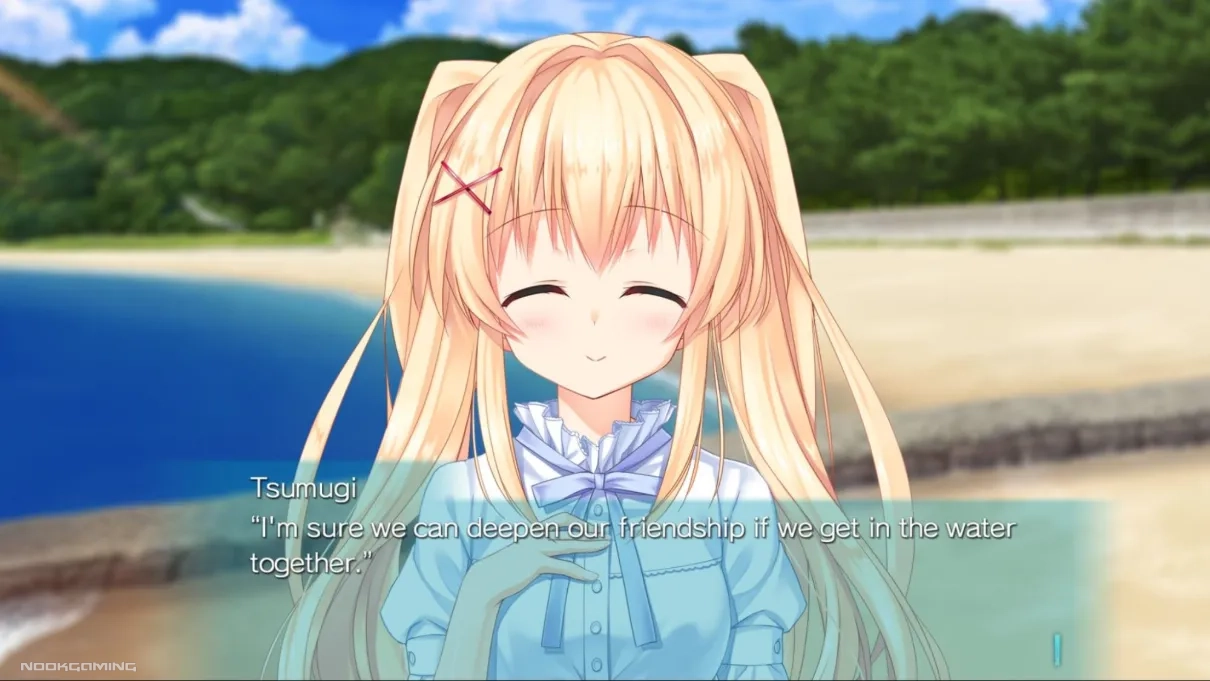
Looking at the heroines themselves, Summer Pockets REFLECTION BLUE features a sizable collection of romantic interests that all fit in their own archetypes. You have your token mascot character heroine, the shy kuudere, the airhead with a taste for adventure, a beautiful closet pervert, a clumsy heroine who’s also honest to a fault, and so on. Each of them have clearly defined character traits that make their routes stand out from each other in both romantic progression and central themes. This makes each heroine feel fresh and less monotonous, as the dynamics change between each character.
Shallow Waters for Crying Lovebirds
The problem with such a large cast, however, is that there’s a larger chance of compromising their routes’ narratives. Summer Pockets REFLECTION BLUE suffers from this in the way it structures the branching off of its routes; a large portion of the story’s common route is dedicated to meeting each heroine and building rapport with them initially, so their route has to deal with establishing the foundation of their budding romantic interest and their arc’s climax. This is a tough task to do with eight heroines while avoiding the risk of making the visual novel’s one-month story either too condensed or dragged out, and understandably, a task that this visual novel comes up short of fulfilling.
The structure of each route is formulaic; the initial days focus on wholesome relationship-building that eventually introduces a foreboding story element that they either overcome or cope with through companionship. The narrative builds you up with happy thoughts and then carves out a strong sense of inevitable loss, after which it performs a bait-and-switch that leads to an emotional ending. It’s a great format that I felt tug strongly at my heartstrings, but with ten scenarios in total using the same pattern within the same length, there’s a point where despite the tenderness of the subject, later routes lose their ability to move the reader the same way the first ones did. It becomes too repetitive without palate cleansers such as story arcs with different moods in between. The indication of the dates doesn’t help as well because the more you read, the more familiar you get with how they spread out the story beats leading to key events within the routes. You start to expect the switch-up, dulling the story’s impact.

Perching on People’s Heads
Summer Pockets REFLECTION BLUE makes use of an in-game day system to help readers track their progress through the common route. A day in-game is split into two halves, AM and PM, and contains different events for different characters based on what date it is. The intended progression line towards a heroine’s route is fairly simple; you click the event that features the heroine every time it pops up while making some choices along the way, and eventually, you’ll land yourself in their route. There are also miscellaneous events marked by a butterfly logo, which either lead you to random achievements if done correctly or unlock hidden minigames. Outside of the common route, the Torishirojima Map is also used for some specific heroine events that involve visiting multiple locations to progress the story in some way.

Table Tennis is Serious Business!
Diving into the minigames, Summer Pockets REFLECTION BLUE has two mostly irrelevant but fun game modes that readers can engage with for additional achievements and fun scenarios with the cast.
The first one involves Tenzen, the hardcore table tennis fan of Torishirojima who seeks a worthy training partner. By entering the Secret Base when his icon is displayed in the Torishirojima map, you can engage him in a 1-vs-1 table tennis training session that has three variations: fixed number of rallies, endless mode, and challenge mode. Each of these modes has its respective set of achievements, so if you’re a completionist, you’ll have to try them all out eventually.
There are two difficulty levels for this mode, and depending on which you choose, you’ll have to either aim and click or only click. This only affects Hairi’s gameplay however, which means that if you find an enemy whose gimmick you have a hard time dealing with, it won’t change anything besides giving your wrist a rest. Personally, I really like the challenge this mode has; it adds an interesting spin to the point and click gameplay by making characters, such as Tenzen, do unfair, even sometimes borderline superhuman serves and returns that respect the comedic nature of the minigame. The best part? It’s optional!
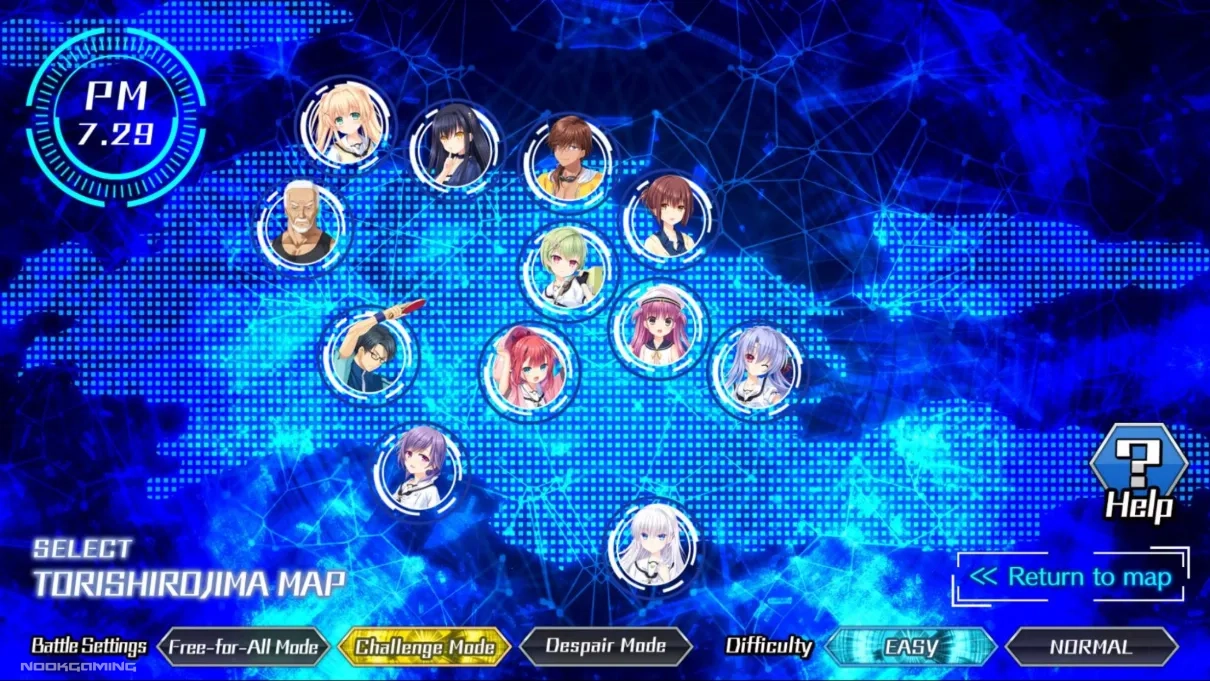
Alternatively, instead of fully clearing the solo training with Tenzen, you can also unlock the hidden Islapong scenario that sets Hairi on a quest to find his perfect partner for the Islapong doubles tournament. This hidden scenario has additional dialogue with most of the cast and features special movesets that reflect their character quirks that made them so lovable in the first place. It also changes the core gameplay of the table tennis minigame, introducing elements such as an equipment gauge, a health point bar, and ultimate abilities. If you finish the tournament as the winner, you get to see a secret ending unrelated to the rest of the game’s plot.
The Early Bird Catches the Islamon!
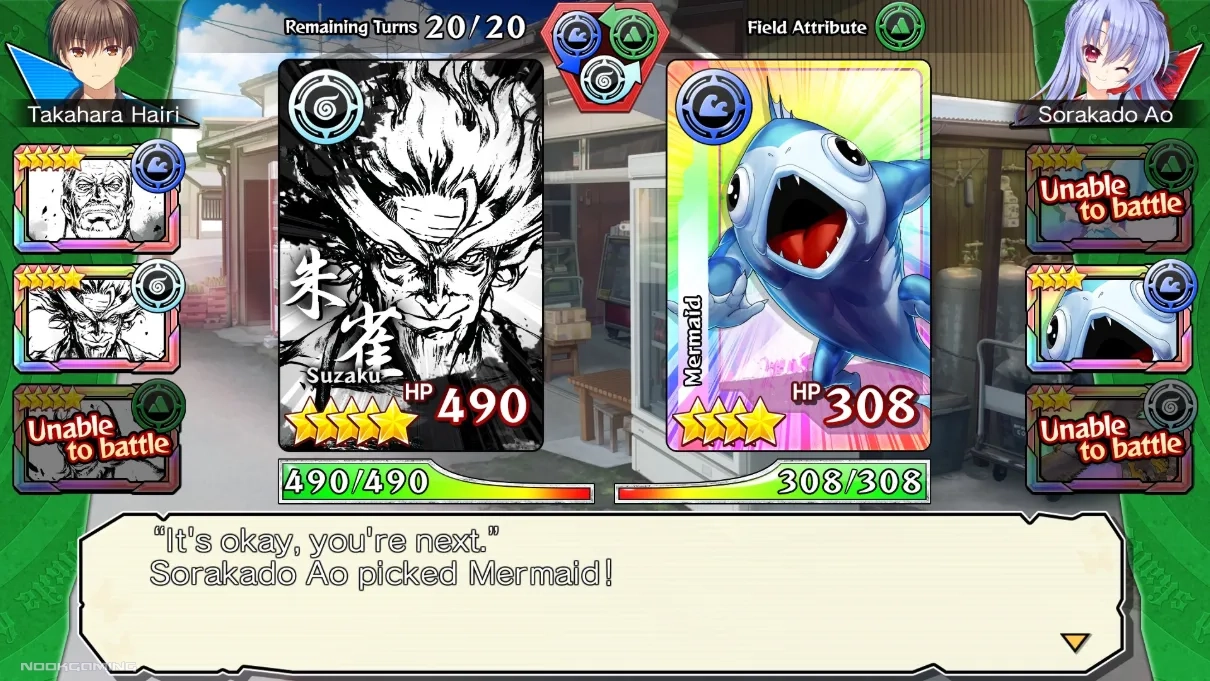
The second minigame featured in Summer Pockets REFLECTION BLUE is Islamon, a game that takes the visual novel’s island setting and mixes it with a very recognizable series that men and women of all ages surely love. The mode features a set of creatures that Hairi can use to battle the residents of Torishirojima and claim the title of Islamon Master. There are a hundred Islamons to collect, so for content completionists, you’ll be here for a while.
There are two main phases for Islamon’s gameplay. The first phase is during the morning and afternoon halves of the in-game day, where Hairi can enter the Islamon map to find fellow fighters that he can challenge. If he wins, he can move up the ranks and get closer to becoming the strongest Islamon fighter on Torashirojima. If he loses, you retain your rank but lose a half day of progress that can hinder you from finishing the scenario within the time limit.
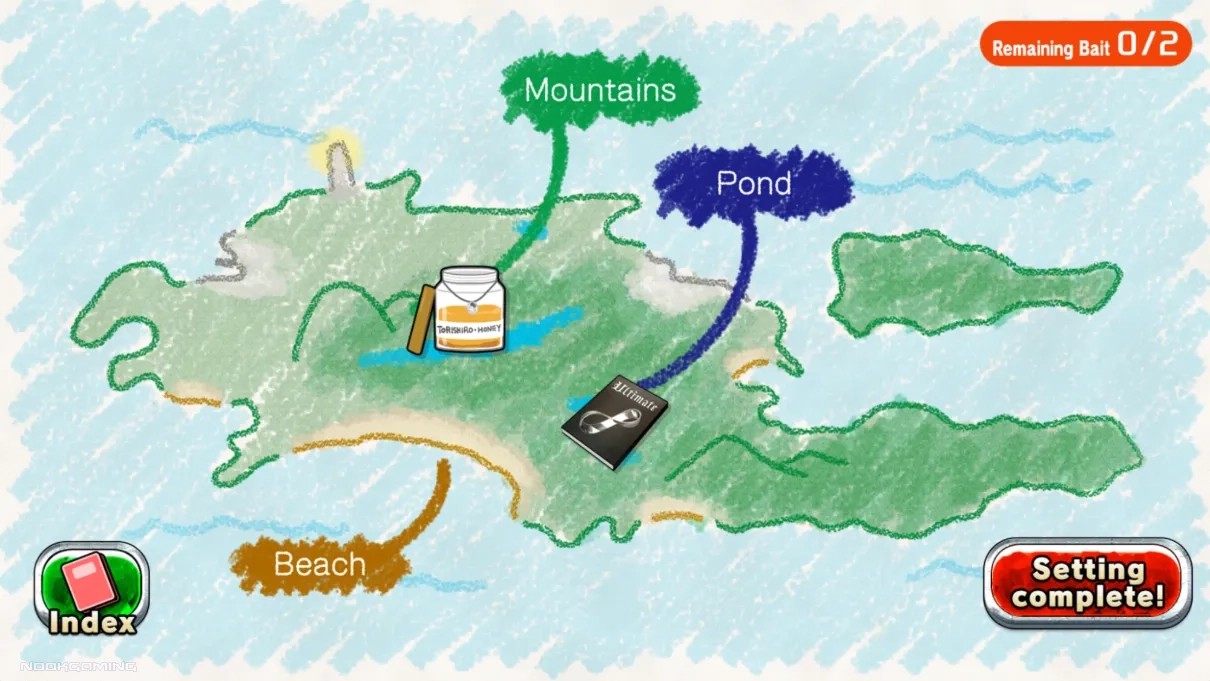
Of course, to consistently win and get to the top, Hairi will need stronger Islamon to deal with stronger enemies. This is where the second phase of Islamon matters: at night, before sleeping, Hairi can choose places to leave bait, with different types of bait and new locations unlockable through viewing certain optional scenarios or other criteria. He can then check the following morning to see which Islamon he catches so that he can increase the roster, which he can use to fight. The higher the rarity of the Islamon, the stronger it potentially is. In a way, to fully beat the mode, you’re encouraged to go through trial and error to find sets of Islamon that will get Hairi to the top as soon as possible!
When it comes to the actual Islamon battles, there are a few mechanics that make or break Hairi’s career to the top. There’s an elemental triangle used for strengths and weaknesses, special abilities tied to specific Islamons that can trigger within a fight, and characteristics dependent on certain character relationships that can destroy specific Islamons’ fighting spirits. There’s a surprising amount of secrets and special dialogues to discover, especially with the human Islamons. Much like Islapong, another secret ending unconnected to the main plot awaits you here.
Overall, both minigames are pretty fun! They’re great ways to change the experience up from the melodramatic atmosphere of the routes; a sort of break in-between to help stave off reading fatigue. I just wish it were easier to know the milestones for getting the achievements for each minigame. It’s a little bit tiring imagining the grind you need to do when you don’t even know the max limit you should be aiming for in each mode.

The Birds, the Sky, and Her Underwear
Similar to many of Key’s modern titles, Summer Pockets REFLECTION BLUE is an all-ages release. The game does not contain any form of explicit adult-oriented sexual content, although there are implications of it in certain routes, mentions of adult topics, and a particularly dirty-minded heroine. There are also some fanservice-oriented CGs, which are standard for bishoujo-focused visual novels.
Some fanservice CGs were adjusted presumably to become less risque by adding assets to the original artwork or editing the colors. I did feel that it made the CGs in question look a little bit more awkward in appearance. There were also other minor adjustments from the original.
This was an all-ages title in the first place, but if the lack of adult content is a turn-off, then this is not a title for you.

Summer Pockets, Once More
Content-wise, Summer Pockets REFLECTION BLUE is a direct upgrade to its predecessor. With additional routes and scenarios, there’s little reason to pick up the original over this release. The newly introduced routes for both side heroines and the new character Shiki, while barely affecting the core story of the game, make use of the same motifs that the original set of heroines had. In a way, they just expand on Hairi’s possible summer experience in Torishirojima. There’s no doubt that if you liked your experience with the previous game, then you’ll like REFLECTION BLUE as well.
Overall, while I do have my reservations about Summer Pockets REFLECTION BLUE, I greatly enjoyed my experience reading through the game’s story and spending time with its fun and lovable cast. It’s a pretty ambitious project that felt like it wanted to fit all of what it wanted to do within such a compact package. On one hand, while it did feel rushed and rough around the edges in some parts, whenever it had its highs, it came punching. I just wish it put more variation into its pacing across routes and their respective playtimes; it would have helped greatly in getting rid of predictability and improving payoff for readers’ emotional investment in the characters, especially in the game’s last stretch of routes.

Art and Music
Summer Pockets REFLECTION BLUE features a total of 116 unique CGs, not including variations. These CGs are spread across all eight heroines, with a majority concentrated around the initial routes. The increase in number from the base game is nothing to scoff at, however, with at least 35 of them directly attributable to REFLECTION BLUE.
As evident in the quality of the game’s visuals and art assets, Summer Pockets REFLECTION BLUE features a large number of artists who worked on the title. Some recognizable names include Na-Ga who worked on a large number of Key works (including but not limited to AIR, CLANNAD, and Little Busters), Izumi Tsubasu (Mashiroiro Symphony, 9-nine- series), Nagayama Yuunon (Angel Beats! -1st beat-, SPIRAL!!), and Humuyun (LAMUNATION!, LUNARiA -Virtualized Moonchild-). Although I was initially skeptical of such a variety of artists working together because of their different art styles, I didn’t find them jarring to look at, even when looking at them side by side. The sprites nicely blend together into the incredible backgrounds drawn by Atelier Kuukikan, famous for their work on many visual novels such as Kinkoi: Golden Loveriche and Sugar*Style. It’s honestly amazing how pretty everything looks.
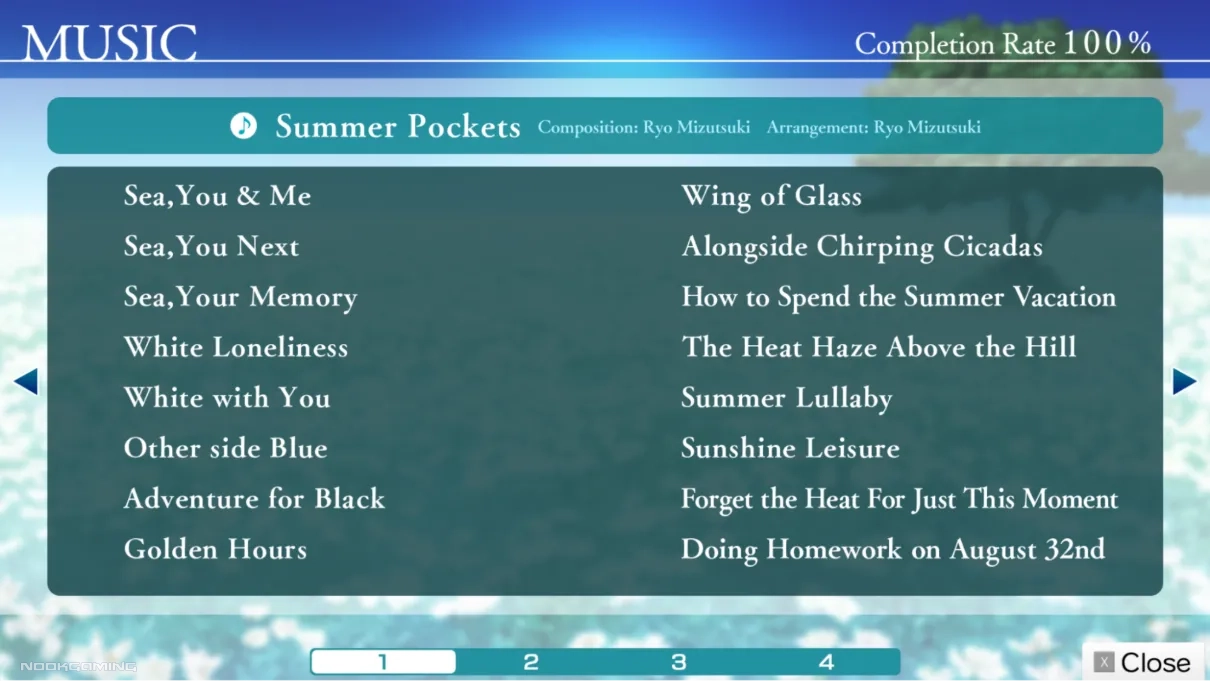
As for the music, Summer Pockets REFLECTION BLUE features a total of 60 OST entries, with multiple songs covering the opening and various endings. The OSTs feel great to listen to, with each heroine’s soundtrack reflecting some aspect of their personality or story. For the miscellaneous tracks, whenever I hear Summer Adventure or Frolic Summer, I immediately know I’m in for a good time in-game. The atmosphere they create solely through these tracks is amazing, making scenes easily memorable for the reader. The insert songs sound beautiful within and beyond their intended contexts, perhaps with the exception of Tsumugi’s Summer Vacation, which, while heartwarming and wholesome, has some silly lyrics that can make you question your own musical taste. All in all, the music is probably one of the best things about the game, something that’ll probably find me coming back for more.

Verdict
Summer Pockets REFLECTION BLUE is a nakige that dabbles with the idea of having a perfect summer vacation. On an island far away from your home, with friends you’ve made during your stay, under the heat of the sun and the salty breeze of the seas, it paints an experience filled with wholesome friendship, self-discovery, and possibly even the promise of a romantic encounter. Through companionship and the willingness to make yourself vulnerable, it’s an emotional journey that’ll have you feeling nostalgic about happier times with people you love.
Although incredibly high quality in both visuals and music, Summer Pockets REFLECTION BLUE trips over itself by inserting too many things in its modestly long runtime. With a total of twelve endings across an average of fifty hours of reading, there’s barely enough time to establish meaningful relationship progression while also creating a solid foundation for a hard-hitting emotional climax. Perhaps a longer script or a more focused overall storyline could have made it better, but as it stands, it feels rushed. Despite this, it manages to effectively use existing cliches to create fun and interesting characters with dynamics that make its common route one of the best the genre has to offer.
If you’re looking for some space to reflect on experiences and memories from warmer times, why not take a trip to Torishirojima? Summer Pockets REFLECTION BLUE might just have that thing you’ve been seeking that’ll help you reconnect with your inner child. Simple yet full of emotion, it offers you a chance to live a summer vacation that’s sure to be a memorable one.
SUMMER POCKETS REFLECTION BLUE IS RECOMMENDED

If you are looking for another visual novel, you may enjoy Kinkoi: Golden Loveriche. We have also covered a wide variety of visual novels both original to English and localized from Japanese, which you can check out here.
Thank you to Visual Arts for providing a PC review code for Summer Pockets REFLECTION BLUE.

Visual novel reader that wishes there were more than 24 hours in a day. Gacha victim, TCG enjoyer, and VTuber simp. Still trying to live happily.