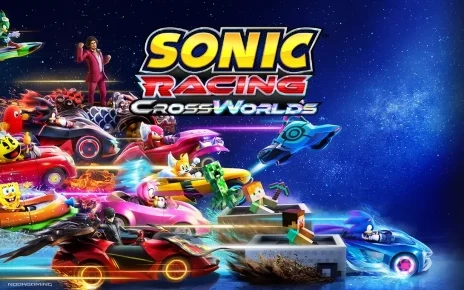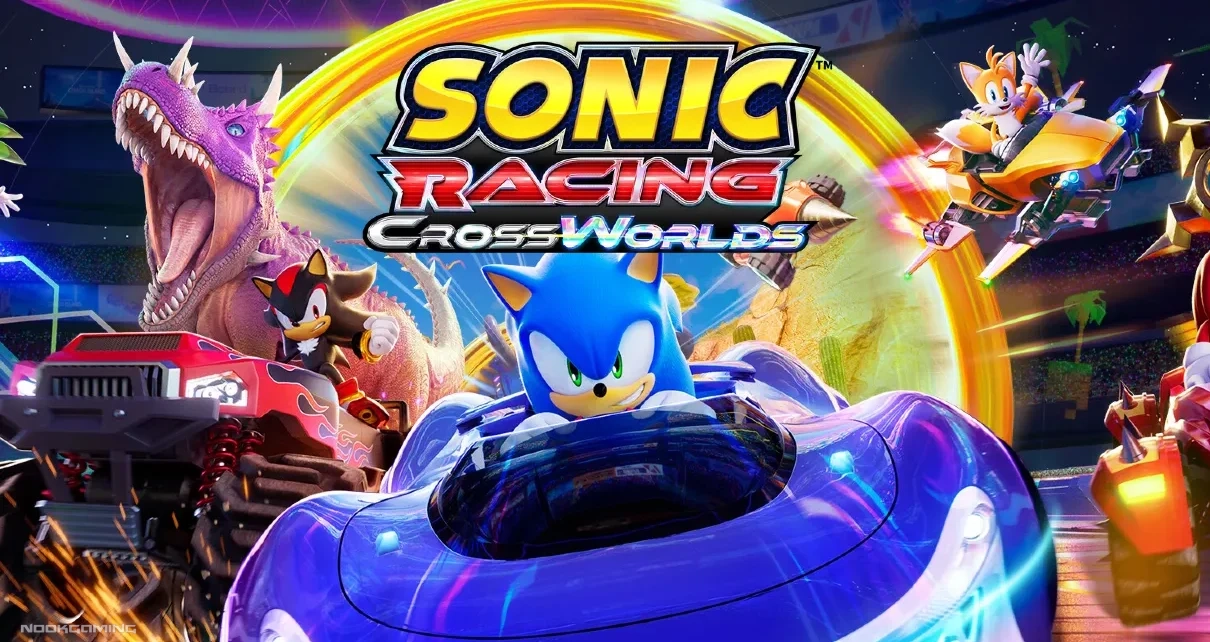
The last time a Sonic Racing title was released was back in 2019 with Team Sonic Racing. It was little more than an overwhelmingly okay racing game that failed to live up to its predecessors in almost every regard. However, that was during a period where Sonic as a franchise wasn’t up to much of anything, and to say a lot has changed from then to now would be a big understatement. With that being said, we’ve finally got a new Sonic Racing title from an unexpected place. Unlike past games, which were developed by Sumo Digital, the one we have today combines Sonic Team with Sega’s old arcade racing developers. Sonic Racing: CrossWorlds has arrived, promising chaotic races across dimensions.
Super Sonic Racing
Despite carrying the Sonic Racing moniker, a shift in developer has also led to a shift in the general game feel compared to previous outings. Like before, it’s still a Sonic-themed kart racer that follows many of the same conventions as Mario Kart. You run a 3-lap race around one course, competing for 1st Place against 11 other players who will throw all manner of items to impede your progress, and you’ll be doing the same. Like previous Sonic racing titles, there is a very heavy emphasis on drifting and turning sharp corners to fill up your boost meter and speed up. This game trades the heavier, more methodical turning and gamefeel of previous titles for something more lightweight and frantic. It takes a bit to get used to if your muscle memory of past games is still in place, but it feels amazing once you get a feel for it. Taking sharp turns and making big shortcuts by boosting over rough terrain to overtake the competition never felt so satisfying.
But what’s a kart racer without good track design? It wouldn’t be Sonic Racing: CrossWorlds, as it has what I feel is some of the best level design throughout the series’ racing spinoffs. They’re fast-paced, have satisfying curves to turn, well-placed shortcuts, and have lots of alternating paths. Unlike the previous game, which was made up entirely of tracks based on levels from older games, CrossWorlds provides a strong mixture of original levels combined with ones from Sonic Adventure 2 and beyond. Even all of the recent games get courses based on them, with Shadow Generations, Sonic Superstars, and Sonic Frontiers all here and accounted for with excellent tracks of their own. They even successfully incorporate many mechanics and ideas from those games, as do tracks from other titles. Kronos Island, from Frontiers, has you combating and hitching a ride on many bosses from that game, who are all mechanically reminiscent of how they work. Radical Highway from Sonic Adventure 2 and Aqua Road from Sonic Forces feel like full-on recreations of their respective levels.
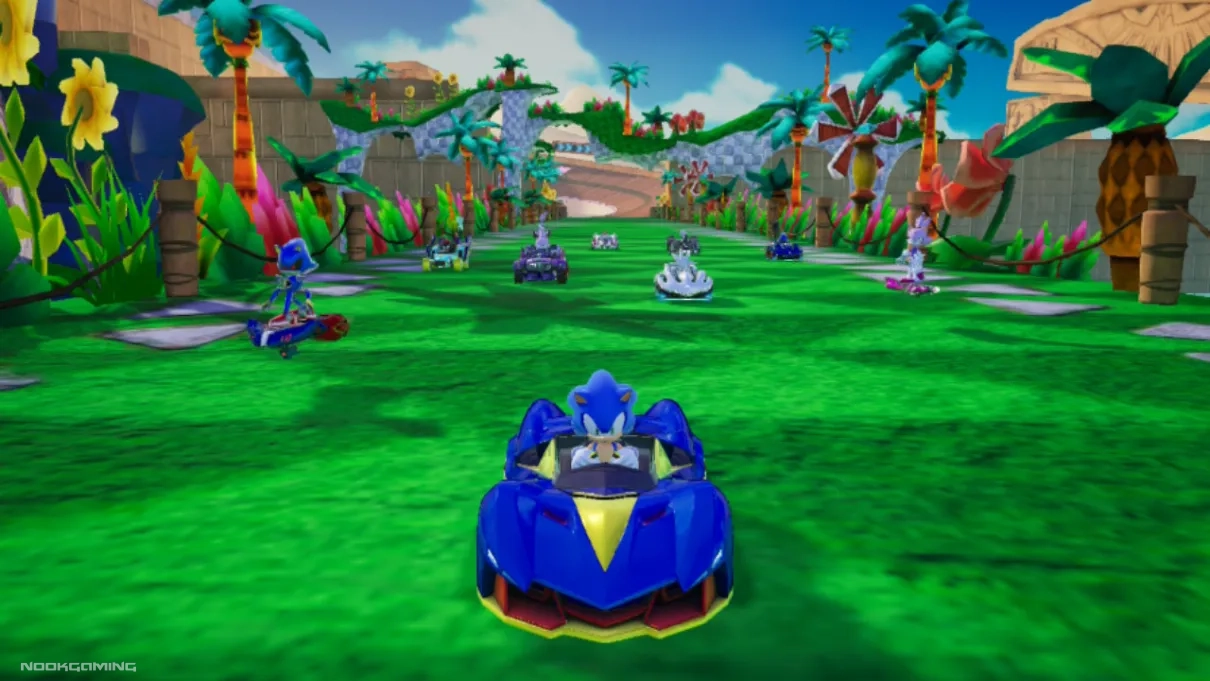
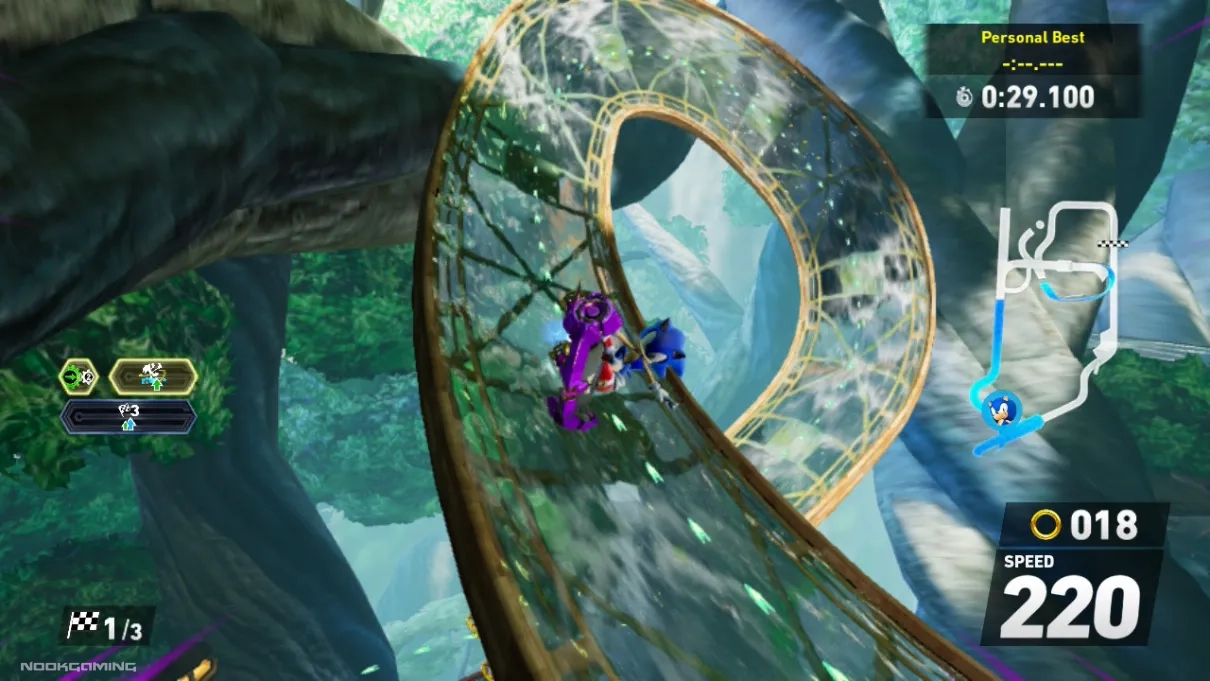
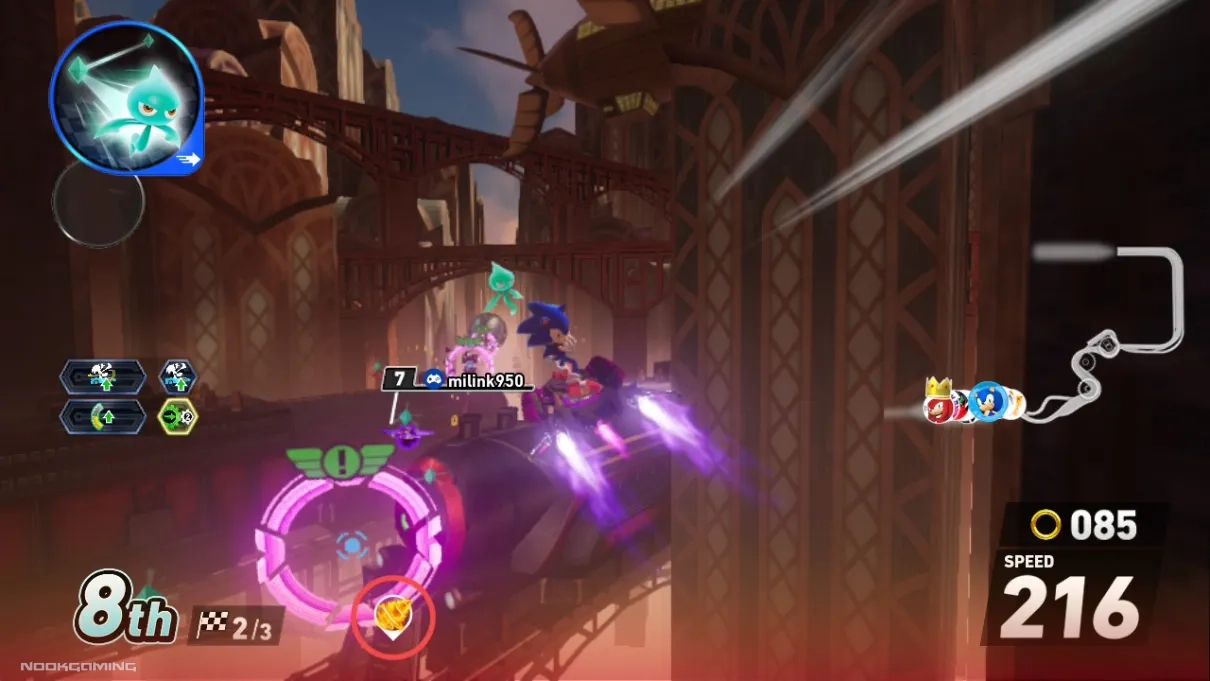
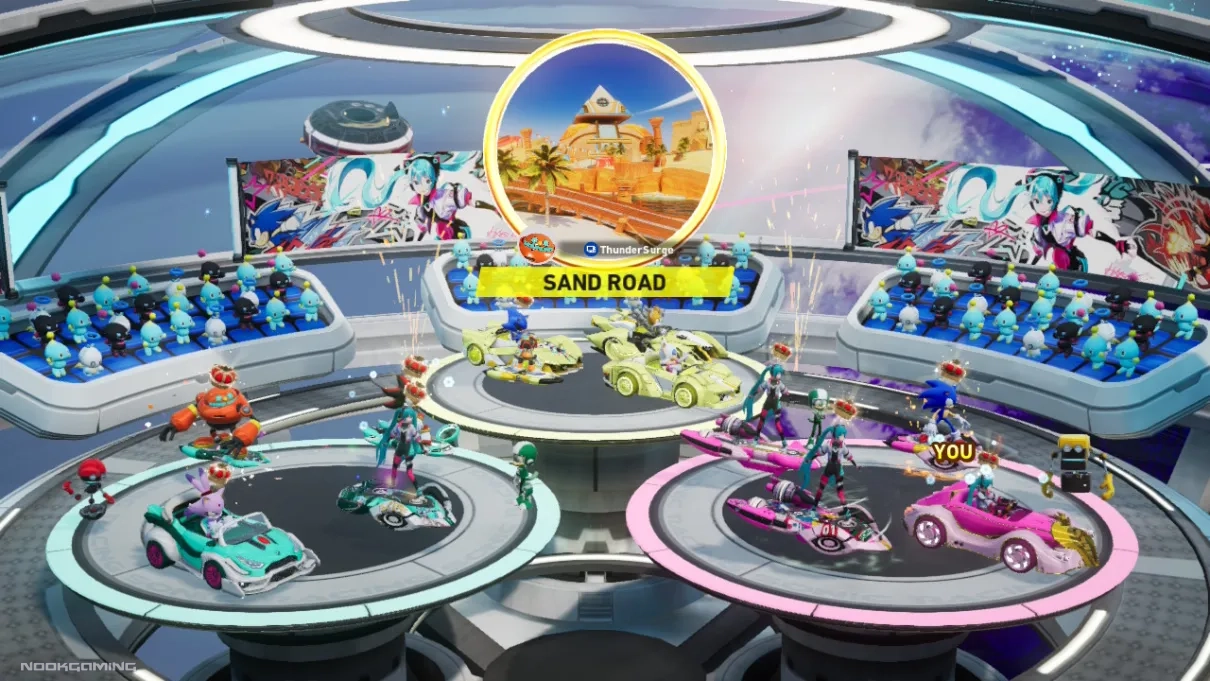
These are made all the better by the triumphant return of the vehicle transformation system from Sonic & All-Stars Racing Transformed, as well as that game’s lap transformation system. By driving through designated zones, you’ll fly or boat through different sections of the level design. While Sand Road might have you solely driving on land on Lap 1, Lap 3 opens up a section for you to boat over. Likewise, while you can stick to driving throughout Urban Canyon, you can also take the upper paths by flying through Boost rings. Lap transformations meanwhile are never quite as dramatic as the ones from Transformed, but they make enough of a difference to feel distinct and fresh. Lap 3 of a given track may open up a new shortcut, a new pathway, or an alternate route that will see you boating or flying.
Vehicle transformations are, however, more transformative in terms of control, raising the overall skill ceiling of the game. Boats lose their ability to drift, but gain a charge jump, meaning you can take different kinds of shortcuts, but turning is now more difficult. Flying is more freeform, but drift boosting in that mode is harder, meaning you have to more closely consider what kinds of turns you’ll take and how to avoid obstacles or items. Needless to say, it’s a lot of fun. While these gimmicks aren’t in focus as much as they were in All-Stars Transformed, I think the balance struck here, thanks to some other gimmicks, makes it really work out in its favor.
Cross the Worlds
The headlining feature of Sonic Racing: CrossWorlds is, of course, the eponymous CrossWorlds feature. At the start of Lap 2, you’ll enter and traverse a lap from a totally different course. Started a smooth car ride on E Stadium? Well, Lap 2 might take place on the rocky waves of Kraken Bay or see you flying in above the clouds of Sky Road. The jump is dramatic and impressively instant, as all you’ll have to do is hop in a portal for things to change in a flash. Whoever’s in first place has dibs on what CrossWorld will be played next, usually given the choice between a totally random track or a track that is exclusively a CrossWorld. Tracks that are CrossWorlds only are, generally, tracks from previous games that are either abstract or canonically very far away from Sonic’s planet or location. These include places like the abstract Hidden World from Sonic Lost World, Cyberspace from Sonic Frontiers, or Sweet Mountain and Galactic Parade from Sonic Colors.
Compared to main courses, CrossWorlds are designed much less conventionally, and rather than follow a lap system, they’re usually one-way and follow one direction. They also tend to use transformations a lot more than the main courses, like Holoska using the boat and flight transformations a lot more, or Magma Planet giving you a choice of driving or staying airborne. In general, I would say the difficulty of these courses tend to be noticeably higher than the regular courses, which I think adds a nice dash of excitement to every race. This is before factoring in the Frenzy Time system, which is indicated by a green exclamation mark over the CrossWorld you select on Lap 1. These don’t appear every time, but add a sense of even more thrill and chaos with a randomized new element. These can range from extra boost gates scattered throughout the CrossWorlds, to a Boost Wisp permanently in your inventory, or a fast-charging Drift Boost that you can utterly spam.
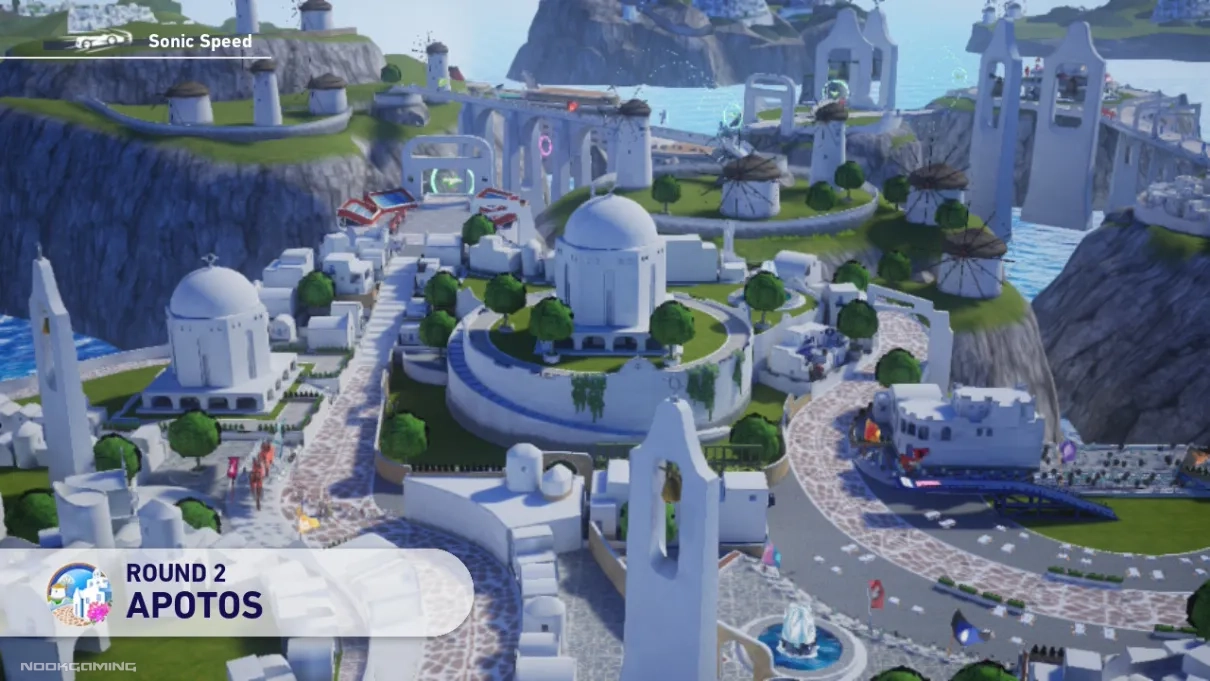
CrossWorlds are incredibly thrilling, more so because of how they make each race feel so distinct. I’ve never had a race in CrossWorlds that I felt went down exactly the same as the one I just did. Even in the rare instance where I play online and race on the same track twice in a row, it’s always offset by the CrossWorld itself being different. Though I’m happy to play on Radical Highway more than twice in succession, it’s always fun to try and lead the pack to see where I can lead everyone next. They also add to the game’s already strong sense of improvisation, adding a nice splash of strategy to the game. As discussed in my guide for Sonic Racing: Crossworlds, some tracks like Dragon Road with its water and long turns are better suited to machines that turn better or can do tricks faster, compared to something like Hidden World where you’ll fly more and have fewer chances to build up drift.
It’s not really any wonder that CrossWorlds became the game’s subtitle, because they are a really strong answer to a problem racers almost always have. Repetition can set in easily once you feel like you’ve played on each course enough times in most kart racers. Even after roughly 60 hours with the game, I’ve never once felt this problem with Sonic Racing: CrossWorlds. There are hundreds of potential stage combinations and I feel like I haven’t even approached seeing them all. What really keeps it exciting is the sense of choice I have thanks to it, and it makes vying for 1st Place even early into a race a lot more exciting. They really struck gold with the addition, made all the better by how seamlessly it works.
Catch Me If You Can
When you’re not racing online with friends, you’re probably in the single-player doing either Time Trials or playing Grand Prix mode against Rival AI. The game has a total of eight GPs in the base game, and beating them all will unlock Super Sonic Speed, an even faster game mode than normal. Grand Prix has four races, the last of which will combine each previous course across three laps. Super Sonic Speed also unlocks a new set of challenges for the game’s Time Trial mode, where you can race against the clock and yourself to see how quickly you can beat three laps of a given course. It’s also here where the game’s absolutely brutal difficulty will creep up on you, and I mean that in the nicest way possible.
Rivals in Grand Prix mode can go from Level 1 all the way up to Level 10 at the player’s discretion. Level 10 Rivals do not mess around at all, having near-perfect item usage and always making excellent cuts in a race. While their stats aren’t boosted, they play so well that they don’t even need it. This makes Grand Prix mode very addicting to play because it feels like I win every race by the skin of my teeth. Thanks to items and machine builds being well-balanced, it also rarely falls under the feeling of being unfair or like the game is conspiring against me. It’s perfectly possible to embarrass even the strongest AIs with enough effort and planning.
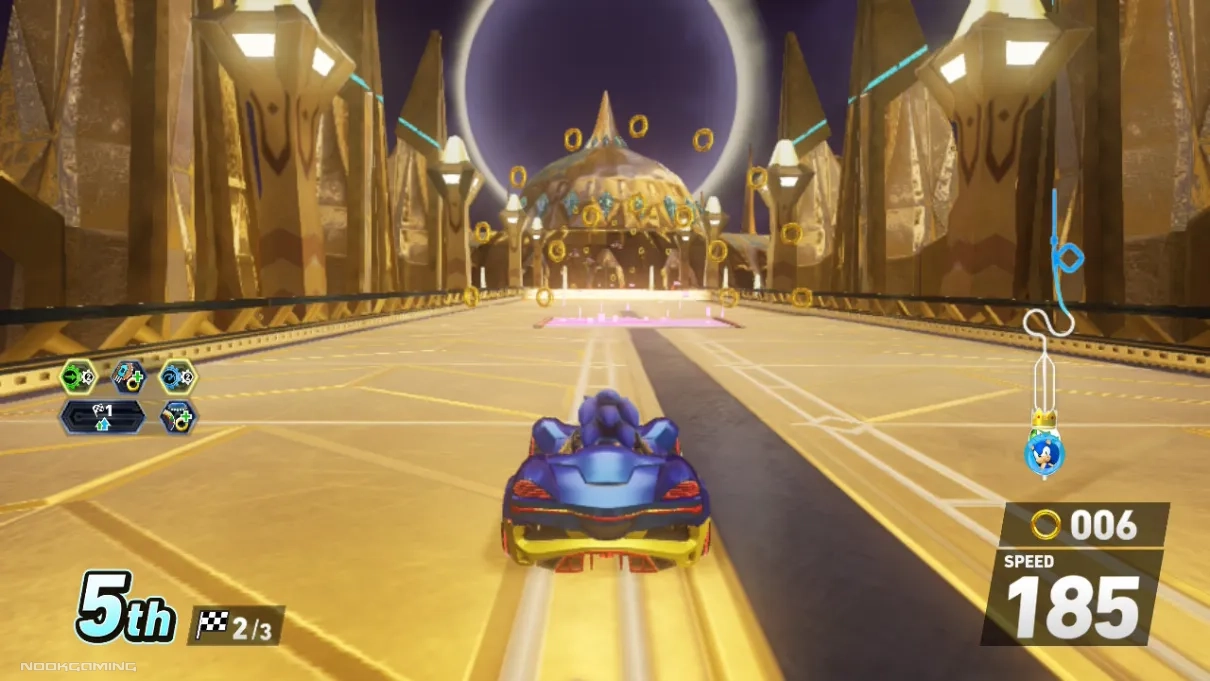
Time Trials, on the other hand, make a really nice distinction from something like Mario Kart because of the way it handles boosting items. Rather than being given three of them at the start to do what you please with, the first two laps of a race will have a set number of them dotted around the race track for you to pick up. These don’t respawn, so you have to think carefully about how you chart your course in a given level, and when or where you want to use a Boost. Using three Boost items on Lap 1 might leave you short of one you need to make a good time on Lap 2, and this is before factoring in Lap 3, which often features transformations or changes that open up new routes for you to take. It adds a really nice layer of strategy and consideration to everything, with courses like Northstar Island especially using this quite well.
Time Trials can be raced on both regular courses and CrossWorlds, and as mentioned before, have two sets of completion times for the player to tackle based on the speed they pick. By getting enough A Ranks on these, the player will steadily be rewarded with music from many past Sonic games for the Jukebox feature, allowing you to mix and match songs for each lap of a race. If you want to really push yourself, you can go for S Rank times as well. S Ranks are absolutely brutal, and even as of writing this I haven’t gotten them all due to the sheer amount of skill and strategy they take. They’re only for bragging rights, and thank goodness for that as I don’t see most kids beating these. That makes them all the more fun to conquer, however, with even slightly off turns or misaligned shortcuts making a significant difference in success or failure. I can only hope the next mainline title takes notes from this game, as I’ve sunk a surprising amount of hours into this alone.
Green Light Ride
On top of the other major mechanics, there’s also the addition of Gadget Boards. Gadget Boards have six slots for the player to place Gadgets in, which provide a long list of buffs to the player depending on what they pick. Gadgets also have a different cost associated with each of them based on how powerful they are. Some Gadgets might cost three slots, while others may only cost one. Carefully balancing and considering which Gadget combination is the best is one of the keys to victory in this game, as you’ll need it both offline and online. There are a lot of gadgets to try, ranging from ones that boost your stats based on which lap you’re on, to ones that power up your drift boost, ones that make your tricks faster, one that gives you an extra item slot, and so on. If you want the full scoop on how to make a good gadget board, check out our player’s guide here.
Gadgets provide a really strong sense of player individuality and expression, and even when playing online with up to 12 players, it never felt like I was running into the same old builds. Instead, everybody played to their own strengths and in ways that suited them. While the strength of each Gadget Board can fluctuate based on what main courses and CrossWorlds are played, I’ve yet to come across a build that is overwhelmingly more powerful than the others. This leads to a very healthy amount of experimentation in both Time Trials and World Match mode as I work to increase my ranking.
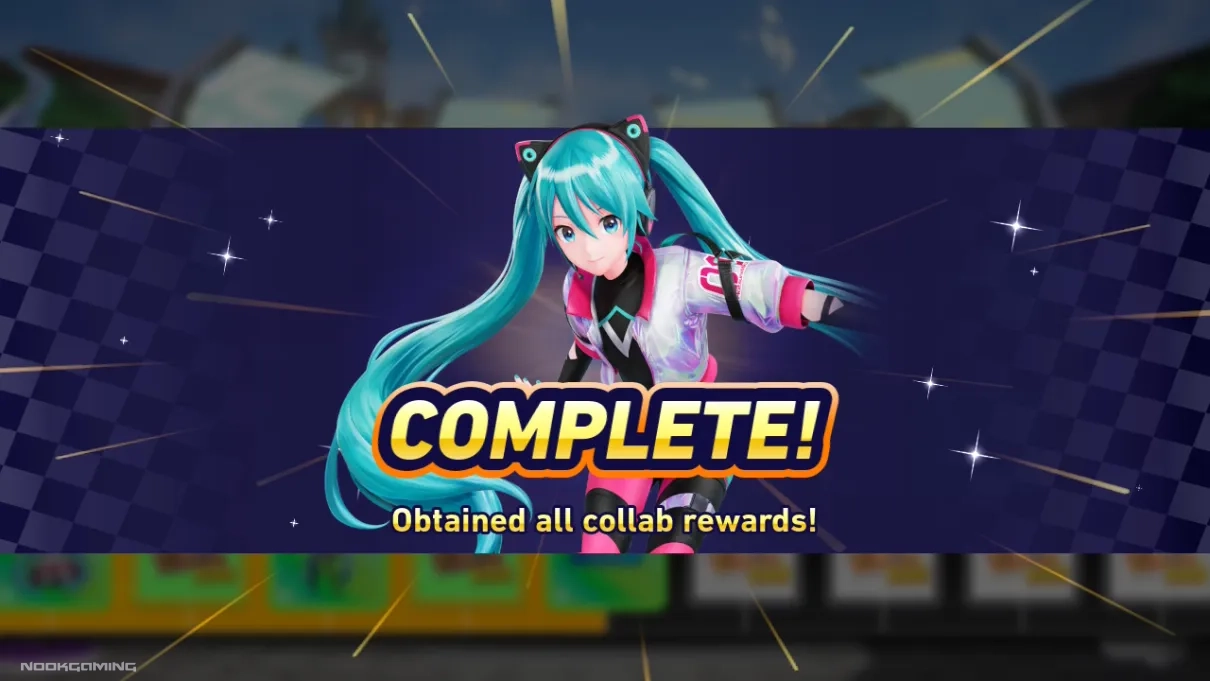
Speaking of online play, I’m happy to report that that part of the game has been almost totally smooth for me. Besides the critical addition of cross-platform matchmaking, it also has an excellent lobby and menu system that allows you to easily join up with friends and play online in public matchmaking or private rooms where you can make your own rulesets. Joining a room is as easy as sending a premade code, and making friends is as easy as picking their name out of the menu. The only issues I ran into were occasional disconnects when servers were particularly congested, but otherwise it was very easy to use. The ranking system is also a lot of fun, with the World Match system having strong skill-based matchmaking in place. As of this writing, I’m sitting comfortably in A+ Rank (just before Legend Rank), and that climb has been satisfying and sufficiently rewarding, with the game giving the player different items to unlock the more they climb.
Every once in a while, there are also themed Festivals that happen online centered around a specific character or gimmick. If you’ve played Splatoon in the past, they are very similar to Splatfests. This uses the same gimmick as team races available in Race Park mode, where you’ll team up with three other players and your positions will be averaged out to declare one team a winner. Every race will also have a secondary objective that contributes to your point total, like bumping into teammates or seeing who can pull off the most tricks. These are really fun breaks away from the cutthroat nature of regular races, and the rewards you get for participating in them are nice bonuses too.
Looking Sharp, Team
As the series’ debut in Unreal Engine, Sonic Racing: CrossWorlds doesn’t disappoint. Environments are very colorful and surprisingly varied, feeling rich with detail but never obnoxiously so. The Nintendo Switch version looks somewhat crude, but it’s workable, and things like performance and load times are surprisingly impressive on it. Even the CrossWorld portal feature is totally seamless and has no lag whatsoever. Character animations are more of a mixed bag, since some look a little jank or lack polish, but never to a degree where things look poor outright. Character intros at the start of a Grand Prix also have lots of personality, with nice camerawork to boot.
CrossWorlds also has an excellent stadium-like and spectator sport vibe, thanks not just to its visuals but also its incredible soundtrack. While I enjoyed Team Sonic Racing’s score for what it was, CrossWorlds has it beat several times over for its quantity, quality, and genre variety. It pulls from all over Sega for different composers and has a lot of guest artists on top of that, composing old favorites in ways that feel really refreshing. Final Lap tracks in particular are some of my favorites, adding a booming choir whose claps get louder as you approach the finish line, turning each race into a real spectacle. This even applies to the game’s Jukebox feature, where unlockable tracks from the series’ past get new mixes specifically to accommodate the final laps.
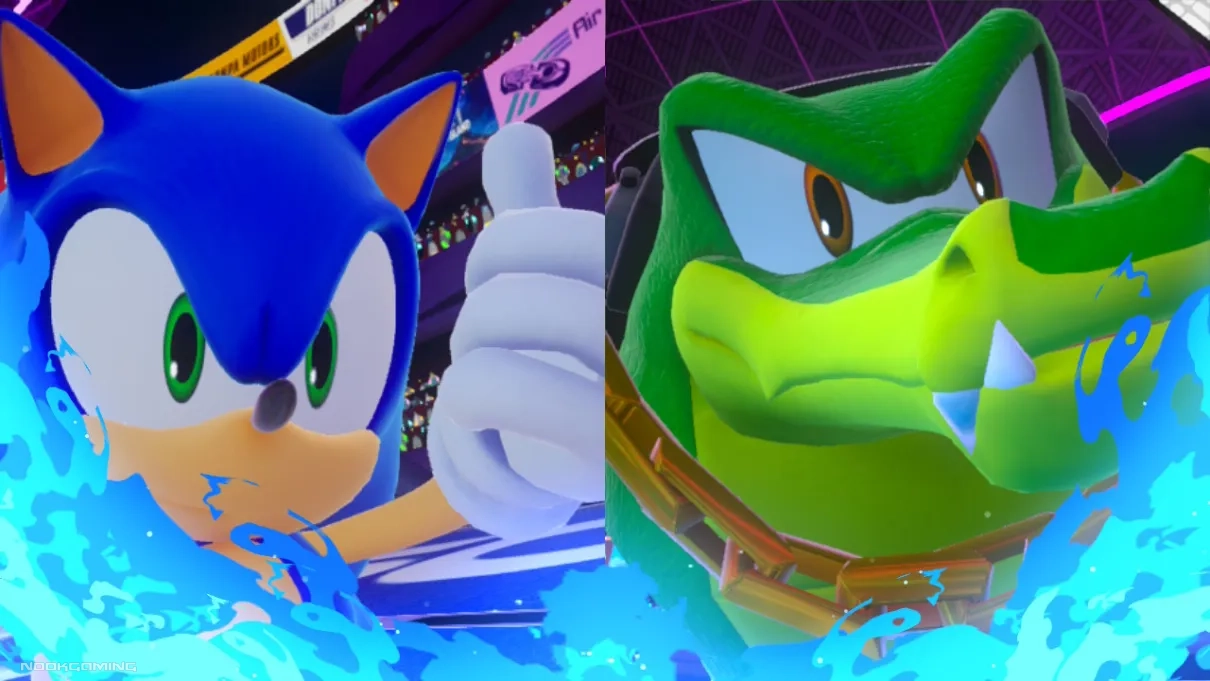
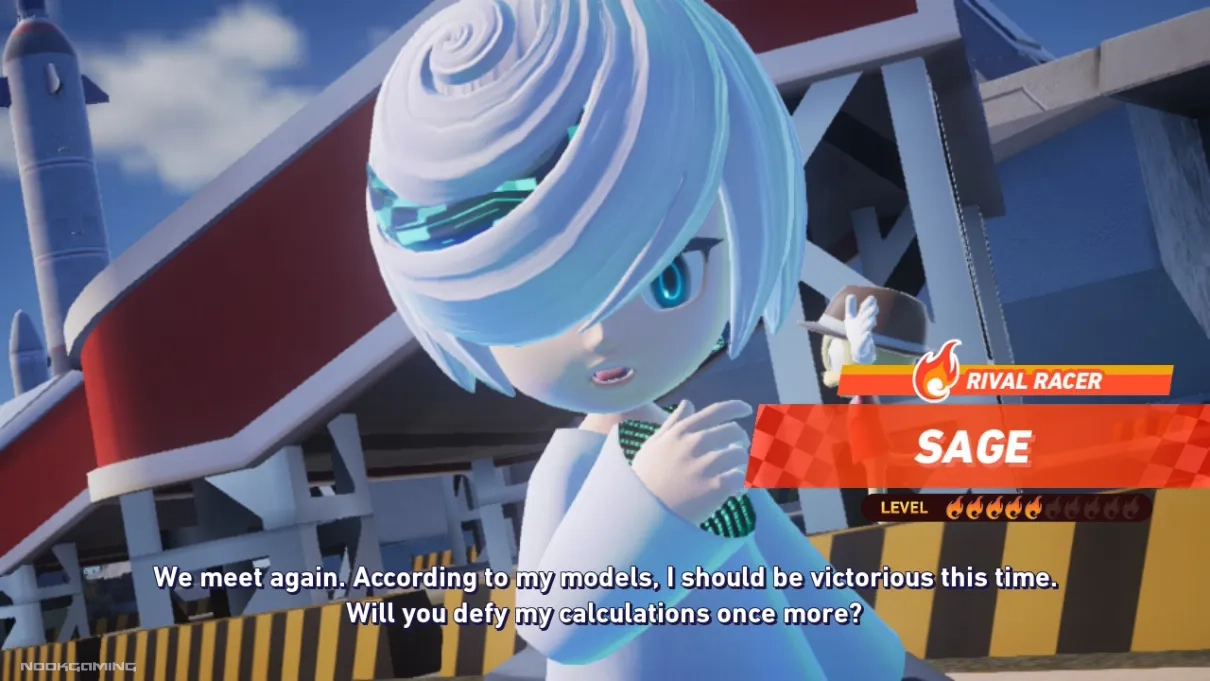
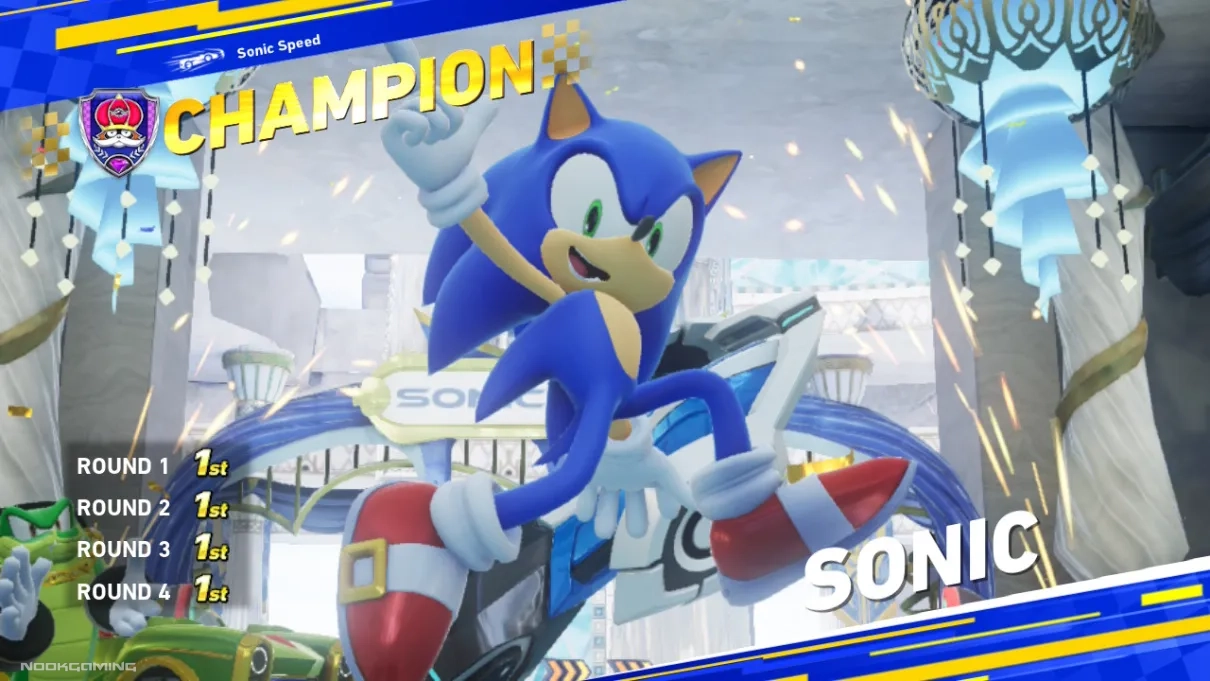
Putting those aside, this has far more callbacks, nods to the source material, and appeals to series fans than Team Sonic Racing in just about every sense. As mentioned before, not only is the track selection a lot more diverse, but so is the character roster, music, and general attention to detail. Win a GP with Sonic and you’ll be treated to a riff of his character theme from Sonic Adventure 2, all while he breakdances and strikes a pose from the box art for Sonic Heroes. Even character interactions and incidental dialogue are far more impressive thanks to writing from Ian Flynn (previously responsible for both Frontiers and Shadow Generations). There are impressively over 500 character interactions, with two different ones at the start of a GP for each Rival combination. These are filled with callbacks to both the games and comics, referencing big and small story beats alike. Stuff like Team Chaotix being perpetually penniless or Sage’s loyalty to Eggman are used to great effect for a diverse range of character interactions.
Even on the main courses and CrossWorlds, you’ll get extra dialogue depending on which character is on what track. Play as Sonic on Dinosaur Jungle, and he’ll call out to Shara, the main heroine of the game that track is from. Play as Silver on Sweet Mountain, and he’ll reference an obscure mission where he was featured in the Nintendo DS version of Sonic Colors. There are many more besides those, but I think it’s best if players discover the rest for themselves.
Verdict
Sonic Racing: CrossWorlds is the inevitable result of Sonic Team’s growing ambition and polish combined with years of arcade racing experience. The result is the very best kart racing game I’ve played since the early 2010s, and a massive turnaround after the tepid thud of Team Sonic Racing. The titular CrossWorld mechanic makes for a game that’s bursting with variety and unpredictability, all woven together wonderfully with considered game balance and customization thanks to its gadget system. My few qualms with the game like occasionally spotty visuals and certain grindy elements do almost nothing to detract from how addicting and compelling everything about the core gameplay is, from its gamefeel to strong track design. In the end, I had to be dragged kicking and screaming away from it just to write this review, and I really think that says it all.
SONIC RACING: CROSSWORLDS IS HIGHLY RECOMMENDED

Beginner’s Guide & Advanced Tips: Click Here
If you would like to see more Sonic, you may be interested in our review of Sonic X Shadow Generations.
Many thanks go to SEGA for a Nintendo Switch review code for Sonic Racing: Crossworlds.

A hobbyist who took up the pen to write about their favorite pastime: games. While a lover of many genres, Isaiah Parker specializes in Platformers, RPGs, and competitive multiplayer titles. The easiest way into his heart is to have great core gameplay mechanics. Self-proclaimed world’s biggest Sonic fan. Follow him @ZinogreVolt