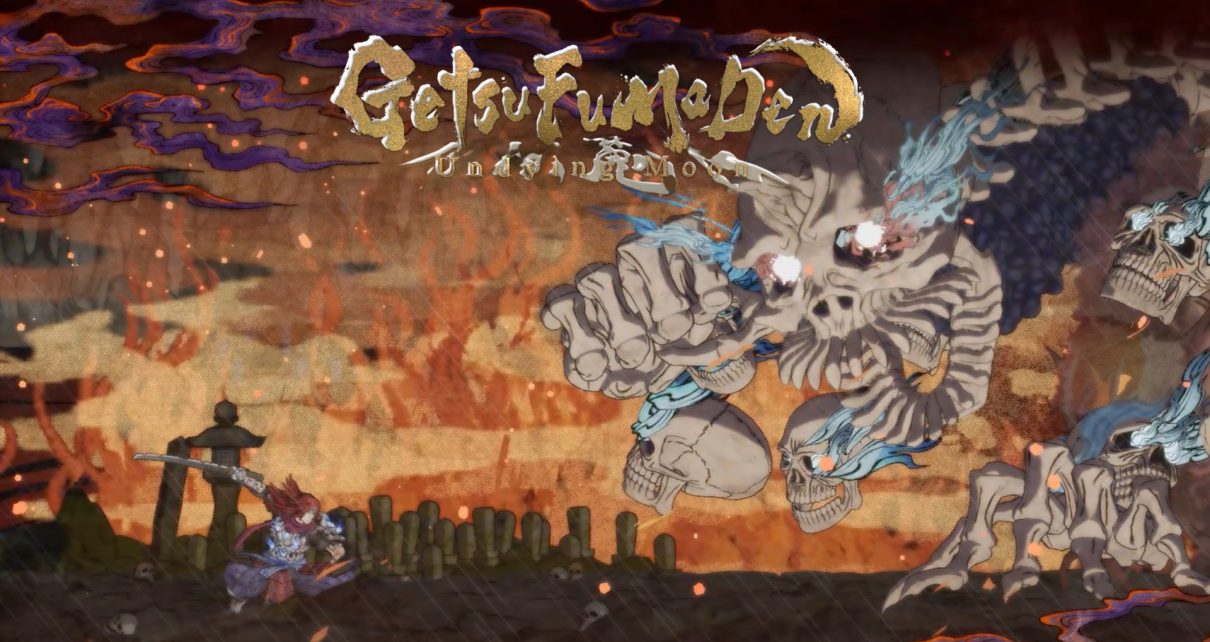
GetsuFumaDen: Undying Moon is a sequel to a game that very few people will have heard of. You might have if you have you’re either into Japanese gaming or played Castlevania: Harmony of Despair. Either way, Konami is gonna Konami and have resurrected this rather obscure relic and brought it to Steam Early Access to be followed by a Nintendo Switch release in 2022.
He must be Fum’in
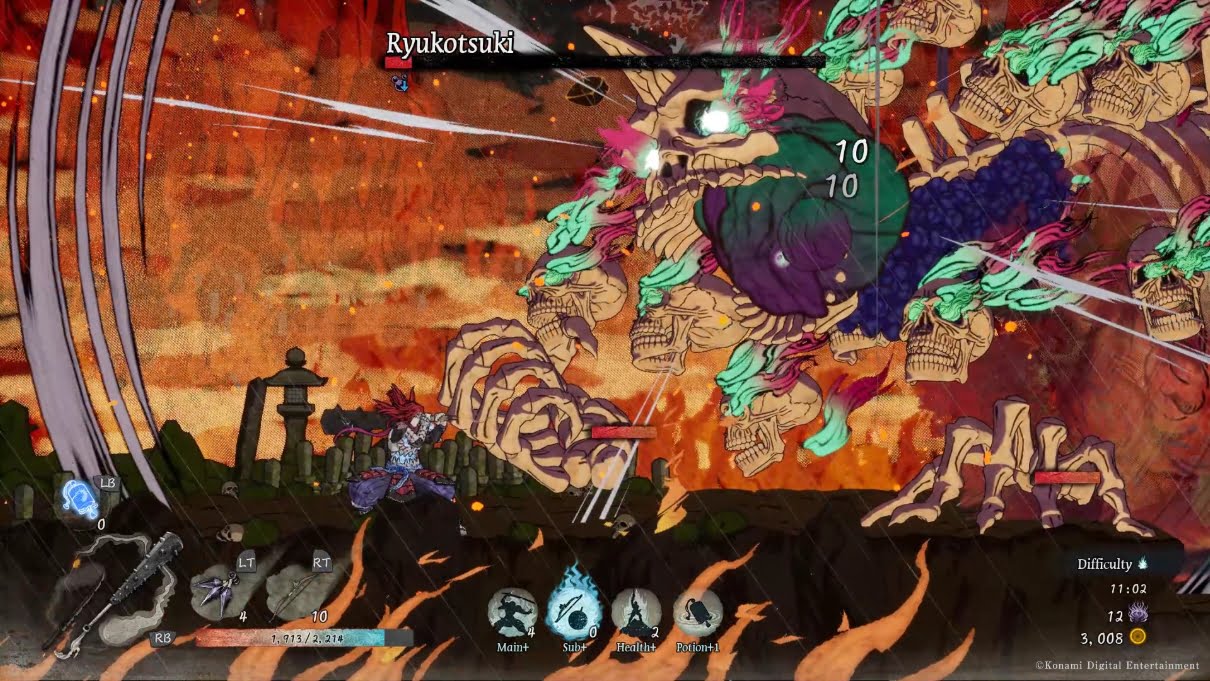
What is a GetsuFumaDen I hear you cry? Well, it’s a tough title to remember for starters! 1000 years before this game’s start, an evil demon king called Ryukotsuki was sealed back into hell after rampaging around Japan by the leader of the Getsu clan. Fast forward 1000 years and Ryukotsuki is back, signaled by a giant Miasma growing in the Valley of the Void. Fuma, our hero, isn’t about this invasion and decides to descend into Hell and give the Demon King a right slap before he gets out and causes mayhem across Japan.
The story outside of that little blurb is near enough nonexistent. You get a little bit of cryptic babbling but this isn’t a story-focused experience. It harkens back to when Konami not only made games but made them with more gameplay than chatter.
Unfortunately one of the better additions to the “rogue-like ” genre isn’t here, and that’s additional lore or story upon death. This is a massive blow, especially in a post-Hades/Children of Morta world where even death somewhat rewards players. This could be something that gets added later as the game is still in Early Access. It’s something I would love to see, maybe in the form of tales from Clan or the history of the Demons over the years.

RogueVania what’s that Den?
GetsuFumaDen: Undying Moon is described as a “RogueVania” and compared to titles such as Dead Cells and Hades, two of the genre’s finest outings. Out of the Torii Gate, I’m just going to say that aside from it controlling like a 2D Platformer, this isn’t the kind of “Vania” combo most would expect. This reminds me more of the difficult Castlevania titles from the NES to SNES era.
Levels are procedurally generated in terms of layout and enemy placement, though sadly not in terms of enemies used, events, or even bosses. You’ll explore the game’s various areas, chopping down foes, picking up randomly dropped loot, and trying to survive on one life long enough to stick the boot into old Ryukotsuki.
You have the standard jump and combat roll as most have come to expect from the genre. Sadly the roll has fewer I-frames than I’m used to or would have liked, meaning I experienced quite a few early deaths, especially from the giant trolls with clubs whose hitboxes were a wild mystery.
Weapons start with Katanas and can range from clubs to spears and even Umbrellas. Each of these has a “special” ability. For example, the Katana can counter attacks if you’re skilled enough. Sub-weapons follow this pattern and have quite the selection from ranged bows and guns to traps and magic. You can carry two of these alongside two main weapons, meaning you can tailor two kinds of load-outs. You can swap these on the fly with the shoulder buttons and let the barrage of sub-weapons fly with the trigger buttons.

Combat is a somewhat basic affair involving you slashing and bashing your foe with the standard attack button, occasionally hitting a critical attack signified by a golden Japanese symbol or putting them in a “kill state”, which rewards you with a quick kill and a fancy animation to boot.
Stage traversal does the best it can with the random nature of the layouts. Traps are few and far between, and this certainly won’t be testing anyone’s Kaizo skills with the platforming.
You’ll find various Torii Gates throughout the stages. These can be fast travel gates, in-game stores, or the entrance to that area’s boss. These are easy to tell apart and you will have grasped what each one does by the end of your first ill-fated run.
Bosses are giants and have been designed with that classic pattern-learning mentality that we all know and love. The first time you come across one the odds may seem insurmountable, but after a few cracks of the whip, you’ll be running through them with ease. Until you get to the next one that is.
Come and Getsu Some
GetsuFumaDen: Undying Moon as previously mentioned is a rogue-like, and everyone knows that games of the genre need to be of a certain difficulty. Even on the standard “Commoner” difficulty, the game can be quite a challenge initially. Though once you’ve had a few runs and learned all the boss patterns and/or had some really good loot drops you can run the game in around an hour. Once you finish your first complete run you can visit a statue to up the difficulty and try again, carrying over anything you unlocked on the previous difficulty.
As is synonymous with this genre, death comes naturally and you’ll be seeing the Clan Hideout quite a few times. It’s here you can use found materials to craft better starting weapons or use Yin and Yang symbols found throughout to upgrade your starting stats. Maybe start with more health or extra healing potions? Anything to see the end.
When you die you keep 10% of what you are carrying in terms of materials used to bring out dormant talents in the weapon trees and the soul collectibles. You lose your gold and any weapons you found on the run. After you defeat a boss, you can return to the Genji Hideout to store your items, which is very much advised. This can also make your next area much easier if you have enough to make tweaks to your demon slayer.

Bust-a-Moon
Visually GetsuFumaDen: Undying Moon is equally beautiful as it is bare-bones. The art direction is that of Ukiyo-e which is synonymous with Japanese art. Think the art in E.Honda’s bathhouse or the art styles of Okami and Muramasa: The Demon Blade.
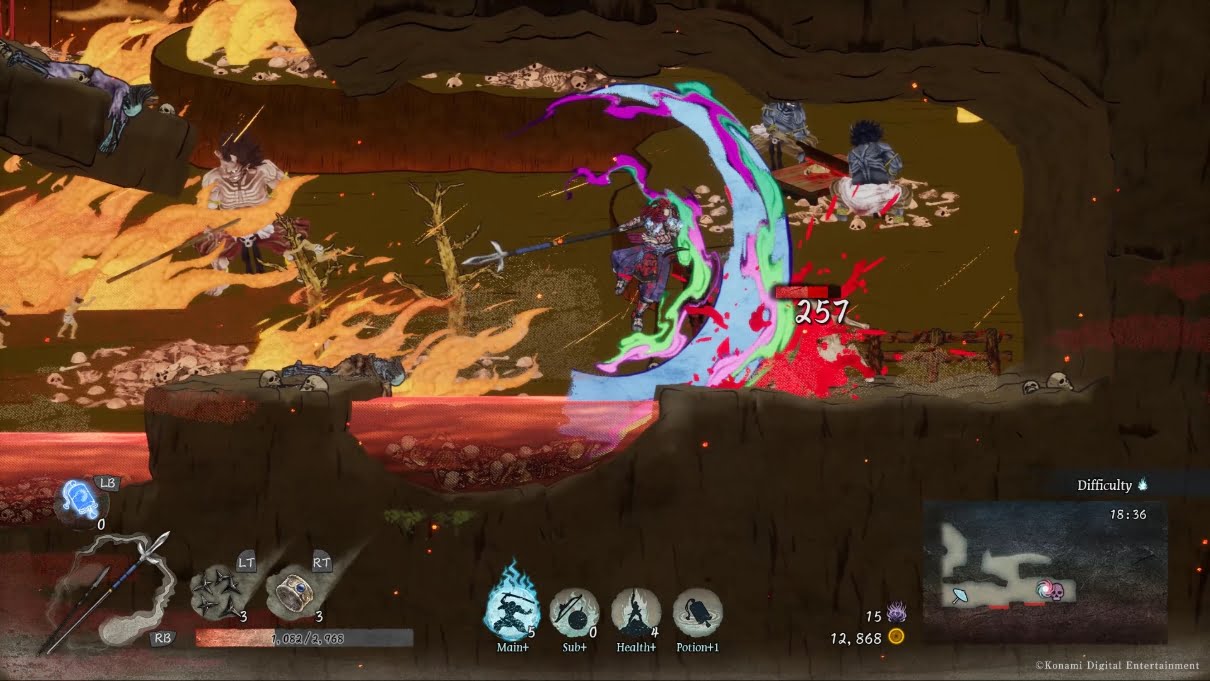
The art is beautifully vibrant and colorful. Swinging a club produces a rainbow of color, and even the more macabre elements of hell have a certain charm about them. At times it’s like looking at a living painting. Fuma and the bosses animate fluidly whereas the enemies, especially larger ones, seemed to miss a few animation frames.
What is quite jarring is the actual playing field isn’t quite as well done. It lacks the hand-drawn elements and opts for a more 3D polygon feel, no doubt another side effect of the random nature of levels. The Valley of Void looks fantastic with brilliant weather effects showcasing the storm in the miasma in full force, but the following level looks like a painting of hell with a bland 3D cave stage put on the top. Sadly not all stages suit the art direction and weren’t made equally.
Verdict
I like GetsuFumaDen: Undying Moon. The unique art style when it works, works. The game has a fun enough loop and the combat is just engaging enough that it staves away the tedium.
Fuma has an interesting quirk where he manages to feel too floaty and too weighty at the same time. The lack of I-frames and lore drops alongside no randomized events and my above issue are all things that could be tweaked and added by the final release, but at the moment it feels a little too basic.
GetsuFumaDen: Undying Moon has all the good bones of a classic “RogueVania”. Unfortunately, it’s a little light on the flesh at the moment. In time, it could become your next obsession. GetsuFumaDen: Undying Moon has all the hallmarks. As it currently stands there are worse ways to spend your time and money, but there are better alternatives for the same price.
WAIT FOR SALE ON GETSUFUMADEN: UNDYING MOON

Love rogue-likes? Check out our review of the Undermine. Want more action? You might enjoy ENDER LILIES: Quietus Of The Knights.
Many thanks go to Konami for a PC review code for this title.
Pride of utopia & greatest thing ever, I found the One Piece, Collected the Dragon Balls & won the Mortal Kombat Tournament in one night, it was quiet for me that night! Follow me on Twitter @powahdunk