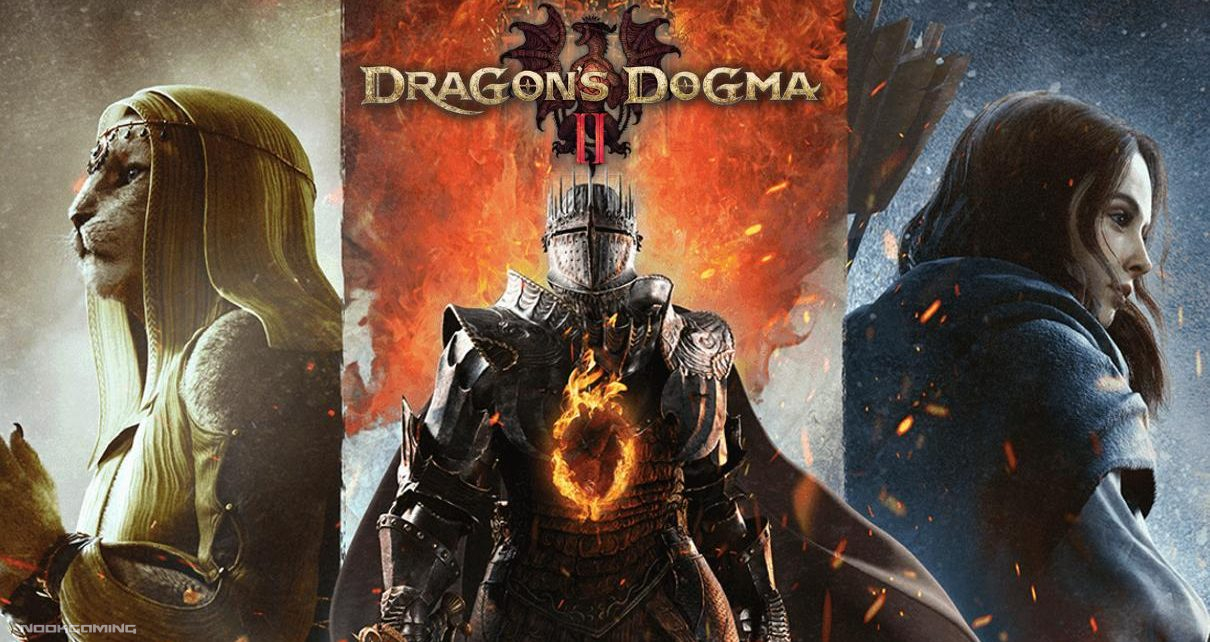
The original Dragon’s Dogma sold well, later received a substantial expansion, and even had a short Netflix adaptation. Despite this, its always felt like one of Capcom’s less utilized IPs. Fortunately, the fates have aligned and Capcom has graced the world with their unique twist on Western high fantasy once again with Dragon’s Dogma 2.
It’s Time The Tale Was Told
Didn’t play the first game? Not a problem! Dragon’s Dogma 2 takes place in a different setting. So, while you’ll have extra context and prior knowledge of the established universe if you have played the original, the game does a great job of introducing newcomers to the unique world of Dragon’s Dogma. You’ll soon learn about its quirky Arisen and Pawn relationship and even the relationship between the player character and the titular dragon.
The game opens with a fairly extensive character creation tool before you are thrust into the pantaloons of the “Arisen”, a chosen one of sorts who has control over “Pawns”. Pawns are beings that look like denizens of the world, but lack true emotion or free will. They’re often used as slaves or mercenaries while they wait for their true purpose of following the Arisen.

Issues quickly arise when you realize there is another Arisen who is the current King. This is quite awkward considering that there can only be one Arisen at any time. To make matters worse, the appearance of the Arisen also means there is a dragon that has been born that bears a grudge against the world, the Arisen, Pawns, and just about everything in its path. If you thought dragons in Skyrim were a threat, you haven’t seen anything yet!
I did feel that the story in Dragon’s Dogma 2 is on the weaker side, especially compared to that of the original. Taking a leaf out of Game of Thrones’ book this is much more of a politically charged narrative that later on dips its toes into the more traditional high fantasy story you would expect from this series.
One of the main problems I found with the writing in Dragon’s Dogma 2 was that I didn’t care enough about the fake Arisen story which fueled the early hours of the game. On top of that, there were only a handful of side quests that had stories I was even slightly invested in. Early on there is an interesting tale where you meet a child who isn’t quite what he seems, and there is another one involving a nameless village and the mysterious thieves guild, but sadly these side quests lay buried under mountains of “follow X here” or “visit X Area and cull monsters”. There is some gold here, it’s just a little further into the mountain and under the costume jewellery, and that is a shame.
Immersion VS Convenience
Dragon’s Dogma 2 is a more traditional Western high fantasy role-playing game. You create your character, soon after you create a “Pawn”, and then you and your party are free to explore a giant Western Europe inspired world, taking on various quests for people and chipping away at the grander narrative, all the while taking on various mythical creatures, greedy humans, and eldritch inspired horrors all in the name of adventure.
Dragon’s Dogma, and by extension Dragon’s Dogma 2, has never been the most “original” of concepts. Instead, it tweaks the already tried and true formula to give it that unique Capcom spin and feel to it, making the game feel a lot more original than it is. This is certainly not a knock on the product, but it can catch people off guard, especially with the levels of viral hype this game has received when it initially seems a lot more “pedestrian” than you would expect.

First of all, Dragon’s Dogma 2 leans into the immersive simulation side of gaming, sometimes focusing on immersion over convenience. For example, while there is a fast travel system, it isn’t as convenient to use as you may expect. Not only does it require a rather expensive consumable item, but outside of major towns the only way you can fast travel to a location is if you have been there before and left a waypoint stone. You can also travel between major locations using an “Oxcart” which can either go in real time and help you fill out your map at the expense of having to remain awake throughout the trip or just “doze off” and wake up at your target location. Either way, your journey might still be interrupted by an enemy attack so this is not the same convenient fast travel as in most games.
Another major part of the immersion is your ability to pick up and throw stuff along with how you can react to the scenery surrounding you. For example, early on while making my way to another town on foot I was attacked by a cyclops. Rather than taking it head on I found an explosive barrel that I threw into a makeshift dam, releasing a torrent of water, drowning the cyclops and living to fight another day. Other examples of this are throwing one of your party up a cliff so they can lower a ladder down for you. The game is fairly open in what you can do and there are often many ways you can approach a scenario. Discovering stuff like this in-game is one of Dragon’s Dogma 2’s biggest joys.
One of the weirder choices in Dragon’s Dogma as a series is to have all bodies of open water infected with something called “The Brine”. This attacks from the second anything enters the water and will spawn your character back on the nearest body of land or spell instant death for any creature or Pawn that enters it. It does force you to explore further to get around water, but you can also use it as a tool of mass destruction should you be fighting near a precarious bridge.
Kings, Queens, And Pawns
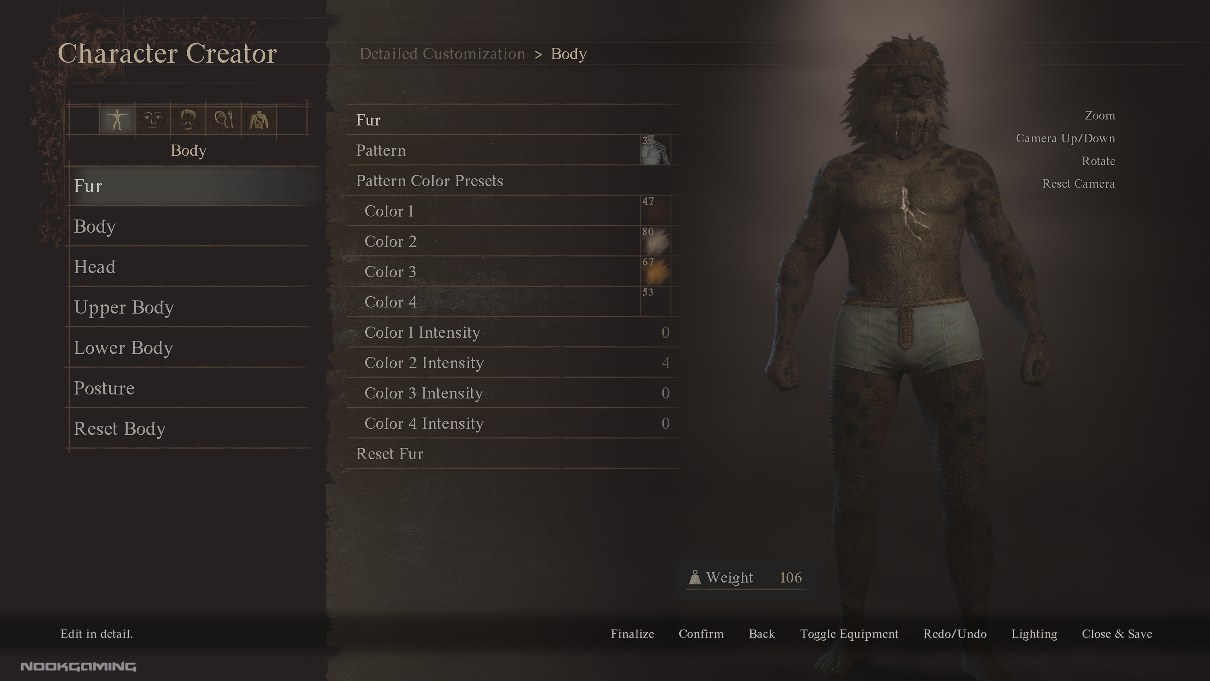
The character creation tool, as briefly touched upon earlier, is insanely robust, to the point that Capcom decided to release it before the game to allow gamers to tinker with to their heart’s content. Following that you need to pick a vocation for your main character and main pawn. Fortunately, you can change these at the local inns and they unlock further attributes the more EXP you put into them over time, allowing you to create your ideal “job”. The game also eases you into this by only giving you a few choices initially before you can pick the more intense job roles, meaning by the time you get to them you know your dragons from your wyverns.
Party creation is partly a social feature. Outside of the initial pawn you make you can also summon another two using a Riftstone, which bundles pawns created by other players, potentially including ones from your friend list. Some of these are made by Capcom for the less social players, and there are even pawns created by well-known content creators working with the publisher.
The pawns, being emotionless slates, often act as more of an archetype than an essential party member. Final Fantasy VII Rebirth this is not. Pawns also never level up, aside from your main pawn, meaning you’ll be hiring and firing quite often. If this isn’t enough to deal with, there is also a disease that some pawns can get which has quite devastating results should they be infected and you summon them into your world.
Combat Your Fears
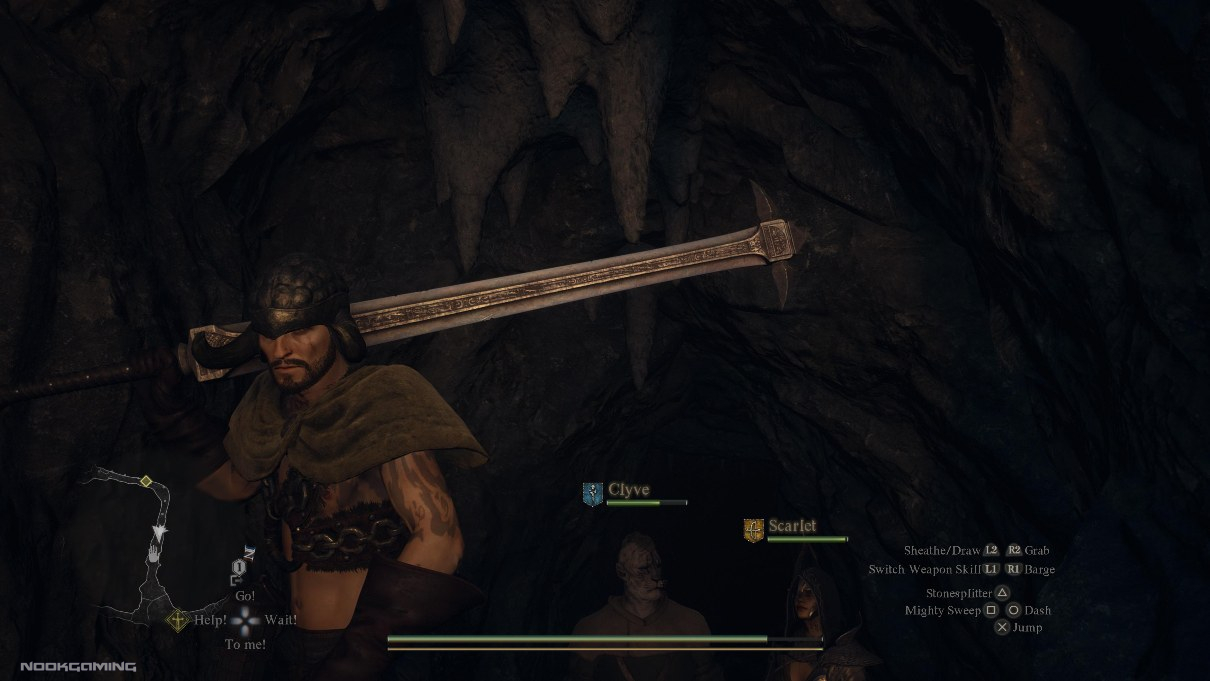
Combat in Dragon’s Dogma 2 feels intentionally weighty, much in the vein of Capcom’s smash hit series Monster Hunter where every attack has a wind-up phase and some real devastating weight behind it. This means that you have to observe your prey and know exactly the best time to swing for the hills, and if you just try to wing it and spam you’ll certainly be feeling the pain in the morning.
The weight, coupled with ever-draining stamina, larger foes like griffins and ogres having huge health bars, and just how randomly combat events can happen, creates this beautiful ballet of blood where you’ll be wandering to your next objective when all hell breaks loose and you’re trying to figure out the best way to win this random assault of nature. There was an instance where an ogre ran straight for me and I rolled out of the way, it stopped by the cliff edge struggling to keep balance, and a gentle push with my greatsword then circumvented a rather tough battle while still providing the thrill and level of immersion I mentioned earlier. I fell prey to a pack of wolves further down the road so nature won that battle!
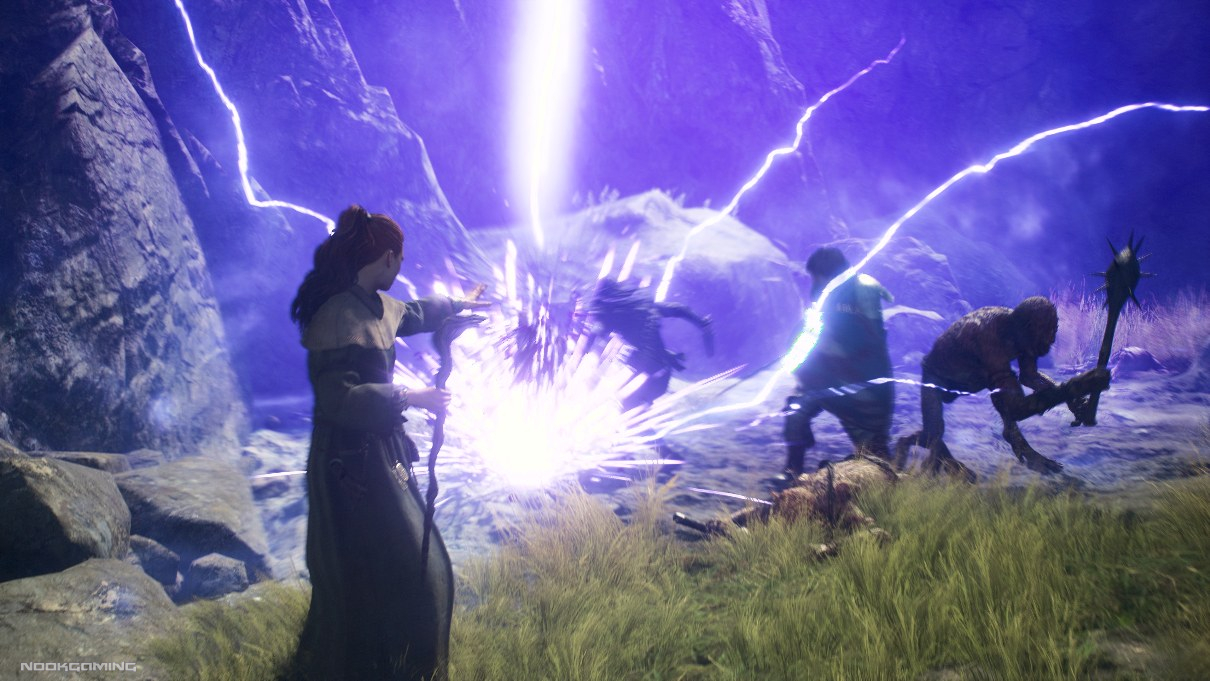
Magic is just as devastating as you would expect it to be. Fire attacks cover the landscape and light up any oil that happens to be lying around, water conducts electricity, and wind summoned from a giant tornado tears through valleys and skin with reckless abandon. While I don’t tend to play mages in these types of games, my main pawn was a magic user and the sheer chaos it brought was tear-inducing. They would often practically nuke a field just to take down a wolf. It brought a smile to my face, until my character caught fire forcing me to try and find a safe body of water.
Monsters can have their tails chopped off, and larger creatures such as wyverns or ogres can be climbed to target weak points, and this also factors in such things as weight if you want to throw their attacks off or assist them in going over a cliff, should you be so inclined. Some fights can be trivialized if you attack the right areas on a monster. The added levels of immersion in the moment-to-moment gameplay creating some memorable battles that even the highest level of scripted events cannot match.
What makes Dragon’s Dogma 2 an unforgettable and unique experience is the way everything I’ve just described works together in harmony. It is one of the most immersive RPG games on the market, with a ton of wiggle room in how you choose to play it. The hard-hitting combat, married with the choices you can make, and how seemingly random enemy encounters are. It just creates this action-packed unique adventure that easily overshadows its rather weak writing.
A Picture Paints A Thousand Words
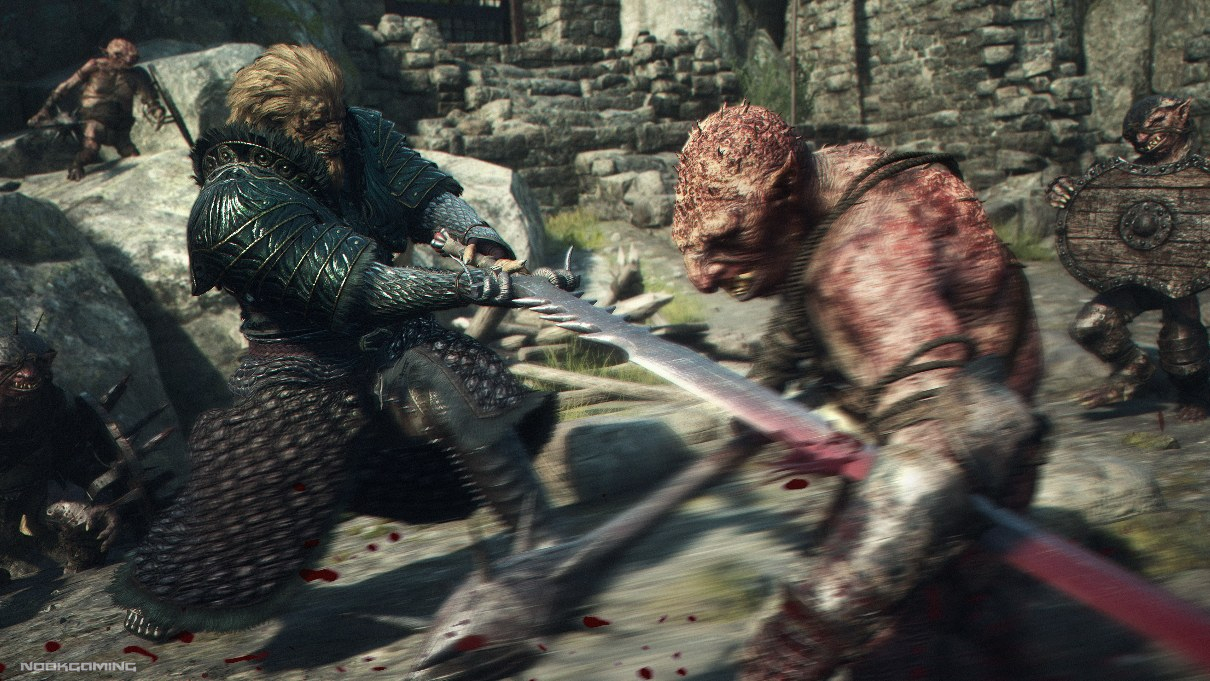
Dragon’s Dogma 2 is a mixed bag when it comes to the visuals. Sometimes this game can look like a painting as you stand on a mountain, watching the sunlight penetrate the scenery, mist slowly forming in the valleys, and nature waking up around you. This picturesque scene can then be ruined by some seriously out of place, almost cheap looking, NPCs with ants in their pants running and jumping around like the most exciting game of “The Floor is Lava” has just kicked off.
The presentation is where I think a lot of people are going to stumble when it comes to this title. Despite its “AAA” lineage, it comes across as very shiny, less glitchy “Euro Jank”. Check out my Gothic II review for a comparison to see what I mean.
The voice acting is mid-tier stuff, with nothing here to knock your socks off, and some of the voiced lines for the pawns are borderline cringe-inducing. The music in the game is again fine, but nothing quite gripped me, which is a shame considering the solid history of Capcom soundtracks. Maybe I was just too engrossed in the action to take note, but not once did I find myself thinking “that’s a banger”.
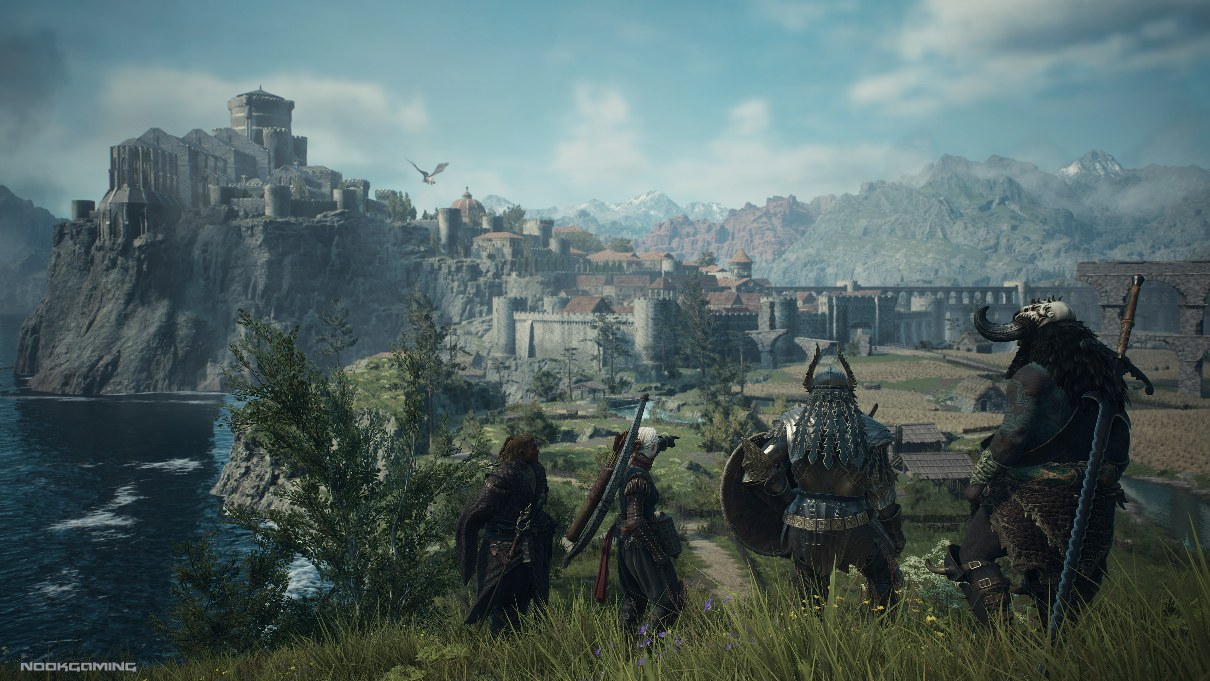
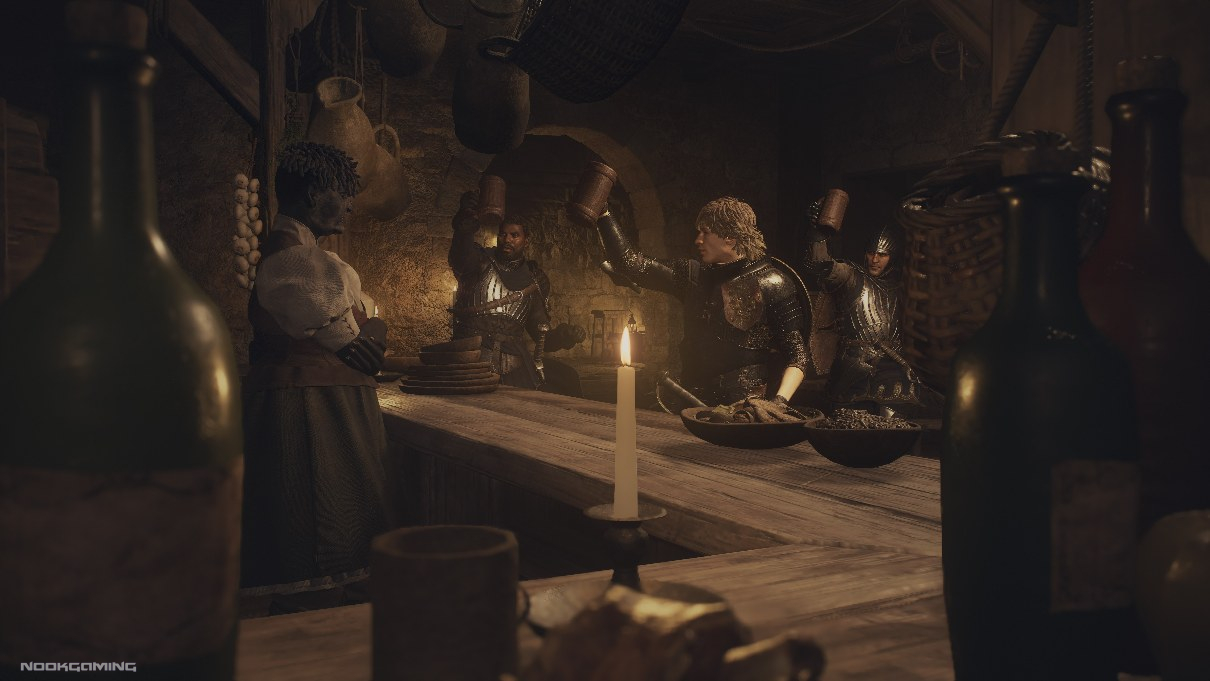
I didn’t encounter any game-breaking bugs in my playthrough, but lost count of the amount of times characters would just start knocking stuff over, run off cliffs, chase me across fields to tell me the same thing they had just told me, and just generally act a little brain dead – especially if doors came into the mix. Character models tended to look a little lacking if they weren’t essential to the main quest, and the majority of pawns had quickly been thrown together and chucked out into the world, creating quite a harsh comparison to carefully created characters and key story NPCs.
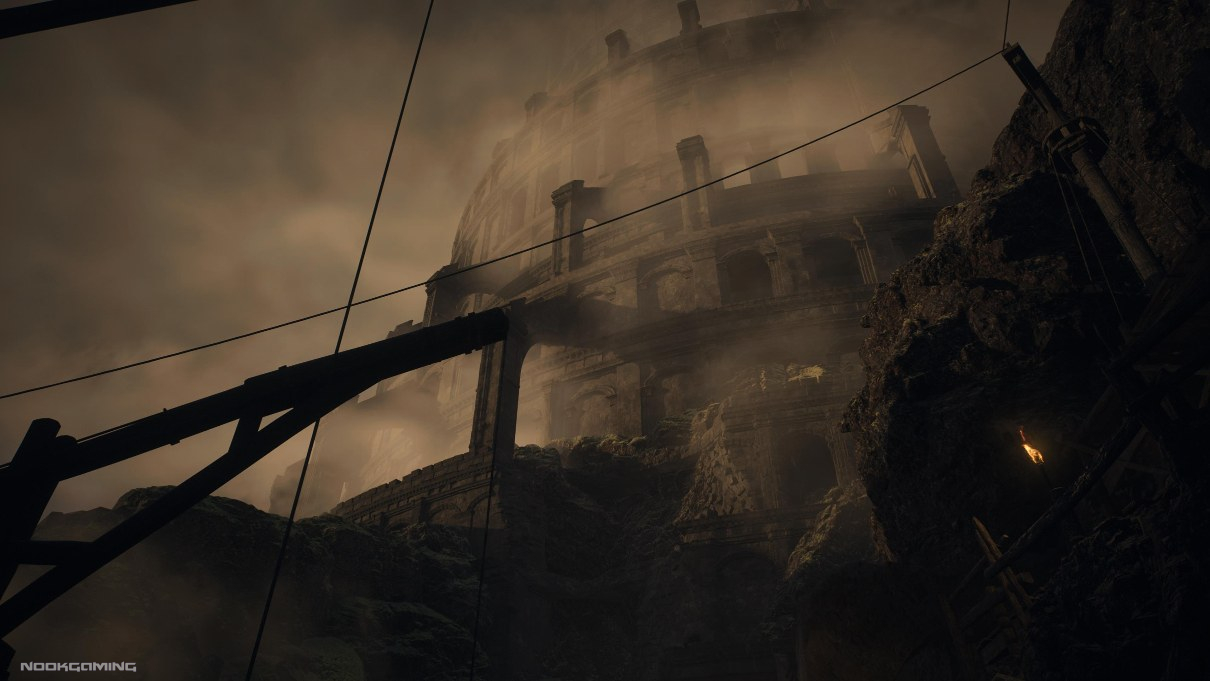
The monsters look amazing. A section involving a fight with a sickly wyvern had me dashing between the charred remains of a city, dodging attacks and climbing onto the monster, and dealing with the obvious pus-filled growths. It was a mixture between grotesque monster design and clever “attack here for massive damage” design, and it felt natural because of how this wyvern looked and acted, stumbling through the city kicking boulders around and spewing poison on my party.
The final “deal breaker” in Dragon’s Dogma 2 will be the performance. It runs at a mostly steady 30fps on PlayStation 5 while looking gorgeous. This is mostly consistent, aside from when it gets really hectic and the frame rate drops to the mid 20s. This is a rare event but it’s a little disheartening that you are stuck at 30fps when other titles are offering “performance” and “graphic” options. Yes the game is stunning, but I would have loved the chance to play it at 60fps, especially in its more hectic and violent moments.
Verdict
Dragon’s Dogma 2 is an amazing experience if you have the patience to deal with its jank and demanding immersion aspects, it holds your hand more than the original does, but its large world, plethora of combat options, and overbearing pawn system may still be a bit much for some players.
Performance issues do harm this title, and the rather mediocre story certainly didn’t keep me around. The moment-to-moment gameplay on the other hand certainly still had me climbing on the back of monsters and polishing off side quests long after the 20-odd hour main story. I highly recommend Dragon’s Dogma 2 for gamers who want to get stuck into their adventure and focus on the violence and viscera of fighting mythical beasts, rather than picking attack options or dealing with run-of-the-mill combat.
DRAGON’S DOGMA 2 IS HIGHLY RECOMMENDED

If you are looking for more action RPGs, you might want to check out our review of Rise of the Ronin.
Thank you to Capcom for providing a PS5 review code for Dragon’s Dogma 2.
Pride of utopia & greatest thing ever, I found the One Piece, Collected the Dragon Balls & won the Mortal Kombat Tournament in one night, it was quiet for me that night! Follow me on Twitter @powahdunk